
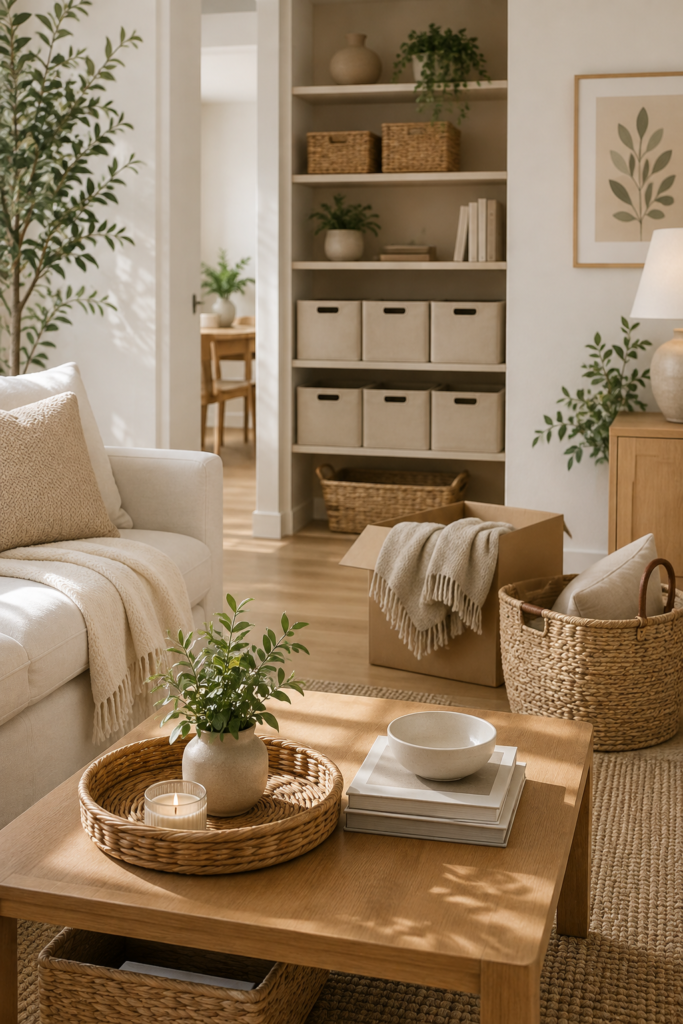
A cluttered home can make even a clean space feel overwhelming. The good news is that decluttering your home doesn’t have to mean spending an entire weekend sorting through every possession you own.
The most effective approach is to make small, intentional changes that are easy to maintain.
Whether you’re dealing with an overflowing kitchen, crowded closets, messy countertops, or drawers full of things you rarely use, a simple decluttering system can make your home feel more spacious and easier to manage.
In this guide, we’ll walk through 15 easy ways to declutter your home, with practical steps you can start using today.
Why Decluttering Your Home Matters
Decluttering isn’t simply about making your home look better.
A more organized space can make everyday tasks easier because you spend less time looking for things and moving unnecessary items out of the way.
A decluttered home can also:
- Make cleaning easier
- Free up useful storage space
- Reduce visual distractions
- Make rooms feel larger
- Help you find things faster
- Make your home easier to maintain
- Prevent clutter from accumulating again
The goal isn’t to own as little as possible.
The goal is to make room for the things that genuinely add value to your everyday life.
1. Start With One Small Area
One of the biggest decluttering mistakes is trying to tackle the entire house at once.
Instead, choose one small area.
Start with:
- One drawer
- One shelf
- One countertop
- One cabinet
- One section of your closet
How to do it
- Remove everything from the area.
- Group similar items together.
- Decide what you use and need.
- Remove anything broken, unwanted, or unnecessary.
- Return only the items that belong there.
- Clean the space before putting everything back.
Completing one small area gives you visible progress without creating a bigger mess.
2. Use the Four-Category Method
A simple sorting system can make decisions much easier.
Create four categories:
Keep
Items you use regularly or genuinely value.
Donate
Useful items you no longer need but someone else could use.
Sell
Items that have enough value to justify selling.
Recycle or discard
Broken, expired, damaged, or unusable items that shouldn’t remain in your home.
Try to avoid creating a large “maybe” pile. If you aren’t ready to make a decision, set aside a small temporary box and give yourself a deadline to revisit it.
3. Declutter Your Kitchen Countertops
Kitchen countertops can become clutter magnets.
Appliances, containers, mail, utensils, and random household items can quickly take over valuable workspace.
Try this:
- Remove everything from the countertop.
- Clean the surface.
- Put away anything that doesn’t belong.
- Keep only appliances you use frequently.
- Store occasional-use items inside cabinets.
- Create a dedicated area for everyday essentials.
A clearer countertop immediately makes a kitchen feel more spacious.
4. Clean Out Your Closet
Your closet is one of the best places to make a noticeable difference.
Start by taking out clothing you haven’t worn in a long time.
Ask yourself:
- Does it fit?
- Have I worn it recently?
- Is it comfortable?
- Would I buy it again today?
- Does it work with the clothes I already own?
If the answer is consistently no, consider donating or selling it.
Pro tip
Turn your hangers around at the beginning of the season. When you wear something, return the hanger normally.
After several months, you’ll have a visual indication of which clothes you actually use.
5. Follow the One-In, One-Out Rule
One of the easiest ways to prevent clutter from returning is to control what enters your home.
The one-in, one-out rule is simple:
When you bring one similar item into your home, remove one you no longer need.
For example:
- New sweater → donate an old sweater
- New mug → remove a mug you rarely use
- New kitchen gadget → reconsider one you never use
This keeps your possessions from gradually increasing without limit.
6. Declutter Your Bathroom
Bathrooms often contain expired products, duplicate toiletries, and items you tried once but never used again.
Start by checking:
- Expired products
- Old makeup
- Nearly empty containers
- Duplicate products
- Unused samples
- Damaged accessories
- Old towels
Then organize what remains by category.
For example:
Daily products: Keep them easily accessible.
Occasional products: Store them in a cabinet or drawer.
Backups: Keep them together rather than scattering them around the bathroom.
7. Tackle the Junk Drawer
Almost every home has one.
Instead of accepting the junk drawer as a permanent mess, give it a simple system.
Step-by-step
- Empty the entire drawer.
- Throw away obvious rubbish.
- Remove duplicates.
- Group similar items.
- Use small dividers or containers.
- Return only useful items.
You don’t need expensive organizers.
Small boxes or containers you already own can work surprisingly well.
8. Declutter Your Paperwork
Paper can accumulate faster than almost anything else.
Start by sorting documents into categories:
- Important documents
- Action required
- Financial records
- Receipts
- Manuals
- Recyclable paper
Digitize documents when appropriate and when you have confirmed that you don’t need to retain the original.
For important records, use a clearly labeled folder or filing system.
Create a simple rule
Handle incoming paper once whenever possible.
Instead of moving paperwork from one pile to another, decide whether it needs action, filing, digitizing, or recycling.
9. Organize Your Entryway
Your entryway sets the tone for the rest of your home.
Shoes, bags, keys, mail, and jackets can quickly accumulate near the door.
Create dedicated places for everyday items.
For example:
- Hooks for bags
- A shoe rack or cabinet
- A small tray for keys
- A basket for incoming items
- A designated location for coats
The easier it is to put something away, the more likely everyone is to do it.
10. Declutter Your Bedroom
Your bedroom should feel calm rather than crowded.
Start with visible surfaces.
Remove:
- Unused decorations
- Old packaging
- Clothes that don’t belong
- Empty bottles
- Unnecessary papers
- Items that belong in other rooms
Then look under the bed and inside bedside drawers.
Keep your most frequently used items within easy reach and move everything else into appropriate storage.
11. Reduce Duplicate Items
Duplicates are a major source of unnecessary clutter.
You may have more than one:
- Scissors
- Water bottle
- Travel mug
- Serving dish
- Cleaning product
- Kitchen utensil
- Phone charger
- Storage container
You don’t necessarily need to eliminate every duplicate.
Instead, ask whether each one has a specific purpose.
If you have five nearly identical items but regularly use only two, consider letting the others go.
12. Declutter Your Digital Life
Decluttering doesn’t have to be physical.
Your phone and computer can become cluttered too.
Set aside a few minutes to:
- Delete unused apps
- Remove duplicate photos
- Organize important files
- Delete old downloads
- Unsubscribe from unwanted emails
- Clean your desktop
- Organize digital folders
A cleaner digital environment can make it easier to find what you need.
13. Create a Donation Box
Keep a designated box or bag somewhere accessible.
Whenever you find something you no longer need but could be useful to someone else, put it inside.
When the box is full, donate the contents.
This turns decluttering into an ongoing habit instead of a major project you have to repeat every few months.
Important rule
Don’t let the donation box become permanent storage.
Set a regular schedule for taking it out of the house.
14. Use the 10-Minute Decluttering Method
You don’t need an entire afternoon to make progress.
Set a timer for 10 minutes.
Choose one small area and work continuously until the timer ends.
You might:
- Clear a countertop
- Organize one drawer
- Sort mail
- Put away clothes
- Clean a shelf
- Remove expired products
Ten minutes may not sound like much, but repeated daily, it can create a significant difference.
Try this routine
Monday: Kitchen drawer
Tuesday: Bathroom shelf
Wednesday: Bedroom surface
Thursday: Entryway
Friday: Closet section
Small sessions are often easier to maintain than occasional marathon cleaning days.
15. Give Everything a Home
This is one of the most important long-term decluttering habits.
If an item doesn’t have a designated place, it will probably end up somewhere random.
Create a home for frequently used items.
For example:
Keys → entryway tray
Remote controls → living room basket
Cleaning supplies → cleaning cabinet
Bags → hooks
Important documents → filing system
Once everything has a home, tidying becomes much faster.
How to Decide What to Get Rid Of
Sometimes the hardest part of decluttering isn’t organizing. It’s deciding what to keep.
Ask yourself these questions:
Do I use it?
If you haven’t used something in a long time, consider why.
Do I need it?
Separate genuine needs from things you simply feel you should keep.
Would I buy it again?
Imagine seeing the item in a store today.
Would you spend money on it?
Does it fit my current lifestyle?
Your belongings should support your life as it is now—not a hypothetical version of your future life.
Is it worth the space it takes?
Storage space has value too.
If an item takes up significant space but provides little benefit, it may be time to let it go.
How to Declutter Without Getting Overwhelmed
Decluttering can feel overwhelming when you look at the entire house.
Instead, break the project into manageable zones.
Start with high-impact areas
Choose areas that you see and use every day.
For example:
- Kitchen counters
- Living room
- Entryway
- Bedroom
- Bathroom
- Closet
- Storage areas
Seeing an immediate improvement can motivate you to continue.
What to Do With Items You No Longer Want
Not everything needs to go straight into the trash.
Consider four options.
Donate
Useful clothing, household goods, books, and other items may benefit someone else.
Sell
Higher-value items can be sold through appropriate local or online marketplaces.
Recycle
Paper, cardboard, electronics, and other materials may have specific recycling options depending on your area.
Dispose
Broken, damaged, expired, or unusable items should be disposed of appropriately.
Avoid donating items that are unsafe, unhygienic, or unusable.
How to Keep Your Home Decluttered
Decluttering once isn’t enough.
The real goal is to create habits that prevent clutter from returning.
Use the five-minute reset
Before going to bed, spend five minutes returning items to their proper places.
Follow the one-in, one-out rule
Control how many new possessions enter your home.
Deal with clutter immediately
If something takes only a few seconds to put away, do it immediately.
Have a regular decluttering day
Once a month, choose one small area to review.
Don’t shop just because something is on sale
A discount doesn’t make an item useful.
Before buying something, ask:
Where will I keep this?
If you don’t have a clear answer, reconsider the purchase.
A Simple Weekly Decluttering Routine
You can maintain an organized home without spending hours every week.
Monday: Kitchen
Clear one drawer or countertop.
Tuesday: Bedroom
Put away clothing and clear one surface.
Wednesday: Bathroom
Check products and remove anything expired or unused.
Thursday: Living Room
Return items to their designated places.
Friday: Entryway
Organize shoes, bags, and mail.
Weekend
Choose one larger area for a 20–30 minute reset.
This simple routine keeps clutter from becoming overwhelming.
Common Decluttering Mistakes
Trying to Declutter Everything in One Day
Large projects can quickly become exhausting.
Start small.
Buying Organizers Too Early
Don’t buy storage containers before deciding what you’re keeping.
Otherwise, you may simply end up organizing clutter.
Keeping Things Out of Guilt
You don’t need to keep an item simply because someone gave it to you.
Creating a Permanent “Maybe” Pile
A temporary decision box is fine, but give it a deadline.
Moving Clutter From One Room to Another
An organized-looking pile is still clutter if you haven’t decided what to do with it.
Frequently Asked Questions
What is the fastest way to declutter a home?
Start with small, high-impact areas such as countertops, entryways, drawers, and visible surfaces. Use a simple keep, donate, sell, and discard system.
How do I declutter when I have too much stuff?
Don’t try to tackle everything at once. Choose one small area and work through it completely before moving to the next.
What should I declutter first?
Start with items that are broken, expired, duplicated, unused, or obviously unwanted. Then move on to more difficult decisions.
How often should I declutter my home?
Small daily or weekly resets can prevent major clutter. A more thorough review every few months can help keep your home manageable.
Should I buy storage containers before decluttering?
Usually, no. Declutter first, determine what remains, and then buy storage that fits your actual needs.
How can I stop clutter from coming back?
Create a place for everything, use the one-in, one-out rule, avoid unnecessary purchases, and spend a few minutes each day resetting your home.
Final Verdict
The best easy ways to declutter your home don’t involve complicated systems or expensive storage products.
They involve making small decisions consistently.
Start with one drawer, one countertop, or one shelf. Sort what you own, remove what you don’t need, and give everything you keep a designated home.
Then build simple habits that prevent clutter from returning.
Remember, the goal isn’t to create an empty home.
It’s to create a home where the things you own are useful, intentional, and easy to manage.
The Bottom Line
Declutter slowly, make thoughtful decisions, and focus on creating a home that works for your everyday life. Small changes repeated consistently can transform even a cluttered space into a calmer, more organized home.