
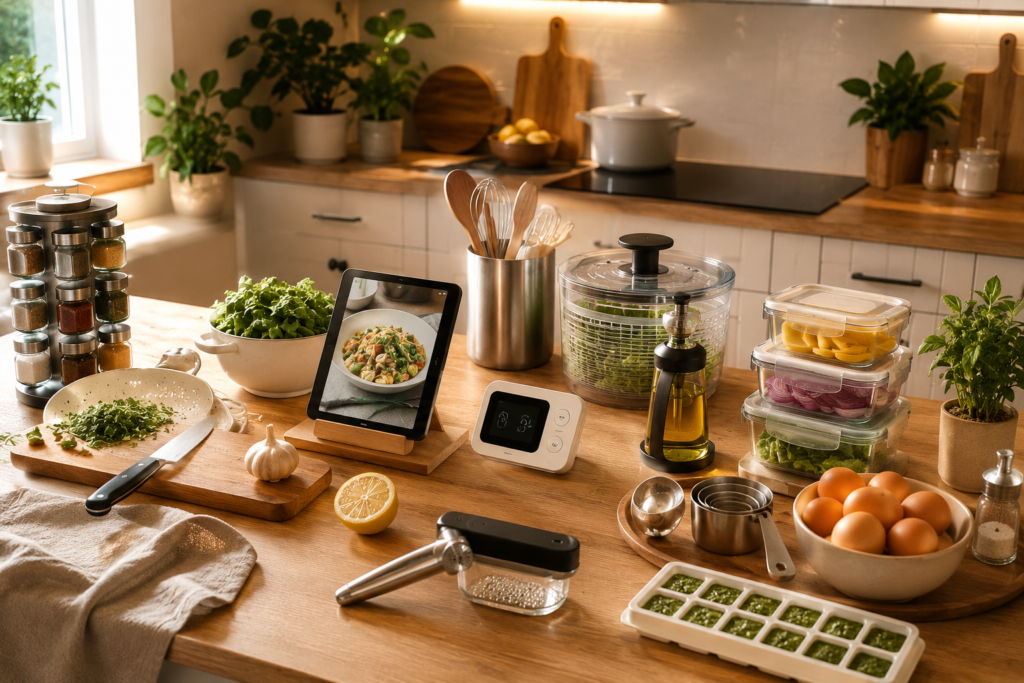
Cooking at home doesn’t have to mean spending hours chopping vegetables, searching through cabinets, or cleaning a mountain of dishes afterward.
Sometimes, the biggest improvements come from small changes to the way you prepare, organize, and cook your food.
From preparing ingredients before you turn on the stove to keeping a dedicated bowl for scraps, these simple kitchen tricks can make everyday cooking more efficient—and often much less stressful.
Whether you’re cooking in a large kitchen or working with limited counter space, these practical tips can help you save time, reduce mess, and enjoy cooking more.
Quick Overview: Our 10 Favorite Kitchen Tricks
| Kitchen Trick | Main Benefit | Difficulty |
|---|---|---|
| 1. Prepare ingredients first | Faster cooking | Easy |
| 2. Keep a scrap bowl nearby | Less mess | Easy |
| 3. Use a tray for everyday seasonings | Faster seasoning | Easy |
| 4. Freeze ingredients in portions | Reduces food waste | Easy |
| 5. Keep your knife sharp | Easier preparation | Easy |
| 6. Clean while you cook | Less cleanup later | Easy |
| 7. Use containers for prepped ingredients | Better organization | Easy |
| 8. Create kitchen zones | Better workflow | Easy |
| 9. Use one-pan cooking when possible | Fewer dishes | Easy |
| 10. Keep frequently used tools accessible | Saves time | Easy |
1. Prep Your Ingredients Before You Start Cooking
One of the simplest ways to make cooking easier is to prepare everything before you start cooking.
Professional kitchens use a technique called mise en place, which essentially means having your ingredients prepared and ready before you begin.
Instead of chopping onions while your pan is already heating, prepare the onions, garlic, vegetables, herbs, and other ingredients first.
How to do it
Step 1: Read the entire recipe.
Step 2: Take out all the ingredients you need.
Step 3: Wash and chop vegetables.
Step 4: Measure spices, oils, sauces, and other ingredients.
Step 5: Arrange everything near your cooking area.
Now you can focus on cooking instead of constantly stopping to search for ingredients.
Why it works
It reduces interruptions and makes it much easier to follow recipes accurately.
Hot Picks Tip: If you’re cooking several dishes at once, group ingredients according to the dish they belong to.
2. Keep a “Scrap Bowl” Beside Your Cutting Board
This is one of those tiny kitchen tricks that can make a surprisingly big difference.
Instead of walking back and forth to the trash every time you peel a vegetable or trim an ingredient, place a small bowl next to your cutting board.
How to do it
Step 1: Place a medium-sized bowl beside your cutting board.
Step 2: Add vegetable peels, stems, packaging scraps, and other waste as you prepare ingredients.
Step 3: When you’re finished, empty the bowl into the trash or compost.
Bonus idea
Some vegetable scraps can be saved for homemade stock. Just make sure they are suitable for that purpose and stored safely.
This simple trick keeps your workspace cleaner and reduces unnecessary trips across the kitchen.
3. Create a Small Seasoning Station
If you regularly use the same cooking essentials, keeping them together can save a surprising amount of time.
Instead of having your olive oil, salt, pepper, and everyday seasonings scattered around the kitchen, place your most-used items together on a small tray.
How to set it up
Step 1: Choose a small tray.
Step 2: Add the ingredients you use most frequently.
Step 3: Keep the tray close to your main cooking area.
Step 4: Return everything to the tray after cooking.
This creates a dedicated “grab-and-go” seasoning station while keeping the countertop organized.
A tray also helps contain small spills from oil bottles and seasoning containers.
4. Freeze Ingredients in Useful Portions
Freezing isn’t only for leftovers.
You can also freeze certain ingredients in portions so they’re ready when you need them.
Great examples include:
- Chopped onions
- Minced garlic
- Fresh herbs
- Ginger
- Cooked rice
- Broth or stock
- Tomato paste
- Sliced vegetables
- Homemade sauces
How to do it
Step 1: Prepare the ingredient.
Step 2: Divide it into practical portions.
Step 3: Place the portions in freezer-safe containers or bags.
Step 4: Label them with the ingredient and date.
Step 5: Take out only what you need.
Why it’s useful
Instead of preparing the same ingredient from scratch every time, you can simply grab a portion and continue cooking.
Important: Use appropriate food-safe containers and follow safe food storage and thawing practices.
5. Keep Your Kitchen Knife Sharp
A sharp knife might seem like a basic kitchen tool, but it can dramatically improve food preparation.
A properly maintained knife cuts ingredients more easily and gives you better control.
Simple knife routine
Step 1: Use an appropriate cutting board.
Step 2: Keep your knife clean and dry.
Step 3: Maintain the edge regularly according to the knife manufacturer’s recommendations.
Step 4: Store the knife safely instead of leaving it loose in a drawer.
Kitchen safety tip
A dull or poorly maintained knife can make cutting harder because you may need to apply more force.
Always use proper cutting technique and keep your fingers safely positioned away from the blade.
6. Clean as You Cook
Nobody wants to finish cooking and discover a kitchen full of dirty dishes.
The solution?
Don’t wait until the end.
Whenever you have a few free moments while something is simmering, baking, or cooking, use that time to clean.
Try this simple routine
Prep → Clean → Cook → Clean → Serve
For example:
- Chop your vegetables.
- Put the scraps in your scrap bowl.
- Put unused ingredients away.
- Wash or load the cutting board and knife.
- Start cooking.
- Clean other utensils while the food cooks.
By the time dinner is ready, much of the cleanup may already be finished.
7. Use Containers for Prepped Ingredients
If you’re preparing several ingredients at once, small bowls or food-storage containers can keep everything organized.
Instead of putting chopped onions, peppers, herbs, and sauces in random places around your counter, give each ingredient its own space.
How to use this trick
Step 1: Prepare your ingredients.
Step 2: Place similar ingredients together.
Step 3: Keep them arranged in the order you’ll use them.
Step 4: Add ingredients to the pan as needed.
This is especially useful when cooking recipes with several ingredients that need to be added at different stages.
Bonus: Clear containers make it easier to see what you’ve already prepared.
8. Create Kitchen Zones
Your kitchen becomes much easier to work in when frequently performed tasks have dedicated areas.
Think of your kitchen as several small work zones.
Example:
Prep Zone
Cutting board, knives, mixing bowls.
Cooking Zone
Pots, pans, spatulas, cooking oils.
Cleaning Zone
Sink, dish soap, sponge, towels.
Storage Zone
Food containers, wraps, bags, pantry items.
Why this works
When the tools you need are close to where you use them, you spend less time walking around the kitchen.
The goal isn’t to make your kitchen look perfect.
The goal is to make it work better for you.
9. Choose One-Pan or One-Pot Meals When Possible
Want an easy way to reduce cleanup?
Use fewer cooking vessels.
One-pan and one-pot meals can combine several ingredients into a single dish, which means fewer pots, pans, bowls, and utensils to wash afterward.
Easy examples
- Sheet-pan chicken and vegetables
- One-pot pasta
- Rice and vegetable dishes
- Stir-fries
- One-pan roasted vegetables
- Skillet meals
- Simple soups and stews
Simple strategy
Before using another pan, ask yourself:
“Can I do this in the pan I’m already using?”
Sometimes the answer is yes.
Just make sure the cookware is appropriate for the ingredients and cooking method.
10. Keep Your Most-Used Kitchen Tools Within Easy Reach
You shouldn’t have to open five cabinets every time you cook.
Identify the tools you use almost every day and store them somewhere convenient.
For example:
- Chef’s knife
- Cutting board
- Measuring spoons
- Spatula
- Wooden spoon
- Tongs
- Favorite saucepan
- Mixing bowls
The simple rule
Frequently used → easy to reach
Occasionally used → cabinet or drawer
Rarely used → deeper storage
This keeps your most valuable workspace available while making everyday cooking faster.
5-Minute Kitchen Reset Before You Finish
Here’s an extra trick that can make your kitchen feel dramatically better.
Before you consider cooking completely finished, spend five minutes resetting the kitchen.
Your 5-minute reset
Minute 1: Put ingredients back where they belong.
Minute 2: Load dishes into the dishwasher or wash the most important items.
Minute 3: Wipe the main countertop.
Minute 4: Clean obvious spills around the stove.
Minute 5: Put cooking tools back in their storage areas.
That’s it.
A small daily reset is much easier than allowing clutter to build up until you need a major kitchen cleanup.
Kitchen Tricks That Save the Most Time
If you don’t want to change everything at once, start with these five:
1. Prep before cooking
Having ingredients ready makes recipes easier to follow.
2. Keep a scrap bowl
Less walking and a cleaner workspace.
3. Clean while cooking
You’ll have less work after dinner.
4. Organize your everyday tools
Keep frequently used items within easy reach.
5. Use one-pan meals
Fewer dishes means faster cleanup.
Frequently Asked Questions
What is the easiest kitchen trick for beginners?
Start by preparing all your ingredients before turning on the stove. This simple habit can make recipes easier to follow and reduce last-minute rushing.
How can I make cooking faster?
Plan your recipe first, prepare ingredients in advance, keep frequently used tools accessible, and organize your workspace before cooking.
How can I reduce dishes when cooking?
Choose one-pot or one-pan recipes when appropriate, reuse preparation bowls when practical, and clean utensils while food is cooking.
How can I keep my kitchen clean while cooking?
Keep a scrap bowl nearby, put ingredients away after using them, wipe spills immediately, and wash or load dishes during cooking breaks.
How should I organize my kitchen for easier cooking?
Create simple zones for preparation, cooking, cleaning, and storage. Keep the tools you use most often close to their work area.
Are kitchen hacks really worth trying?
Yes. The best kitchen hacks don’t require expensive gadgets. Small improvements to preparation, organization, storage, and cleanup can make everyday cooking noticeably easier.
Final Verdict
You don’t need a completely redesigned kitchen or a collection of expensive gadgets to make cooking easier.
The biggest improvements often come from better habits.
Prepare your ingredients before you cook. Keep a scrap bowl nearby. Organize your everyday seasonings and tools. Clean as you go. Freeze useful ingredients in portions. And whenever possible, simplify your meals with one-pot or one-pan cooking.
These small changes can help you create a kitchen that feels faster, cleaner, and easier to work in every day.
And if you’re looking to upgrade your kitchen, the next step isn’t necessarily buying more products—it’s choosing the right tools for the way you actually cook.