
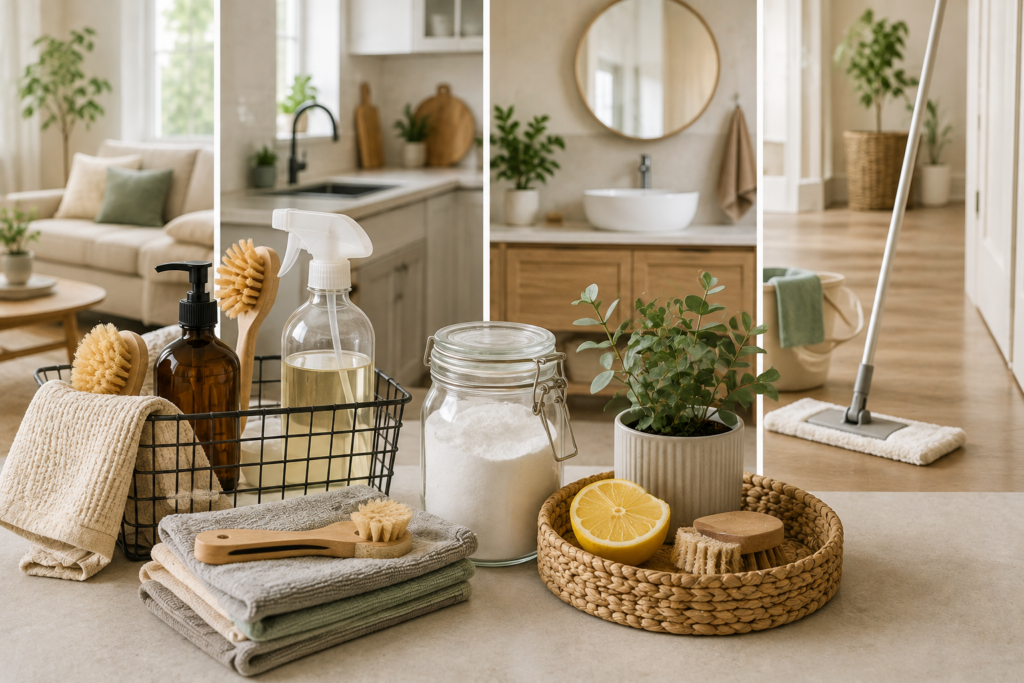
Cleaning doesn’t have to take over your entire day.
The secret to a cleaner home isn’t necessarily cleaning more. It’s cleaning smarter.
Small changes to the way you organize your cleaning supplies, handle daily messes, and approach different rooms can eliminate unnecessary work and make routine cleaning much faster.
The best cleaning tricks are usually simple. They don’t require expensive equipment, complicated routines, or hours of scrubbing.
In this guide, we’re sharing 15 practical cleaning tricks that can save time and effort, from cleaning as you go to using the right tools for the right job.
Whether you’re trying to keep a busy family home under control or simply want to spend less time doing chores, these ideas can help you create a more efficient cleaning routine.
Quick Overview: 15 Time-Saving Cleaning Tricks
| # | Cleaning Trick | Main Benefit |
|---|---|---|
| 1 | Clean as you go | Prevents buildup |
| 2 | Keep supplies together | Saves searching time |
| 3 | Work from top to bottom | Avoids re-cleaning |
| 4 | Declutter before cleaning | Makes cleaning faster |
| 5 | Use a cleaning caddy | Easy room-to-room cleaning |
| 6 | Let products do the work | Reduces scrubbing |
| 7 | Clean high-touch surfaces | Targets important areas |
| 8 | Use microfiber cloths | Faster, more effective wiping |
| 9 | Keep a laundry routine | Prevents pileups |
| 10 | Clean the shower regularly | Prevents heavy buildup |
| 11 | Use a timer | Keeps cleaning focused |
| 12 | Clean floors last | Prevents extra work |
| 13 | Empty the vacuum regularly | Improves performance |
| 14 | Give everything a home | Reduces future mess |
| 15 | Create a daily reset | Keeps cleaning manageable |
1. Clean as You Go
One of the most effective cleaning tricks is also one of the simplest:
Don’t let small messes become big ones.
Instead of allowing dishes, crumbs, spills, and clutter to accumulate throughout the day, deal with them when they’re easy to handle.
Try this routine
Step 1: Wipe spills immediately.
Step 2: Put items away after using them.
Step 3: Wash or load dishes after meals.
Step 4: Wipe kitchen surfaces after cooking.
Step 5: Return cleaning tools to their storage area.
A few seconds spent handling a small mess can save several minutes later.
Hot Picks Tip
Think of cleaning as a series of small resets, rather than one giant chore at the end of the day.
2. Keep Your Cleaning Supplies Together
How much time do you spend looking for cleaning products?
If your bathroom cleaner is under the kitchen sink, your microfiber cloths are in a bedroom drawer, and your vacuum accessories are in another room, cleaning becomes unnecessarily inefficient.
Create a cleaning station
Keep commonly used supplies together, such as:
- Microfiber cloths
- All-purpose cleaner
- Disinfecting products when appropriate
- Scrub brushes
- Sponges
- Gloves
- Trash bags
A dedicated cleaning caddy can be especially useful.
How to use it
Step 1: Choose your most frequently used products.
Step 2: Place them in one portable caddy.
Step 3: Carry the caddy from room to room.
Step 4: Return everything to its storage location when finished.
This eliminates repeated trips back to the cleaning cupboard.
3. Clean From Top to Bottom
This simple technique can save you from cleaning the same area twice.
Dust and debris naturally fall downward.
So if you clean the floor first and then dust the shelves, you’ll probably have to clean the floor again.
Use this order:
Ceiling and high surfaces
↓
Shelves and furniture
↓
Countertops
↓
Lower surfaces
↓
Floor
Example
When cleaning a bedroom:
- Dust light fixtures.
- Dust shelves.
- Wipe furniture.
- Clean mirrors.
- Vacuum or sweep the floor.
It’s a small change, but it makes the entire process more efficient.
4. Declutter Before You Clean
Cleaning around clutter takes longer.
Before you start wiping, vacuuming, or mopping, spend a few minutes putting things back where they belong.
Use the three-basket method
Have three containers:
Put Away
Items that belong in another location.
Donate
Items you no longer need.
Discard
Broken or unusable items.
Why this works
A clear surface is much faster to clean than a surface covered with objects.
Instead of moving 15 items before wiping a table, you can simply wipe it.
The rule
Declutter first. Clean second.
5. Use a Cleaning Caddy
A cleaning caddy is one of the simplest tools for making routine cleaning more efficient.
Instead of carrying individual products around the house, keep your essentials together.
A useful cleaning caddy might include:
- All-purpose cleaner
- Glass cleaner
- Microfiber cloths
- Scrub brush
- Sponge
- Disposable gloves
- Small garbage bags
Step-by-step
Step 1: Choose a lightweight caddy.
Step 2: Add only the products you regularly use.
Step 3: Keep extra supplies elsewhere.
Step 4: Carry the caddy with you while cleaning.
This turns your cleaning supplies into a portable workstation.
6. Give Cleaning Products Time to Work
One common mistake is spraying a product and immediately wiping it away.
Many cleaning products need a certain amount of contact time to work effectively.
A better approach
Step 1: Apply the appropriate product according to its label.
Step 2: Allow the recommended contact time.
Step 3: Move on to another nearby task.
Step 4: Return and wipe or rinse as directed.
This can reduce the amount of unnecessary scrubbing.
Important
Always follow the product label, use appropriate ventilation, and never mix cleaning chemicals, especially bleach with ammonia or acids.
7. Focus on High-Touch Surfaces
You don’t always need to deep-clean every surface every day.
Instead, pay particular attention to areas that are touched frequently.
Examples include:
- Door handles
- Light switches
- Cabinet handles
- Remote controls
- Faucet handles
- Appliance handles
- Frequently used switches
Quick routine
Step 1: Identify the high-touch surfaces in your home.
Step 2: Add them to your regular cleaning routine.
Step 3: Use an appropriate cleaner for each surface.
Step 4: Follow the product instructions.
This helps you focus your cleaning time where it matters most.
8. Use Microfiber Cloths
A good microfiber cloth can make everyday cleaning easier because it is versatile and reusable.
They’re useful for:
- Dusting
- Wiping countertops
- Cleaning glass
- Polishing surfaces
- Removing fingerprints
- Cleaning appliances
How to use them efficiently
Keep separate cloths for different cleaning purposes.
For example:
- Kitchen
- Bathroom
- General dusting
- Glass
Wash reusable cloths according to their care instructions and avoid using fabric softener if the manufacturer recommends against it.
Hot Picks Tip
Keep a small stack of clean microfiber cloths in your cleaning caddy so you don’t have to stop and search for one.
9. Stay Ahead of Laundry
Laundry becomes much more time-consuming when it piles up.
Instead of allowing several loads to accumulate, create a simple routine.
Try this system
Step 1: Use separate laundry baskets if helpful.
Step 2: Run a load when a basket is reasonably full.
Step 3: Move laundry to the dryer or drying area promptly.
Step 4: Fold or hang clothes soon after they’re dry.
Step 5: Put everything away.
Why this saves time
You’re handling smaller amounts more frequently rather than spending an entire day dealing with a huge laundry pile.
10. Clean the Shower Regularly
A few minutes of regular shower maintenance can prevent much heavier cleaning later.
Soap residue and mineral deposits can become harder to remove when they accumulate.
Quick shower routine
After showering:
Step 1: Rinse visible residue from surfaces.
Step 2: Use a suitable shower squeegee on glass if appropriate.
Step 3: Keep the area ventilated.
Step 4: Wipe problem areas regularly.
Weekly cleaning
Clean the shower more thoroughly according to the materials and surfaces in your bathroom.
The key idea
Prevent buildup instead of fighting heavy buildup later.
11. Use a Timer for Quick Cleaning Sessions
Cleaning can feel overwhelming when you think you need to clean the entire house.
Instead, set a timer.
Try a 10- or 15-minute cleaning session.
Example
Minute 1–3: Pick up clutter.
Minute 4–7: Wipe surfaces.
Minute 8–11: Clean the bathroom or kitchen.
Minute 12–15: Vacuum or sweep a high-traffic area.
When the timer ends, stop or take a break.
Why it works
A short, focused session can feel much easier than thinking:
“I need to clean the whole house.”
12. Clean Floors Last
If you’re cleaning a room from top to bottom, the floor should usually be one of the final steps.
Otherwise, dust and debris from other surfaces may end up on the floor again.
Ideal sequence
Declutter → Dust → Wipe → Clean surfaces → Vacuum/Sweep → Mop
This simple order can reduce repeated work.
Hot Picks Tip
If you’re cleaning multiple rooms, vacuum or sweep them all before mopping where practical.
That keeps your workflow efficient.
13. Empty Your Vacuum Regularly
A vacuum cleaner can’t perform at its best if its dust container or bag is excessively full.
Make it a habit
After vacuuming:
Step 1: Check the dust container.
Step 2: Empty it when necessary.
Step 3: Check the filter according to the manufacturer’s instructions.
Step 4: Remove hair and debris from the brush roll when needed.
Step 5: Store the vacuum properly.
Regular maintenance can help your vacuum work more efficiently and may extend the life of the machine.
14. Give Everything a Home
A home becomes much easier to keep clean when every item has a designated place.
Instead of asking:
“Where should I put this?”
you should already know.
Create homes for:
- Shoes
- Keys
- Toys
- Cleaning supplies
- Kitchen tools
- Chargers
- Remote controls
The two-minute rule
If putting something away takes less than two minutes, do it immediately.
This prevents small amounts of clutter from becoming a major weekend cleanup project.
15. Create a Daily 10-Minute Reset
You don’t need to spend hours cleaning every evening.
A short daily reset can keep your home under control.
Try this routine
Minute 1–2: Put away clutter.
Minute 3–4: Clear kitchen counters.
Minute 5–6: Load dishes or wash them.
Minute 7–8: Wipe high-use surfaces.
Minute 9: Quick floor cleanup.
Minute 10: Return cleaning supplies to their storage area.
That’s it.
The goal isn’t perfection.
It’s to prevent small messes from becoming large ones.
A Simple Weekly Cleaning Routine
If you want to turn these cleaning tricks into a practical routine, try this schedule.
Daily
- Make the bed
- Clear kitchen counters
- Wash or load dishes
- Wipe obvious spills
- Put items away
- Perform a 10-minute reset
2–3 Times Per Week
- Vacuum high-traffic areas
- Clean bathroom surfaces
- Change kitchen towels
- Dust frequently used surfaces
Weekly
- Thoroughly clean bathrooms
- Vacuum throughout the home
- Mop hard floors
- Change bed linens
- Clean kitchen appliances as needed
- Empty and clean bins
Monthly
- Clean less frequently used areas
- Clean appliance filters where applicable
- Review cleaning supplies
- Declutter one storage area
Your exact schedule can be adjusted based on your household, pets, traffic, and cleaning needs.
How to Clean Faster Without Doing a Worse Job
Cleaning faster doesn’t mean skipping important tasks.
It means reducing wasted movement and unnecessary repetition.
Follow these five principles:
1. Work systematically
Don’t jump randomly between rooms.
2. Carry supplies with you
A cleaning caddy can reduce trips.
3. Work from top to bottom
This prevents re-cleaning.
4. Declutter first
Clear surfaces are easier to clean.
5. Maintain instead of constantly deep-cleaning
Small daily actions prevent major buildup.
Cleaning Tools That Can Save You Time
The right tools can make repetitive chores significantly easier.
You don’t need all of these, but each can solve a specific problem.
Microfiber Cloths
Best for: Everyday dusting and wiping.
Cleaning Caddy
Best for: Carrying supplies around the home.
Cordless Vacuum
Best for: Quick daily floor cleanup.
Robot Vacuum
Best for: Automating routine floor maintenance.
Electric Spin Scrubber
Best for: Reducing manual scrubbing on suitable surfaces.
Squeegee
Best for: Reducing water and residue on shower glass.
Extendable Duster
Best for: Reaching high or difficult areas.
Steam Cleaner
Best for: Certain hard surfaces when the manufacturer says steam is appropriate.
The best cleaning gadget isn’t necessarily the most advanced one.
It’s the one that solves a cleaning problem you repeatedly encounter.
Cleaning Tricks That Save the Most Time
If you only want to start with five ideas, make them these:
1. Clean as you go
Prevent mess from building up.
2. Declutter before cleaning
Don’t waste time cleaning around unnecessary objects.
3. Work from top to bottom
Avoid cleaning the same area twice.
4. Keep supplies together
Reduce unnecessary trips.
5. Do a 10-minute daily reset
Small maintenance is easier than major cleanup.
Common Cleaning Mistakes to Avoid
Using too much cleaning product
More product doesn’t necessarily mean better cleaning. Follow the label instructions.
Cleaning without decluttering
Moving objects around while cleaning adds unnecessary work.
Using the wrong product
Different surfaces require different cleaning methods. Always check the manufacturer’s recommendations.
Forgetting contact time
Some disinfecting products need to remain wet on the surface for a specified period to work as intended.
Mixing cleaning chemicals
Never mix cleaning products unless the manufacturer specifically says it is safe.
Trying to clean the whole house at once
Breaking cleaning into smaller sessions can make the task much easier to manage.
How to Build a Cleaning Routine That Actually Lasts
The best cleaning routine is one you can maintain.
Don’t create a schedule that requires several hours every day if you know you won’t follow it.
Instead:
Start small
Begin with 10 minutes a day.
Focus on high-impact areas
Kitchen, bathroom, floors, and clutter usually make the biggest visual difference.
Use repeatable systems
Keep supplies in the same location and give everyday items permanent homes.
Automate when practical
A robot vacuum, dishwasher, or other suitable appliance can reduce repetitive work.
Adjust the routine
If something isn’t working, change it.
Your cleaning routine should fit your lifestyle—not the other way around.
Frequently Asked Questions
What is the fastest way to clean a house?
Declutter first, gather your supplies, work from top to bottom, clean systematically, and finish with floors. Short daily maintenance can also reduce the need for long cleaning sessions.
How can I clean my house without spending all day?
Use short, focused cleaning sessions and prioritize high-traffic and high-use areas. A daily 10-minute reset can prevent mess from accumulating.
What cleaning trick saves the most time?
Cleaning as you go is one of the most effective habits because it prevents small messes from becoming larger cleaning tasks.
Is it better to clean one room at a time?
Usually, yes. Finishing one area before moving to another can reduce unnecessary movement and make the process easier to track.
How often should I deep clean my home?
There is no universal schedule. High-use areas may need frequent attention, while less-used areas can be cleaned less often. Regular maintenance can reduce the need for intensive cleaning.
Are cleaning gadgets worth buying?
They can be, especially when they automate repetitive tasks or make difficult jobs easier. Before buying one, identify the specific cleaning problem it solves.
Final Verdict
You don’t need to spend your entire weekend cleaning to have a tidy home.
The most effective approach is to reduce the amount of cleaning you create in the first place.
Clean spills when they happen. Put things away after using them. Declutter before you clean. Keep your supplies together. Work from top to bottom and create a simple daily reset.
Once these habits become part of your routine, cleaning becomes less of a major event and more of a series of small, manageable tasks.
And when you do need extra help, choose cleaning tools and gadgets based on the chores that actually take up your time.
The goal isn’t a perfectly spotless home every minute of the day.
It’s a home that’s easier to maintain, with less effort and more time left for the things you actually enjoy.