
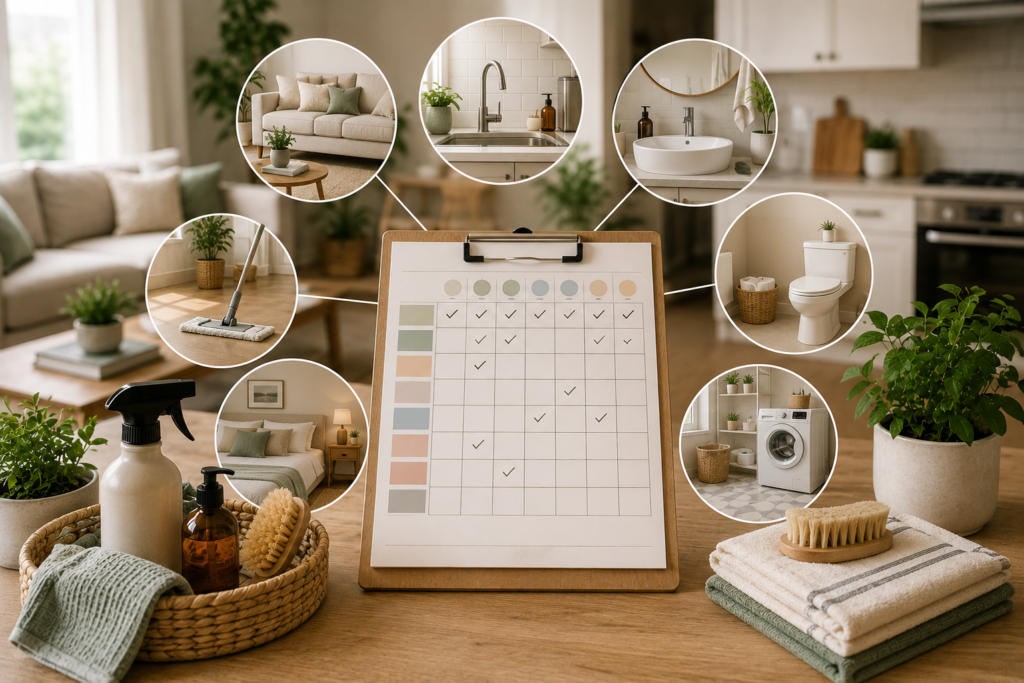
Knowing how often to clean your home can be surprisingly difficult.
Some areas need attention every day, while others only need to be cleaned once a month—or even a few times a year.
Clean too often, and you may spend more time than necessary on chores. Clean too rarely, and dust, dirt, grease, and clutter can quickly build up.
The solution is to create a realistic cleaning schedule based on how often each area is used.
In this guide, we’ll break down exactly how often you should clean the most common areas, surfaces, appliances, and household items—from kitchen countertops and bathrooms to mattresses, windows, refrigerators, and floors.
You’ll also find a simple daily, weekly, monthly, and seasonal cleaning checklist that you can save and use as your regular home cleaning routine.
How Often Should You Clean Your Home?
Here’s a quick overview:
| Area or Item | How Often? |
|---|---|
| Kitchen countertops | Daily |
| Dishes | Daily |
| Kitchen sink | Daily |
| Toilet | Several times per week |
| Bathroom sink | Several times per week |
| High-touch surfaces | Several times per week |
| Floors | Several times per week to weekly |
| Shower/bathtub | Weekly |
| Bed sheets | Weekly |
| Towels | Every few days to weekly |
| Microwave | Weekly or as needed |
| Refrigerator | Monthly |
| Oven | Every few months or as needed |
| Windows | Every few months |
| Mattress | Every 6–12 months |
| Curtains | Every few months |
| Ceiling fans | Every 1–3 months |
| Baseboards | Every 1–3 months |
| Deep decluttering | Seasonally |
These are practical starting points rather than strict rules. Your cleaning frequency may need to change depending on household size, pets, allergies, cooking habits, traffic, and how quickly surfaces become dirty.
The Golden Rule of Home Cleaning
Before creating a complicated schedule, remember one simple principle:
Clean according to use, not just according to time.
A kitchen used several times every day will need more frequent cleaning than a guest room used once a month.
Likewise, a bathroom shared by several people may need more frequent attention than a bathroom that is rarely used.
Your cleaning routine should reflect your actual home and lifestyle.
Daily Cleaning Tasks
You don’t need to deep-clean your home every day.
Instead, focus on small tasks that prevent mess and buildup.
1. Clean Kitchen Counters
Frequency: Daily
Kitchen countertops come into contact with food, spills, crumbs, and cooking ingredients.
Simple routine
- Remove appliances and clutter.
- Brush away crumbs.
- Wipe the surface with an appropriate cleaner.
- Dry the surface if needed.
- Return frequently used items.
A few minutes each evening can prevent a much bigger cleanup later.
2. Wash or Load Dishes
Frequency: Daily
Leaving dirty dishes overnight can make the kitchen feel messy immediately the next morning.
Better habit
After meals:
- Scrape food into the appropriate waste container.
- Rinse or load dishes according to your dishwasher routine.
- Wash items that cannot go into the dishwasher.
- Clean the sink area.
- Wipe the countertop.
This creates a simple end-of-day kitchen reset.
3. Clean Kitchen Spills Immediately
Frequency: As needed
Don’t wait for spills to dry.
Dried food and grease are generally harder to remove than fresh messes.
Quick rule
Spill → Wipe → Done.
This is one of the easiest ways to reduce your overall cleaning workload.
4. Make the Bed
Frequency: Daily
Making the bed isn’t technically cleaning, but it can make the bedroom feel noticeably more organized.
Quick routine
- Open curtains or blinds when appropriate.
- Straighten the sheets.
- Arrange pillows.
- Fold or straighten the duvet or blanket.
It takes only a few minutes.
5. Do a Quick Clutter Reset
Frequency: Daily
Walk through the main living areas and return misplaced items to their designated homes.
Focus on:
- Shoes
- Toys
- Clothes
- Cups
- Chargers
- Remote controls
A 5–10 minute reset can prevent clutter from accumulating.
Cleaning Tasks to Do Several Times a Week
Some areas don’t necessarily need cleaning every day, but waiting an entire week may allow noticeable buildup.
6. Vacuum High-Traffic Areas
Frequency: Several times per week, or as needed
Focus on:
- Entryways
- Living rooms
- Hallways
- Frequently used bedrooms
Homes with children or pets may require more frequent vacuuming.
Quick strategy
You don’t always need to vacuum the entire house.
Focus on the areas that actually receive the most traffic.
7. Clean Bathroom Sinks
Frequency: Several times per week
Bathroom sinks collect:
- Toothpaste
- Soap residue
- Hair
- Water spots
- Personal-care product residue
Simple cleaning process
- Remove items from the sink.
- Rinse away loose debris.
- Apply an appropriate cleaner.
- Wipe the basin and surrounding surface.
- Rinse if required.
- Dry the area.
8. Clean the Toilet
Frequency: Several times per week, depending on use
A frequently used toilet generally needs more regular cleaning than a guest bathroom.
Basic routine
- Apply an appropriate toilet cleaner.
- Allow the product to work according to its instructions.
- Clean the bowl with a toilet brush.
- Wipe the exterior surfaces.
- Clean the seat and surrounding area.
- Wash your hands thoroughly.
9. Wipe High-Touch Surfaces
Frequency: Several times per week or as needed
Pay attention to frequently handled surfaces such as:
- Door handles
- Light switches
- Cabinet handles
- Faucet handles
- Appliance handles
- Remote controls
The exact frequency depends on how heavily the surfaces are used.
Weekly Cleaning Tasks
A weekly cleaning routine should focus on the areas that need more thorough attention.
10. Clean the Shower and Bathtub
Frequency: Weekly
Regular cleaning prevents soap residue and mineral deposits from becoming harder to remove.
Step-by-step
- Remove bottles and personal items.
- Rinse the surfaces.
- Apply an appropriate bathroom cleaner.
- Allow the product to sit according to the label.
- Scrub where necessary.
- Rinse thoroughly.
- Dry or ventilate the area.
A quick rinse or squeegee after showers can reduce buildup between deeper cleanings.
11. Mop Hard Floors
Frequency: Weekly or as needed
The right frequency depends on traffic and the type of flooring.
Basic process
- Remove clutter from the floor.
- Sweep or vacuum.
- Prepare the appropriate cleaning solution.
- Mop according to the flooring manufacturer’s recommendations.
- Allow the floor to dry.
Avoid excessive water on flooring that is not designed to handle it.
12. Dust Furniture and Shelves
Frequency: Weekly
Dust:
- Shelves
- Tables
- TV stands
- Bedside tables
- Decorative objects
- Other exposed surfaces
Best method
Work from higher surfaces downward so dust doesn’t settle on areas you’ve already cleaned.
13. Change Bed Sheets
Frequency: Generally weekly
Wash sheets according to the fabric care instructions.
If you sweat heavily at night, have pets in the bedroom, or have other household factors that increase soiling, you may prefer to change them more frequently.
Simple routine
- Remove used bedding.
- Wash according to care instructions.
- Dry completely.
- Make the bed with clean sheets.
14. Wash Towels
Frequency: Every few days to weekly, depending on use
Bathroom towels can stay damp for long periods, making regular washing important.
Good habit
Hang towels so they can dry properly between uses.
Avoid leaving wet towels bunched up on the floor or in a basket.
15. Clean Kitchen Appliances You Use Frequently
Frequency: Weekly or as needed
Focus on appliances such as:
- Microwave
- Coffee maker exterior
- Toaster
- Air fryer basket
- Blender
- Food processor
The exact cleaning frequency depends on how often each appliance is used.
Always follow the manufacturer’s cleaning instructions.
Monthly Cleaning Tasks
Monthly cleaning is about areas that don’t need weekly attention but can accumulate dust, grease, or grime over time.
16. Clean the Refrigerator
Frequency: About once a month, with spills handled immediately
You don’t necessarily need to deep-clean the refrigerator every week.
Instead, perform a quick inspection regularly and a more thorough clean about monthly.
Step-by-step
- Remove expired food.
- Take out removable shelves and drawers.
- Clean suitable surfaces with an appropriate solution.
- Wipe spills and residue.
- Dry surfaces completely.
- Return food in an organized way.
Don’t ignore spills when they happen—those should be cleaned immediately.
17. Clean Kitchen Cabinet Doors
Frequency: Monthly or as needed
Cabinet doors, especially around the stove and cooking area, can collect fingerprints and grease.
Focus on:
- Handles
- Areas around the stove
- Frequently touched doors
- Lower cabinets
Use a cleaning product appropriate for the cabinet material.
18. Clean Baseboards
Frequency: Every 1–3 months
Baseboards don’t usually need weekly cleaning.
However, they can collect dust over time.
Simple method
- Vacuum or dust the surface.
- Wipe with a suitable slightly damp cloth.
- Pay attention to corners.
- Allow surfaces to dry.
Homes with pets may need more frequent cleaning.
19. Clean Ceiling Fans and Light Fixtures
Frequency: Every 1–3 months
Ceiling fans can collect significant amounts of dust.
Cleaning process
- Turn off the fan.
- Allow blades to stop completely.
- Use an appropriate duster or cloth.
- Clean each blade carefully.
- Wipe suitable light fixtures.
Use a stable step ladder when necessary and avoid stretching or standing on unsafe furniture.
20. Clean Under Furniture
Frequency: Monthly or as needed
Dust and hair often collect underneath:
- Beds
- Sofas
- Cabinets
- Tables
If possible:
- Move lightweight furniture.
- Vacuum underneath.
- Clean the floor.
- Return the furniture.
This is particularly useful in homes with pets.
Every Few Months
Some cleaning tasks can be done every few months rather than every week.
21. Clean Windows
Frequency: Every few months or as needed
Windows don’t usually need weekly cleaning.
Focus on:
- Glass
- Frames
- Sills
- Tracks
Homes in dusty environments may require more frequent cleaning.
Tip
Don’t clean windows only when the glass looks dirty.
Dusty frames and tracks can also affect the overall appearance.
22. Clean Curtains and Blinds
Frequency: Every few months
The correct method depends on the material.
For blinds
- Dust or vacuum carefully.
- Wipe suitable surfaces.
- Follow the manufacturer’s recommendations.
For curtains
Check the care label before washing or dry-cleaning.
Some curtains can shrink or become damaged if cleaned incorrectly.
23. Deep-Clean the Oven
Frequency: Every few months or as needed
If you cook frequently, your oven may need cleaning more often.
Basic process
- Remove racks.
- Remove loose debris.
- Apply an appropriate oven cleaner if suitable.
- Follow the product instructions.
- Wipe away residue.
- Clean racks according to their care requirements.
Don’t wait until heavy grease buildup makes the job much harder.
24. Clean Under Major Appliances
Frequency: Every few months
Dust and debris can accumulate underneath and behind appliances.
Depending on your kitchen layout, consider cleaning around:
- Refrigerator
- Washing machine
- Dryer
- Dishwasher
- Oven
Only move heavy appliances if it is safe to do so. Otherwise, clean accessible areas and follow manufacturer recommendations.
Every 6–12 Months
Some household items benefit from less frequent deep cleaning or inspection.
25. Clean Your Mattress
Frequency: Every 6–12 months
Your mattress doesn’t need to be deep-cleaned every month.
Instead:
- Vacuum the surface using a suitable attachment.
- Check the manufacturer’s cleaning instructions.
- Spot-clean stains appropriately.
- Allow the mattress to dry completely if moisture is used.
- Rotate it only if the manufacturer recommends doing so.
Use a mattress protector to help reduce future buildup.
26. Clean or Wash Pillows
Frequency: According to the manufacturer’s instructions
Pillows vary significantly in construction.
Some can be machine washed, while others require spot cleaning or professional care.
Always check the care label before washing.
27. Deep-Clean Carpets
Frequency: Every 6–12 months or as needed
The ideal frequency depends on:
- Household traffic
- Pets
- Children
- Allergens
- Spills
- Carpet type
Regular vacuuming remains important between deeper cleanings.
Seasonal Cleaning Tasks
Seasonal cleaning is a good opportunity to handle tasks that aren’t part of your normal routine.
Spring or seasonal deep clean
Consider:
- Cleaning windows
- Decluttering closets
- Cleaning behind furniture
- Washing suitable curtains
- Cleaning vents
- Organizing storage areas
- Reviewing unused household items
You don’t have to complete everything in one weekend.
Break the work into manageable sections.
A Complete Home Cleaning Schedule
Here’s a simple schedule you can save.
Every Day
Clean kitchen counters
Wash or load dishes
Clean spills
Make the bed
Put clutter away
Quick kitchen reset
Several Times a Week
Vacuum high-traffic areas
Clean bathroom sinks
Clean toilets
Wipe high-touch surfaces
Check kitchen floors
Weekly
Clean shower/bathtub
Dust furniture
Mop floors
Change bed sheets
Wash towels
Clean frequently used appliances
Monthly
Clean refrigerator
Wipe cabinet doors
Clean baseboards
Dust ceiling fans
Clean light fixtures
Clean under furniture
Every Few Months
Clean windows
Clean blinds/curtains
Deep-clean oven
Clean behind appliances
Deep-clean storage areas
Every 6–12 Months
Clean mattress
Clean pillows according to care instructions
Deep-clean carpets
Declutter closets
Review household storage
How to Create a Cleaning Routine That Works for You
A cleaning schedule should make your life easier—not become another source of stress.
Step 1: Identify your home’s high-traffic areas
These will usually require the most attention.
Step 2: Identify your biggest sources of mess
For example:
- Cooking
- Pets
- Children
- Dust
- Laundry
- Clutter
Step 3: Set realistic frequencies
Don’t automatically clean everything every day.
Step 4: Combine similar tasks
For example, dust the entire house during one session rather than repeatedly picking up the duster.
Step 5: Add short daily resets
Small maintenance tasks prevent larger cleaning sessions.
How to Save Time With Your Cleaning Schedule
A cleaning schedule doesn’t have to mean more work.
It should help you avoid unnecessary work.
Use these principles:
Clean spills immediately.
This prevents stubborn buildup.
Clean from top to bottom.
This reduces re-cleaning.
Keep supplies together.
This reduces unnecessary trips.
Declutter regularly.
Fewer objects mean fewer things to clean around.
Use cleaning gadgets strategically.
Automation can help with repetitive chores.
Cleaning Tools That Can Make Your Routine Easier
The right tools can reduce the amount of time you spend on repetitive chores.
Robot Vacuum
Useful for automated maintenance of suitable floors.
Cordless Vacuum
Ideal for quick cleanups without dealing with a power cord.
Microfiber Cloths
Useful for dusting and wiping a variety of surfaces.
Electric Spin Scrubber
Can reduce manual effort when cleaning appropriate bathroom surfaces.
Steam Cleaner
Useful for certain surfaces when steam is approved by the manufacturer.
Cleaning Caddy
Makes it easier to carry your most-used supplies around the home.
The goal isn’t to fill your home with cleaning gadgets.
Choose tools that solve specific problems you encounter regularly.
Common Home Cleaning Mistakes
Cleaning everything every day
Most areas don’t need daily deep cleaning.
Ignoring high-traffic areas
These often become dirty faster than rarely used rooms.
Waiting for visible dirt
Some surfaces benefit from regular maintenance before they look dirty.
Using the same cloth everywhere
Separate cloths for different areas can help prevent cross-contamination.
Using too much cleaner
Follow product instructions rather than assuming more is better.
Mixing cleaning chemicals
Never mix household cleaning products unless specifically instructed by the manufacturer.
Creating an unrealistic schedule
A simple routine you follow is better than a perfect schedule you abandon.
Frequently Asked Questions
How often should I clean my house?
Most homes benefit from a combination of daily maintenance, weekly cleaning, monthly tasks, and occasional deep cleaning.
What should I clean every day?
Focus on kitchen surfaces, dishes, spills, clutter, and other high-use areas. You don’t need to deep-clean the entire home every day.
How often should I vacuum?
High-traffic areas may need vacuuming several times a week, while less-used areas may only need weekly cleaning. Homes with pets or children may require more frequent vacuuming.
How often should I clean my bathroom?
Frequently used bathrooms often benefit from quick maintenance several times a week and a more thorough cleaning at least weekly.
How often should I change my bed sheets?
Weekly is a common starting point. You may prefer more frequent changes depending on personal habits and household circumstances.
How often should I clean my refrigerator?
A monthly deeper clean is a useful starting point, while spills and spoiled food should be handled immediately.
How often should I clean windows?
Every few months is sufficient for many homes, although dusty or high-traffic environments may require more frequent cleaning.
How often should I deep-clean my home?
A deeper seasonal cleaning can be useful for areas that aren’t included in your regular routine. The exact frequency depends on your home and lifestyle.
Final Verdict
You don’t need to clean everything every day to have a clean home.
The most effective approach is to match the cleaning frequency to how often something is used.
Kitchen counters and dishes need frequent attention. Bathrooms and floors need regular cleaning. Appliances, windows, baseboards, mattresses, and other less-used areas can usually be handled on a weekly, monthly, seasonal, or occasional schedule.
The key is consistency.
A few minutes of daily maintenance can prevent hours of difficult cleaning later.
Instead of asking, “How can I clean my whole house today?”, ask:
“What needs cleaning today, and what can wait?”
That simple change can make your cleaning routine more manageable, more efficient, and much easier to maintain.