
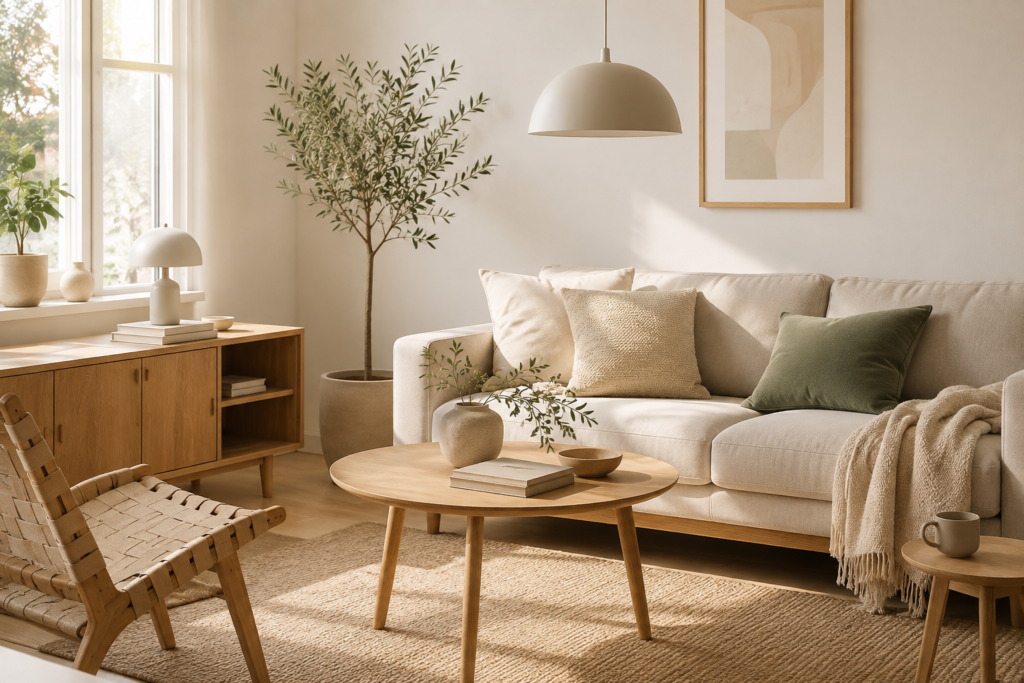
Scandinavian home decor is known for its calm, inviting atmosphere, natural materials, and effortless simplicity. But creating this look doesn’t mean your home needs to feel cold, empty, or overly minimalist.
The Scandinavian design philosophy is about creating a home that feels comfortable, functional, bright, and beautifully lived-in. Think soft neutral colors, light wood, cozy textiles, natural light, simple furniture, and carefully chosen accessories.
The best part? You don’t need a complete renovation to achieve the look.
Whether you’re decorating a small apartment, refreshing your living room, or starting from scratch, these Scandinavian home decor ideas for beginners will help you create a warm and stylish space without making it feel overly designed.
What Is Scandinavian Home Decor?
Scandinavian interior design originated in the Nordic countries, particularly Denmark, Sweden, Norway, Finland, and Iceland.
The style emphasizes simplicity, functionality, natural materials, and comfort. Instead of filling a room with decorative objects, Scandinavian design focuses on choosing fewer pieces that are useful, beautiful, and long-lasting.
A typical Scandinavian-inspired room combines:
- Light and neutral colors
- Natural wood
- Simple furniture
- Soft textiles
- Plenty of natural light
- Greenery
- Minimal visual clutter
- Warm ambient lighting
- Functional storage
The result is a home that feels bright, peaceful, comfortable, and timeless.
1. Start With a Soft Neutral Color Palette
The easiest way to introduce Scandinavian style is through color.
Scandinavian interiors typically use a calm foundation of whites, creams, beige, light gray, taupe, and soft earthy tones.
However, don’t feel that everything has to be pure white. Warm neutrals often create a much more inviting result.
Try this beginner-friendly palette:
Base: Warm white or cream
Secondary: Beige or light gray
Natural accent: Light oak or natural wood
Soft accent: Sage green, dusty blue, or muted brown
Contrast: Small touches of black
Step-by-step:
- Choose one light neutral for your walls.
- Select one or two complementary neutral colors for furniture and textiles.
- Introduce natural wood through tables, shelves, or frames.
- Add one subtle accent color.
- Use darker colors sparingly.
The goal is visual harmony rather than perfect matching.
2. Choose Light Wood Furniture
Natural wood is one of the easiest ways to make Scandinavian interiors feel warm.
Look for furniture made from or inspired by light woods such as oak, ash, or birch.
You don’t need to replace every piece of furniture. A few carefully selected wooden elements can completely change the atmosphere.
Start with:
- A light-wood coffee table
- Wooden dining chairs
- A simple side table
- Floating wood shelves
- Natural wood picture frames
Beginner tip:
If your existing furniture is darker, balance it with lighter accessories and textiles rather than replacing everything at once.
3. Keep Furniture Simple and Functional
Scandinavian design is beautiful because it avoids unnecessary complexity.
Look for furniture with:
- Clean lines
- Simple shapes
- Slim profiles
- Natural materials
- Practical storage
- Comfortable proportions
Instead of choosing furniture simply because it looks attractive, ask:
“What purpose does this piece serve?”
A storage ottoman, for example, can provide seating, act as a footrest, and hide blankets at the same time.
This combination of beauty and functionality is at the heart of Scandinavian design.
4. Make Comfort a Priority
One common misconception about Scandinavian interiors is that they should be extremely minimalist.
In reality, comfort is essential.
Add softness through:
- Chunky knitted throws
- Linen curtains
- Cushions
- Wool or wool-look rugs
- Soft bedding
- Bouclé or textured upholstery
Layering different textures creates warmth without requiring lots of decorative objects.
Simple formula:
Neutral sofa + textured cushions + soft throw + natural rug = Scandinavian comfort
5. Use Hygge to Make the Space Feel Cozy
Scandinavian design is closely associated with the Danish concept of hygge, which focuses on comfort, coziness, and enjoying simple everyday moments.
You can bring this feeling into your home with small changes.
Try:
- Add warm lighting.
- Place a soft throw over your sofa.
- Use candles as occasional accents.
- Add a comfortable reading chair.
- Keep your favorite books nearby.
- Create a relaxing evening corner.
The objective isn’t to make the room look perfect.
It’s to make the room feel like somewhere you genuinely want to spend time.
6. Layer Your Lighting
Lighting can completely transform a Scandinavian-inspired room.
Avoid relying exclusively on one bright ceiling fixture.
Instead, combine several sources of light.
Use three layers:
Ambient lighting: Ceiling light or pendant
Task lighting: Desk lamp or reading lamp
Accent lighting: Table lamp, wall light, or candle
Warm-white bulbs are particularly effective for creating a cozy atmosphere in the evening.
Beginner upgrade:
If you change only one thing, add a warm table or floor lamp to a dark corner.
It can make a surprisingly big difference.
7. Bring Nature Indoors
Plants work beautifully with Scandinavian interiors because they introduce color and organic shapes without overwhelming the room.
You don’t need a jungle.
Choose a few plants and position them intentionally.
Good options include:
- Snake plants
- Pothos
- Fiddle-leaf figs
- Olive trees
- Rubber plants
- Small herbs
Natural branches, dried flowers, woven baskets, and stone accessories can also bring organic elements into the room.
8. Choose Natural Textiles
Scandinavian interiors rely heavily on texture.
Instead of adding lots of decorations, use fabrics to create visual interest.
Look for:
- Linen
- Cotton
- Wool
- Jute
- Woven fabrics
- Bouclé
For example, a cream sofa can look completely different when combined with a chunky knitted throw, linen cushions, and a woven rug.
This is one of the easiest ways to make a neutral room feel rich rather than boring.
9. Keep Decorative Accessories Intentional
Scandinavian design doesn’t mean having no decorations.
It means being selective.
Instead of filling every shelf, choose a small number of objects that complement the room.
Good choices:
- Ceramic vases
- Simple candles
- Minimal artwork
- Wooden bowls
- Books
- Small plants
- Handmade pottery
- Woven baskets
Leave some empty space between objects.
That breathing room is part of the aesthetic.
10. Add Scandinavian-Inspired Artwork
Artwork can introduce personality without disrupting the calm atmosphere.
Look for:
- Abstract artwork
- Botanical prints
- Simple line drawings
- Nature photography
- Minimal geometric designs
Choose artwork that uses colors already present in your room.
For a beginner-friendly arrangement, try one large piece above the sofa instead of covering the entire wall with small frames.
11. Use Rugs to Add Warmth
A Scandinavian-inspired room should feel comfortable underfoot.
A neutral rug can add softness, define a seating area, and make the room feel more finished.
Look for rugs with:
- Cream or beige tones
- Subtle patterns
- Natural textures
- Low-contrast designs
For small apartments, avoid rugs that are too small for the furniture arrangement.
A properly sized rug can make the entire room feel more cohesive.
12. Hide Clutter With Smart Storage
Scandinavian interiors look calm partly because everyday clutter is controlled.
This doesn’t mean you need to own fewer things.
Instead, give everything a place.
Useful storage ideas:
- Woven baskets
- Storage ottomans
- Floating shelves
- Closed cabinets
- Storage beds
- Drawer organizers
- Decorative boxes
A good rule is:
Display the beautiful. Hide the functional.
Keep attractive books, plants, and ceramics visible while storing cables, paperwork, toys, and miscellaneous items out of sight.
13. Create a Scandinavian Bedroom
The bedroom is one of the easiest rooms to transform.
Start with simple bedding in white, cream, beige, or soft gray.
Then layer:
- A duvet
- Two or three pillows
- A textured blanket
- A soft rug
- Warm bedside lighting
- One or two simple decorative elements
Avoid excessive patterns.
The finished space should feel calm enough to encourage relaxation.
14. Don’t Forget the Kitchen
Scandinavian principles work particularly well in kitchens.
Focus on simplicity and functionality.
Try:
- Light wood cutting boards
- Ceramic bowls
- Glass storage containers
- Neutral dishware
- Open wood shelving
- Small plants
- Woven storage baskets
Keep countertops relatively clear and display only items that are useful or beautiful.
A wooden cutting board leaning against the backsplash can become both a practical tool and a decorative element.
15. Add Contrast Without Losing the Calm
A completely neutral room can sometimes feel flat.
The solution is subtle contrast.
Black metal, dark wood, charcoal textiles, or deep green plants can create visual definition.
The key is moderation.
For example:
Cream sofa + light wood table + beige rug + black lamp + green plant
The black lamp provides enough contrast to make the lighter elements stand out.
16. Use Simple Window Treatments
Natural light is extremely important in Scandinavian interiors.
Choose curtains that allow daylight to filter through the room.
Good options include:
- Linen curtains
- Cotton curtains
- Sheer curtains
- Soft neutral curtains
Hang them slightly higher and wider than the window when possible. This can make the window appear larger and the ceiling feel taller.
17. Create a Scandinavian Entryway
Your entryway sets the tone for the rest of your home.
Even a small entrance can feel Scandinavian with a few practical pieces.
Try this simple combination:
Mirror + wooden hooks + narrow bench + woven basket
Keep shoes, bags, and coats organized so the area remains visually calm.
A small mirror can also make a narrow entryway feel brighter and more spacious.
18. Mix Old and New
Your home doesn’t need to look like a furniture showroom.
Scandinavian interiors often work beautifully when modern furniture is combined with vintage or handmade pieces.
Try mixing:
- A modern sofa with a vintage side table
- New artwork with an antique frame
- Modern lighting with handmade ceramics
- Contemporary furniture with woven baskets
This creates character and prevents the room from feeling too uniform.
19. Follow the “Less, But Better” Rule
When you’re unsure whether to add another decorative item, don’t automatically add it.
Step back and look at the room.
Ask yourself:
Does this item improve the room?
If the answer is no, leave the space empty.
Empty space isn’t wasted space in Scandinavian design. It helps the important elements stand out.
20. Build the Look Gradually
You don’t need to redecorate your entire home in one weekend.
In fact, building the style gradually often produces a better result.
Start with these five changes:
Step 1: Choose a warm neutral color palette.
Step 2: Add one natural wood piece.
Step 3: Introduce a textured rug or throw.
Step 4: Improve your lighting.
Step 5: Remove unnecessary visual clutter.
Once those elements are in place, add plants, artwork, baskets, and other accessories gradually.
A Beginner’s Scandinavian Shopping List
If you’re shopping for your first Scandinavian-inspired space, prioritize pieces that combine function, comfort, and timeless design.
| Item | Why You Need It | What to Look For |
|---|---|---|
| Neutral rug | Adds warmth and defines the room | Cream, beige, subtle texture |
| Light-wood coffee table | Creates a natural focal point | Simple clean lines |
| Floor lamp | Adds warm ambient lighting | Minimal silhouette |
| Storage basket | Controls everyday clutter | Woven natural fibers |
| Throw blanket | Adds texture and comfort | Wool or chunky knit |
| Neutral cushions | Creates layered softness | Linen, cotton, textured fabric |
| Ceramic vase | Adds simple decoration | Matte neutral finish |
| Large mirror | Reflects light | Simple frame |
| Indoor plant | Adds natural color | Low-maintenance variety |
| Simple artwork | Adds personality | Neutral or earthy palette |
Frequently Asked Questions
What is Scandinavian home decor?
Scandinavian home decor is an interior design style centered around simplicity, functionality, natural materials, neutral colors, comfort, and thoughtful decoration.
What colors are best for Scandinavian interiors?
Warm white, cream, beige, light gray, taupe, muted green, soft blue, and natural wood tones are excellent choices.
Does Scandinavian design have to be minimalist?
No. Scandinavian design can be cozy and layered. The key is avoiding unnecessary clutter and choosing functional pieces carefully.
How can I make my home Scandinavian on a budget?
Start with inexpensive changes such as neutral cushions, textured throws, plants, warm lighting, woven baskets, and simple artwork. You don’t need to replace all your furniture.
What type of furniture works best with Scandinavian decor?
Choose furniture with simple silhouettes, clean lines, comfortable proportions, and natural materials. Multifunctional furniture is especially useful in smaller homes.
How do I make Scandinavian decor feel warmer?
Use warm lighting, natural wood, layered textiles, rugs, plants, candles, and earthy accent colors. These elements prevent neutral interiors from feeling cold.
Can Scandinavian decor work in a small apartment?
Absolutely. The style is particularly effective in small spaces because it emphasizes functionality, visual simplicity, natural light, and smart storage.
Final Verdict
Scandinavian home decor is more than a decorating trend. It’s a practical approach to creating a home that feels calm, comfortable, functional, and timeless.
You don’t need expensive furniture or a complete makeover to achieve the look.
Start with a warm neutral palette, introduce natural wood, add soft textures, improve your lighting, and remove unnecessary clutter. Then build personality through plants, artwork, ceramics, and other carefully selected pieces.
The secret is to resist the temptation to decorate everything.
Choose fewer pieces, make them count, and leave enough breathing room for your home to feel relaxed.
Simple doesn’t have to mean boring. Scandinavian design proves that a home can be minimal, warm, practical, and beautiful at the same time.