
Bringing plants into your home is one of the easiest ways to add color, texture, and personality to your interior. But if your rooms don’t receive much natural sunlight, choosing the right plant can be challenging.
The good news is that you don’t need floor-to-ceiling windows to enjoy beautiful houseplants. Many popular indoor plants can tolerate low-light conditions and are relatively forgiving when it comes to everyday care.
However, “low light” doesn’t mean “no light.” Even shade-tolerant plants generally need some indirect natural or artificial light to remain healthy. Before buying, consider where the plant will live, how much light reaches the area, how often you can water it, and how much space you have.
In this guide, we’ve selected 10 of the best indoor plants for low-light homes, from nearly effortless options for beginners to attractive plants that can become a focal point in your living room.
Comparison Table: Best Low-Light Indoor Plants
| Plant | Best For | Light Level | Watering | Care Level | Growth Habit | Pet-Friendly | Best Room |
|---|---|---|---|---|---|---|---|
| Snake Plant | Best Overall | Low–Bright Indirect | Low | Very Easy | Upright | No | Bedroom |
| ZZ Plant | Beginners | Low–Medium | Low | Very Easy | Upright/Bushy | No | Office |
| Pothos | Trailing Greenery | Low–Bright Indirect | Moderate | Very Easy | Trailing | No | Living Room |
| Cast Iron Plant | Very Low Light | Low–Medium | Low–Moderate | Easy | Upright/Bushy | Yes | Hallway |
| Chinese Evergreen | Colorful Foliage | Low–Medium | Moderate | Easy | Upright/Bushy | No | Living Room |
| Parlor Palm | Tropical Look | Low–Medium | Moderate | Easy | Upright/Clumping | Yes | Living Room |
| Heartleaf Philoden-dron | Shelves & Hanging Pots | Low–Medium | Moderate | Easy | Trailing | No | Bedroom |
| Dracaena | Tall Corners | Low–Bright Indirect | Low–Moderate | Easy | Upright | No | Living Room |
| Peace Lily | Flowering Plants | Low–Medium | Moderate–High | Moderate | Upright/Bushy | No | Bathroom |
| Lucky Bamboo | Small Spaces | Low–Medium | Moderate | Easy | Upright | No | Office |
Important: “Low light” means limited indirect light—not complete darkness. A plant still needs sufficient light to photosynthesize and grow.
1. Snake Plant — Best Overall Low-Light Plant
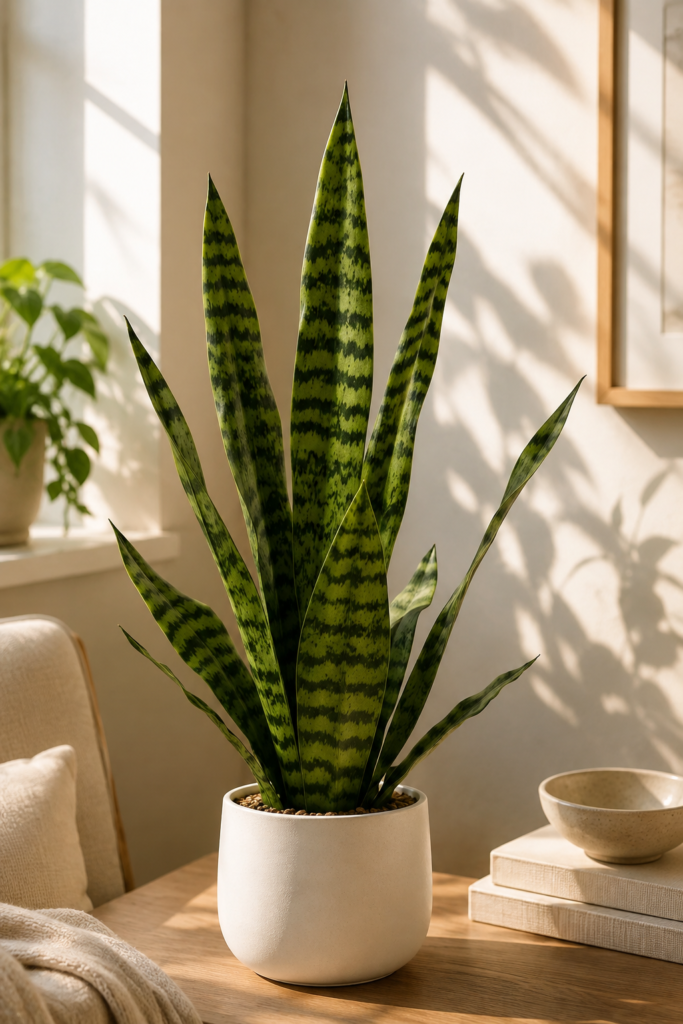
The snake plant is one of the most popular choices for people who want an attractive houseplant without a complicated care routine.
Its tall, upright leaves make it especially useful when floor space is limited. It can also tolerate lower-light conditions better than many other popular houseplants.
Why We Like It
- Very easy to care for
- Tolerates low light
- Doesn’t require frequent watering
- Upright growth saves floor space
- Excellent for beginners
- Many varieties and leaf patterns are available
Best For
Bedrooms, offices, hallways, and low-maintenance homes.
Care Tips
Allow the soil to dry significantly between waterings. Overwatering is one of the most common problems with snake plants.
Consider Before Buying
Snake plants are not considered pet-friendly. If you have cats or dogs that may chew on houseplants, choose a safer alternative.
2. ZZ Plant — Best for Beginners
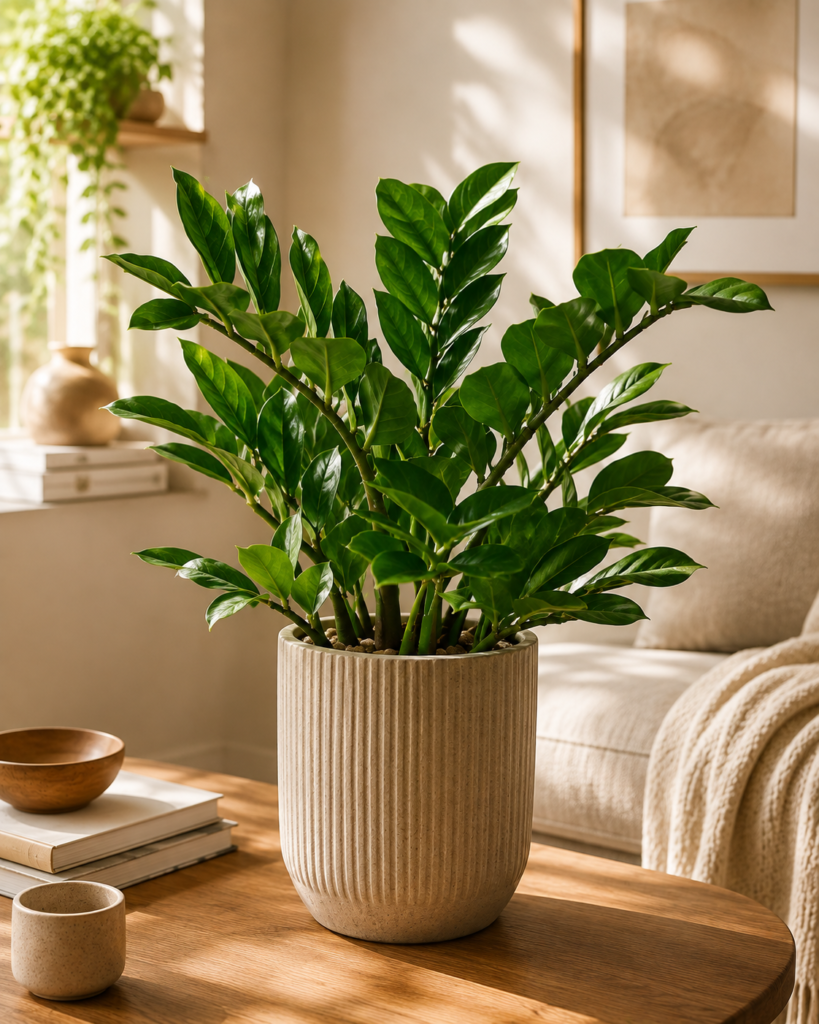
If you frequently forget to water your plants, the ZZ plant may be one of your best choices.
Its thick stems and fleshy leaves allow it to tolerate periods of dryness. It also handles low-light environments well, making it suitable for offices, bedrooms, and corners that don’t receive much direct sunlight.
Why We Like It
- Extremely forgiving
- Low watering requirements
- Tolerates low light
- Attractive glossy leaves
- Great for beginners
Best For
Busy homeowners, offices, and first-time plant owners.
Care Tips
Let the potting mix dry between waterings and make sure the container has drainage.
Consider Before Buying
ZZ plants are not considered pet-friendly, so keep them away from pets that may nibble on the leaves.
3. Pothos — Best Trailing Plant
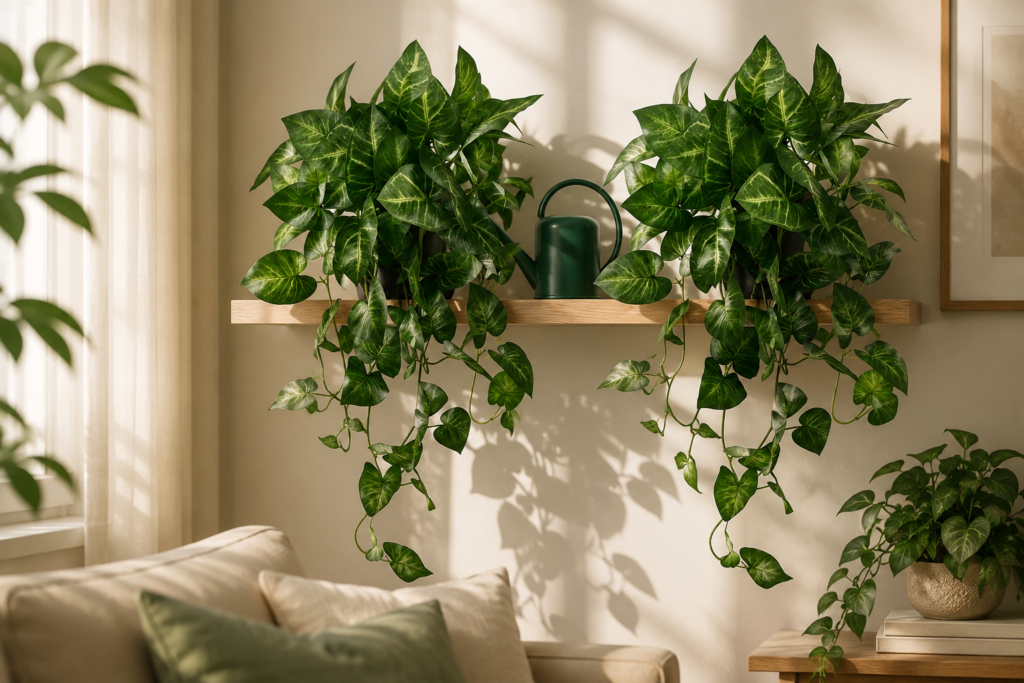
Pothos is an excellent option if you want your plant to add vertical or cascading greenery.
Instead of growing primarily upward, its vines can trail from shelves, bookcases, plant stands, or hanging baskets.
Why We Like It
- Easy to grow
- Tolerates lower light
- Attractive trailing growth
- Easy to propagate
- Available in several varieties
Best For
Shelves, hanging planters, bookcases, and living rooms.
Care Tips
Allow the upper portion of the soil to dry before watering again. Trim long vines when necessary to encourage a fuller appearance.
Consider Before Buying
Variegated varieties may require more light to maintain their coloring than solid-green varieties.
4. Cast Iron Plant — Best for Very Low-Light Areas
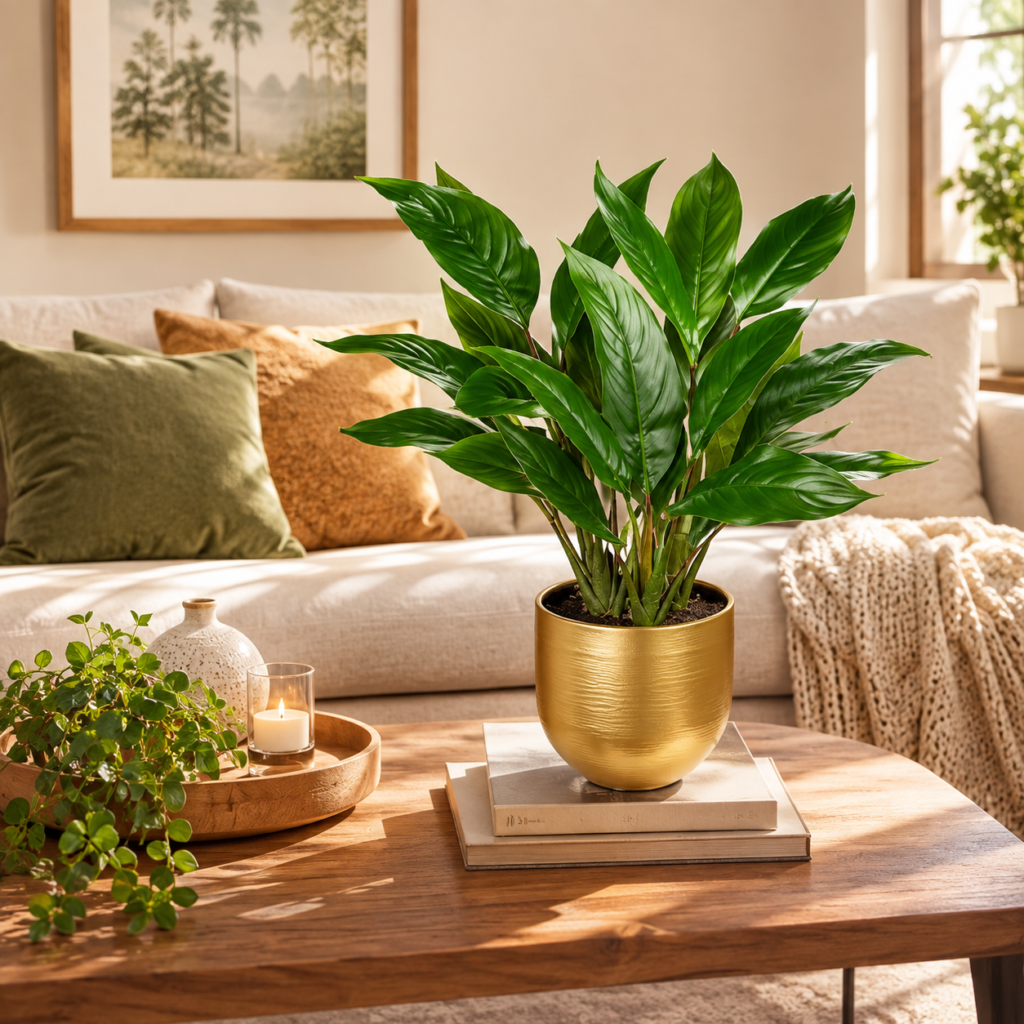
The cast iron plant has earned its name because of its reputation for toughness.
It can tolerate lower light and less-than-perfect conditions better than many decorative houseplants, making it a practical choice for darker rooms.
Why We Like It
- Highly tolerant
- Suitable for low-light rooms
- Relatively low maintenance
- Attractive broad leaves
- Pet-friendly
Best For
Hallways, darker corners, offices, and homes with limited natural light.
Care Tips
Water when the soil begins to dry and avoid keeping the roots constantly wet.
5. Chinese Evergreen — Best for Color and Texture
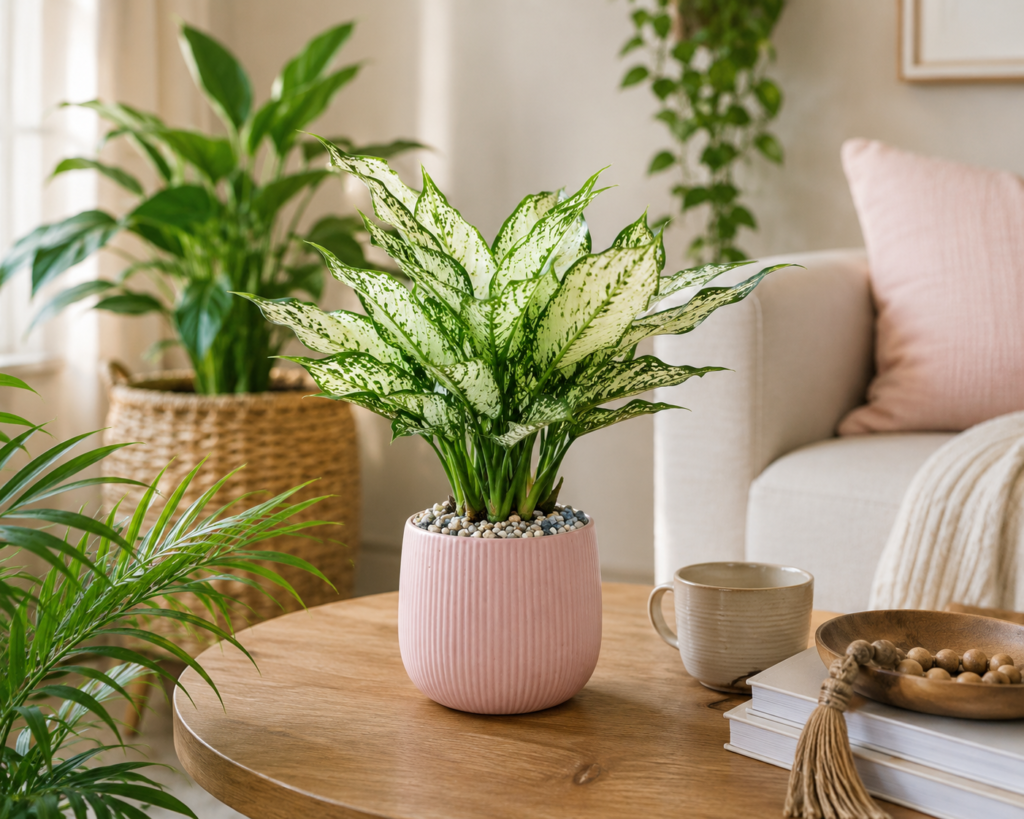
If you want more visual interest than a simple green plant provides, consider a Chinese evergreen.
Depending on the variety, its leaves can feature different shades of green, silver, cream, or other decorative patterns.
Why We Like It
- Attractive foliage
- Tolerates low to moderate light
- Available in many varieties
- Compact enough for tables and stands
- Relatively easy to maintain
Best For
Living rooms, bedrooms, and decorative plant stands.
Care Tips
Keep the soil lightly moist but avoid letting the plant sit in standing water.
Consider Before Buying
Chinese evergreen plants are not considered pet-friendly.
6. Parlor Palm — Best Tropical Look
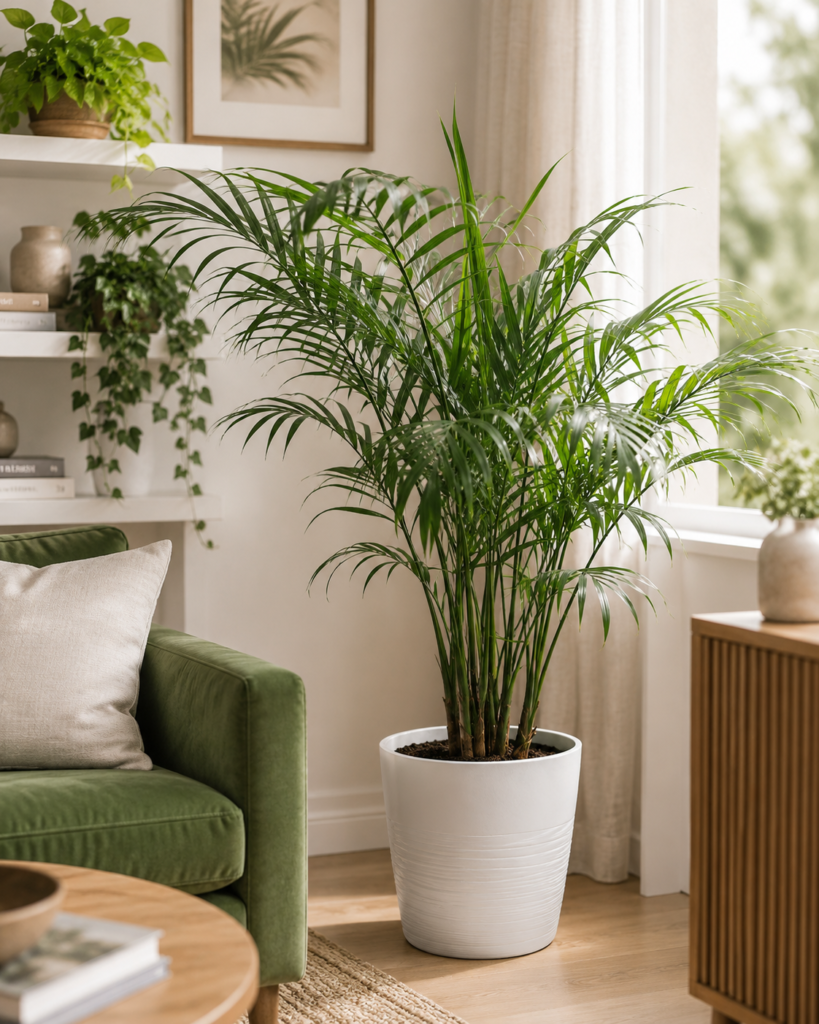
If you want to create a softer, more tropical atmosphere, the parlor palm is worth considering.
Its delicate fronds add movement and texture without requiring the intense sunlight that many tropical plants prefer.
Why We Like It
- Elegant tropical appearance
- Tolerates lower light
- Pet-friendly
- Works well in living rooms
- Adds height and texture
Best For
Living rooms, bedrooms, and relaxed interiors.
Care Tips
Keep it away from harsh direct sunlight and avoid allowing the soil to remain constantly saturated.
7. Heartleaf Philodendron — Best for Shelves
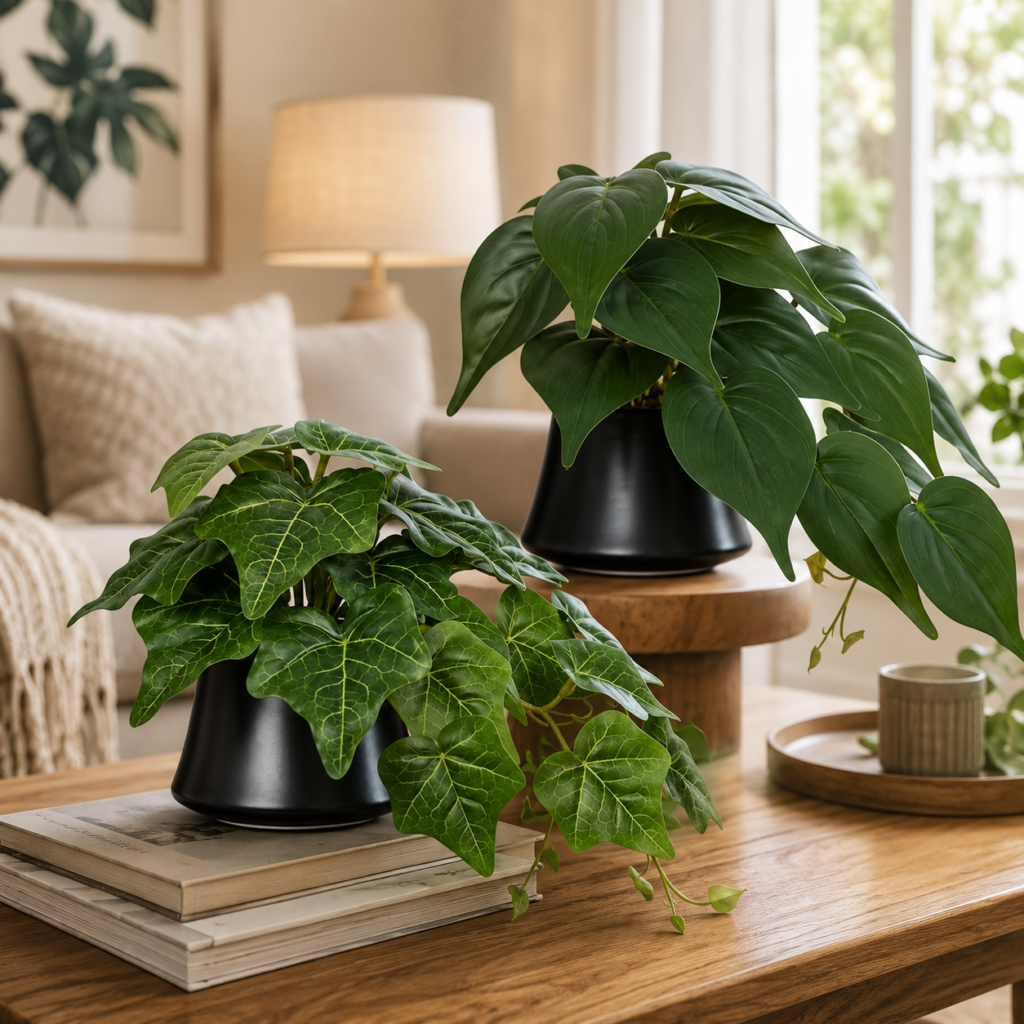
The heartleaf philodendron is another excellent trailing plant for low-light interiors.
Its heart-shaped leaves and cascading stems can soften shelves and furniture while adding a natural element to your décor.
Why We Like It
- Attractive heart-shaped leaves
- Easy to grow
- Trailing growth
- Works well in low to moderate light
- Easy to propagate
Best For
Bookshelves, hanging baskets, bedrooms, and small living rooms.
Care Tips
Water when the top portion of the soil begins to dry and trim the vines if they become too long.
Consider Before Buying
Philodendrons are not considered pet-friendly.
8. Dracaena — Best Tall Low-Light Plant
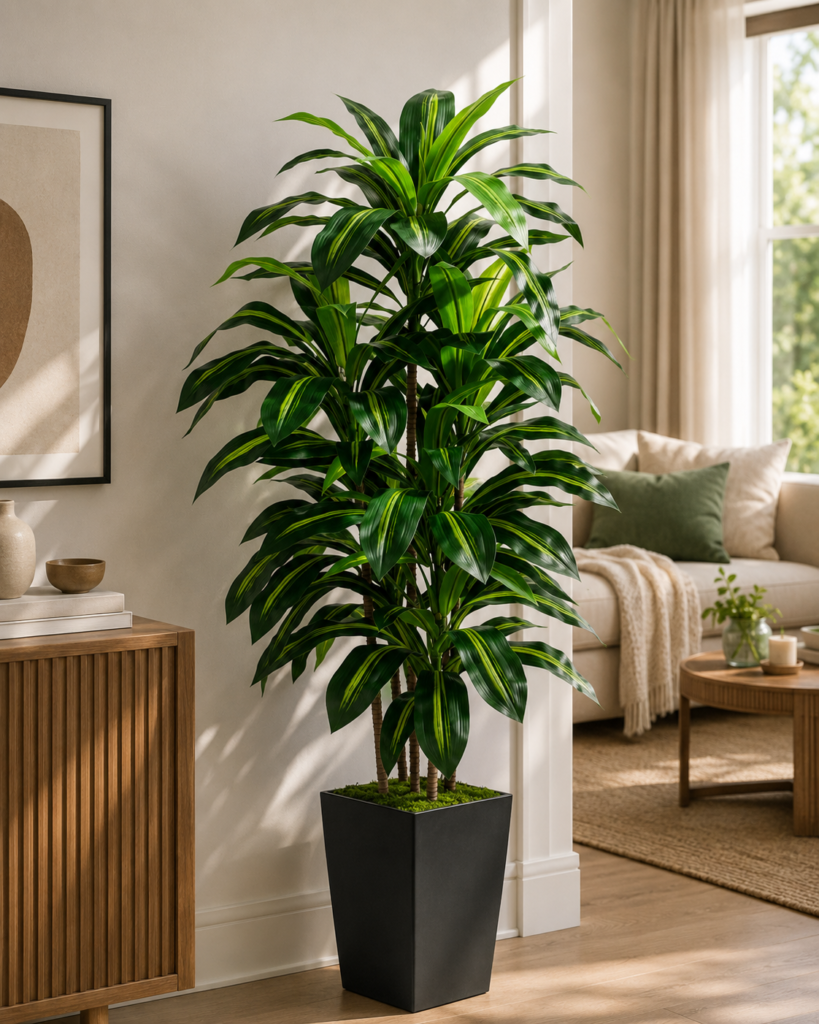
If you want to fill an empty corner, a dracaena can provide the height you’re looking for.
Its upright growth makes it particularly useful in living rooms and larger spaces where a small tabletop plant might get lost.
Why We Like It
- Adds height
- Attractive architectural form
- Tolerates lower light
- Available in different varieties
- Works well as a statement plant
Best For
Empty corners, living rooms, and larger spaces.
Care Tips
Avoid overwatering and choose a pot with adequate drainage.
Consider Before Buying
Many dracaena varieties are not considered pet-friendly.
9. Peace Lily — Best for Flowers
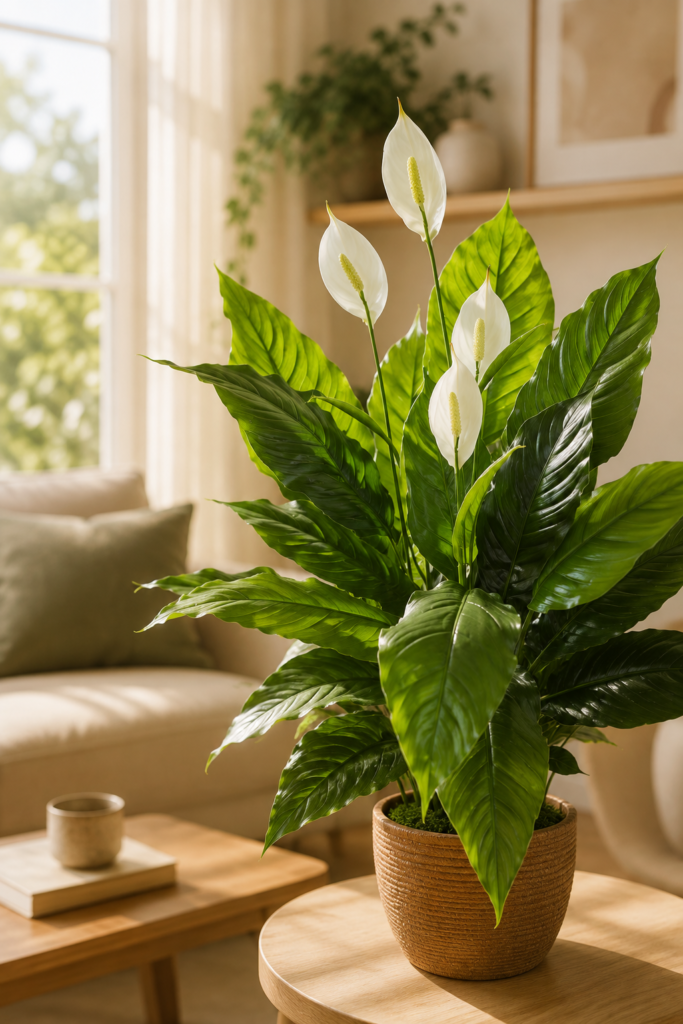
Most low-light houseplants are chosen primarily for their foliage, but the peace lily can add flowers to the mix.
Its dark green leaves and white blooms can create a clean, elegant appearance.
Why We Like It
- Attractive foliage
- Can tolerate lower light
- Produces distinctive white flowers
- Elegant appearance
- Suitable for bathrooms and bedrooms
Best For
People who want a flowering houseplant.
Care Tips
Peace lilies generally prefer more consistent moisture than drought-tolerant plants. Check the soil regularly and avoid allowing the plant to remain waterlogged.
Consider Before Buying
Peace lilies are not considered pet-friendly.
10. Lucky Bamboo — Best for Small Spaces
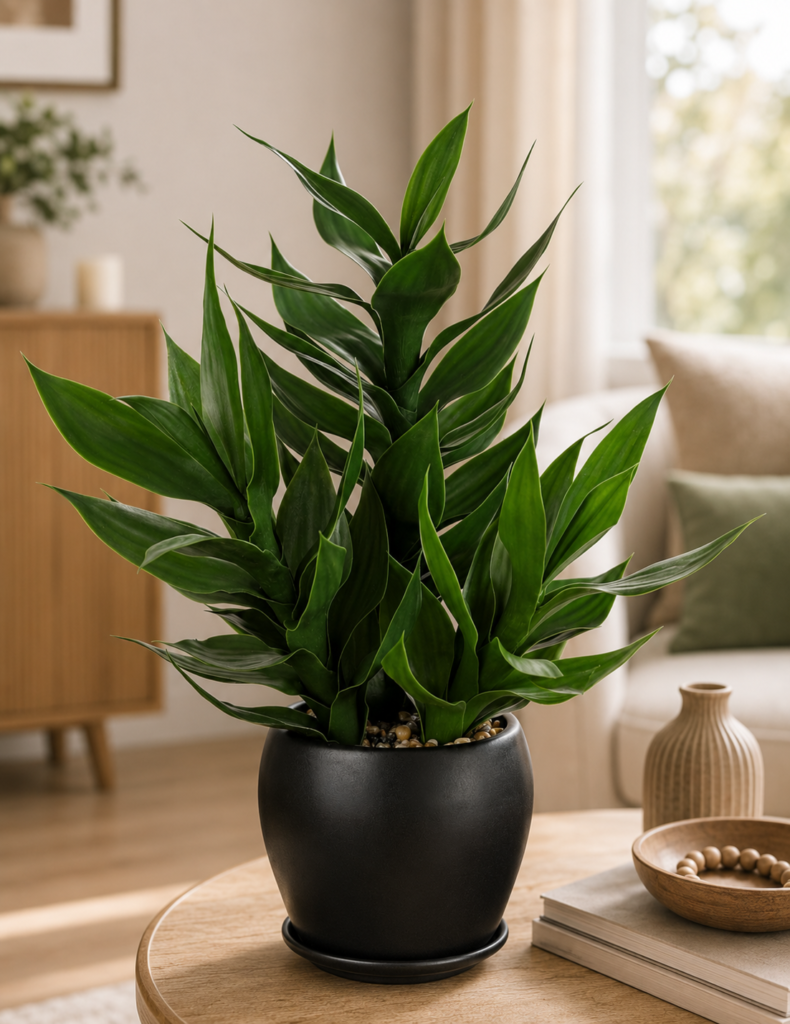
Lucky bamboo is a popular choice for desks, shelves, bathrooms, and other compact areas.
Its upright form takes up very little space, and it can grow in water or suitable potting media depending on the setup.
Why We Like It
- Compact
- Easy to display
- Works well in low to moderate light
- Suitable for desks and shelves
- Distinctive appearance
Best For
Small apartments, offices, desks, and shelves.
Consider Before Buying
Lucky bamboo is a Dracaena species rather than a true bamboo and is not considered pet-friendly.
How to Choose the Best Indoor Plant for a Low-Light Home
Finding the right plant isn’t only about choosing the most shade-tolerant species. Follow these steps to match the plant to your space.
Step 1: Assess Your Available Light
Start by observing the room throughout the day.
Ask yourself:
- Does the room have windows?
- How far is the plant from the window?
- Does direct sunlight enter the room?
- Is the light bright, moderate, or very dim?
- Are curtains or blinds blocking most of the light?
A room with filtered daylight is very different from a windowless room.
A Simple Rule
Bright indirect light: Many houseplants can thrive.
Moderate light: Choose adaptable plants.
Low light: Select plants known for shade tolerance.
No natural light: Consider a suitable grow light rather than expecting a plant to survive indefinitely without adequate light.
Step 2: Consider Your Watering Habits
Your lifestyle matters.
If you frequently forget to water plants, choose:
- Snake plant
- ZZ plant
- Cast iron plant
If you enjoy regular plant care, consider:
- Peace lily
- Chinese evergreen
- Parlor palm
Choose a plant that matches your routine rather than one that requires more attention than you’re willing to provide.
Step 3: Measure Your Available Space
Before buying, decide where the plant will go.
Small Spaces
Choose:
- Lucky bamboo
- Small pothos
- Heartleaf philodendron
- Small Chinese evergreen
Medium Spaces
Choose:
- Parlor palm
- Chinese evergreen
- Peace lily
Large Spaces
Choose:
- Snake plant
- Dracaena
- Large parlor palm
Remember to consider the plant’s mature size—not only its size when you purchase it.
Step 4: Match the Plant to Your Décor
Plants can become part of your interior design.
Minimalist
Try:
- Snake plant
- ZZ plant
- Dracaena
Scandinavian
Try:
- Pothos
- Parlor palm
- Cast iron plant
Bohemian
Try:
- Pothos
- Philodendron
- Parlor palm
Modern
Try:
- Snake plant
- ZZ plant
- Chinese evergreen
Step 5: Check Pet Safety
If you have cats or dogs, pet safety should be part of your plant-shopping checklist.
Some popular houseplants—including snake plants, pothos, ZZ plants, philodendrons, peace lilies, and dracaena—are not considered pet-safe.
Safer options from this list include:
- Cast iron plant
- Parlor palm
Always verify the exact plant species and variety before bringing it into a pet-accessible area.
How to Care for Low-Light Indoor Plants
1. Don’t Overwater
Low-light plants often use water more slowly than plants growing in brighter conditions.
Watering on a fixed schedule can therefore lead to excess moisture.
Instead, check the soil before watering.
2. Use Pots With Drainage
Drainage holes allow excess water to escape and help reduce the risk of waterlogged roots.
3. Rotate Your Plants
Rotate containers occasionally so different sides of the plant receive available light.
This can encourage more balanced growth.
4. Clean the Leaves
Dust can accumulate on large leaves.
Gently wipe leaves with a clean, damp cloth when needed.
5. Watch for Changes
Pay attention to:
- Yellow leaves
- Brown edges
- Drooping
- Slow growth
- Pale foliage
- Soft stems
- Persistent wet soil
These signs can indicate that the plant’s light, water, or growing conditions need adjustment.
How to Make a Dark Room Better for Plants
If your home has very little natural light, you don’t necessarily have to give up on indoor plants.
Add a Grow Light
A suitable LED grow light can supplement natural light and make it possible to keep plants in darker areas.
Move Plants Temporarily
If one area is especially dark, rotate plants between brighter and darker areas when practical.
Use Reflective Surfaces
Light-colored walls and nearby reflective surfaces can help distribute available light more effectively.
Avoid Completely Dark Corners
A decorative plant may look beautiful in a windowless corner, but aesthetics should not come at the expense of the plant’s long-term health.
Common Low-Light Plant Mistakes to Avoid
Mistake 1: Assuming Low Light Means No Light
Even shade-tolerant plants need light.
Mistake 2: Watering Too Often
This is one of the most common problems with indoor plants.
Always check the soil before watering.
Mistake 3: Choosing Based Only on Appearance
A plant may look perfect in your room but struggle if the environmental conditions don’t suit it.
Mistake 4: Ignoring Mature Size
A small plant at the garden center can eventually become much larger.
Mistake 5: Forgetting About Drainage
Decorative pots without drainage can make overwatering easier.
Mistake 6: Ignoring Pet Safety
Always check whether a plant is suitable for your household before buying it.
How to Style Indoor Plants in a Low-Light Home
You can use plants as decorative elements rather than simply placing them randomly around your home.
Create a Reading Corner
Place a tall snake plant or parlor palm beside your reading chair.
Style a Bookshelf
Use trailing pothos or heartleaf philodendron to soften the edges.
Brighten a Home Office
Place a ZZ plant or Chinese evergreen on your desk or nearby shelf.
Fill an Empty Corner
A tall dracaena or large snake plant can add height and visual balance.
Create a Bathroom Accent
A suitable peace lily or cast iron plant can add greenery to a bathroom with appropriate indirect light and humidity.
Frequently Asked Questions
What is the best indoor plant for a low-light home?
The snake plant and ZZ plant are two of the best choices for beginners because they tolerate lower light and generally require relatively little maintenance.
Can indoor plants survive in very low light?
Some plants can tolerate very low-light conditions, but low light does not mean complete darkness. If a room receives virtually no natural light, a grow light may be necessary.
How often should I water low-light plants?
There is no universal schedule. Check the soil and consider the plant species, pot size, humidity, and temperature. Low-light plants may need watering less frequently because they use water more slowly.
What is the easiest low-light houseplant?
ZZ plants and snake plants are among the easiest options for beginners because they tolerate periods of dryness and lower-light conditions.
Which low-light plants are safe for pets?
Pet-friendly options include the cast iron plant and parlor palm. Always verify the exact species before purchasing because common names can sometimes refer to different plants.
Can I put a plant in a windowless room?
A plant cannot thrive indefinitely without light. If the room has no natural light, use an appropriate grow light and provide the plant with a suitable light cycle.
Are low-light plants suitable for bedrooms?
Yes. Snake plants, parlor palms, and other suitable houseplants can work well in bedrooms as long as their lighting, watering, and temperature requirements are met.
Final Verdict
The best indoor plants for low-light homes combine attractive foliage with the ability to tolerate less-than-ideal lighting.
For beginners, the snake plant and ZZ plant are excellent starting points because they are relatively forgiving and don’t demand frequent watering. If you want trailing greenery, pothos and heartleaf philodendron are strong choices. For a tropical appearance, consider the parlor palm, while the cast iron plant is a practical choice for particularly dim areas.
Before buying, remember that low-light tolerance doesn’t mean a plant can live without light. Assess your room first, choose a plant that matches your care routine, use containers with drainage, and consider a grow light when natural light is insufficient.
With the right plant in the right location, even a darker home can feel greener, warmer, and more inviting.
Low-Light Plant Buying Checklist
- Assess the amount of natural light in the room
- Choose a plant suited to your light level
- Consider how often you can water it
- Check the plant’s mature size
- Measure your available space
- Choose a suitable pot with drainage
- Check pet safety if you have animals
- Match the plant to your interior style
- Consider whether you need a grow light
- Avoid overwatering
- Monitor leaves and soil regularly
- Rotate plants occasionally for balanced growth