
For coffee lovers, making espresso at home can transform the daily coffee routine. Instead of visiting a café every morning, the right espresso machine lets you prepare rich espresso, creamy lattes, cappuccinos, flat whites, and other coffee-shop favorites from your own kitchen.
However, choosing an espresso machine can be confusing. Some machines are designed for beginners and automate much of the process, while others give experienced home baristas greater control over grinding, dosing, tamping, extraction, and milk steaming.
The biggest mistake is assuming that the most expensive machine is automatically the best. Your ideal espresso machine depends on your experience level, budget, available counter space, preferred coffee drinks, and willingness to learn.
For this guide, we’ve selected seven strong options across different categories, from compact beginner-friendly machines to traditional machines designed for enthusiasts.
Our Top Picks
Best Overall: Breville Bambino Plus
Best All-in-One: Breville Barista Express
Best for Beginners: De’Longhi La Specialista Arte
Best Traditional: Gaggia Classic Evo Pro
Best for Enthusiasts: Rancilio Silvia
Best Smart Option: Breville Barista Touch Impress
Best Compact: De’Longhi Dedica Arte
Comparison Table: Best Espresso Machines
| Espresso Machine | Best For | Built-In Grinder | Milk System | Portafilter | Heating System | Ease of Use | Best Feature |
|---|---|---|---|---|---|---|---|
| Breville Bambino Plus | Best Overall | No | Automatic steam wand | 54mm | ThermoJet | ⭐⭐⭐⭐⭐ | Fast heat-up & automatic milk texturing |
| Breville Barista Express | Best All-in-One | Yes | Manual steam wand | 54mm | Thermocoil | ⭐⭐⭐⭐ | Integrated grinder |
| De’Longhi La Specialista Arte | Best for Beginners | Yes | Manual steam wand | 51mm | Thermo-block | ⭐⭐⭐⭐⭐ | Assisted grinding & dosing |
| Gaggia Classic Evo Pro | Best Traditional | No | Manual steam wand | 58mm | Single boiler | ⭐⭐⭐ | Traditional espresso experience |
| Rancilio Silvia | Best for Enthusiasts | No | Commercial-style manual wand | 58mm | Single boiler | ⭐⭐⭐ | Durable construction |
| Breville Barista Touch Impress | Best Smart Option | Yes | Automatic/manual | 54mm | ThermoJet | ⭐⭐⭐⭐⭐ | Guided touchscreen workflow |
| De’Longhi Dedica Arte | Best Compact | No | Manual steam wand | 51mm | Thermo-block | ⭐⭐⭐⭐⭐ | Slim design |
Affiliate Disclosure: This post contains affiliate links. We may earn a commission if you make a purchase, at no extra cost to you.
1. Breville Bambino Plus — Best Overall
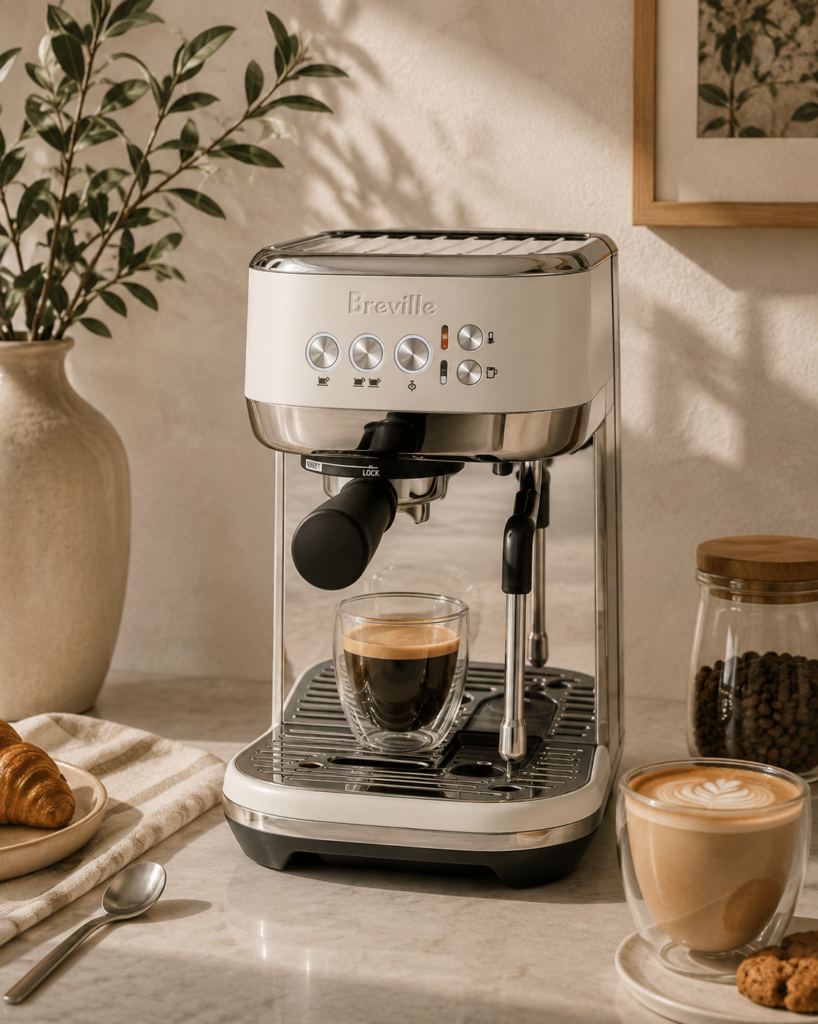
⭐⭐⭐⭐⭐ 4.6/5
The Breville Bambino Plus is an excellent choice for coffee lovers who want high-quality espresso without a long learning curve.
Its compact design makes it particularly attractive for smaller kitchens, while its fast-heating system means you don’t have to wait around for a traditional machine to warm up. Current 2026 reviews continue to highlight its very fast heat-up and automatic milk-texturing system as major advantages.
| Feature | Details |
|---|---|
| Best For | Beginners & milk-based drinks |
| Machine Type | Semi-automatic espresso machine |
| Built-In Grinder | No |
| Portafilter Size | 54mm |
| Heating System | ThermoJet |
| Heat-Up Time | About 3 seconds |
| Pump Pressure | 15-bar pump |
| Pre-Infusion | Yes |
| Milk System | Automatic steam wand |
| Milk Temperature Control | Yes |
| Manual Milk Frothing | Yes |
| Water Tank | 1.9 L |
| Espresso | ⭐⭐⭐⭐⭐ |
| Cappuccino | ⭐⭐⭐⭐⭐ |
| Latte | ⭐⭐⭐⭐⭐ |
| Americano | ⭐⭐⭐⭐ |
| Ease of Use | ⭐⭐⭐⭐⭐ |
| Cleaning | ⭐⭐⭐⭐⭐ |
| Counter Space | Compact |
| Main Advantage | Fast heating and excellent automatic milk texturing |
| Main Drawback | Requires a separate grinder |
Why We Like It
- Very fast heat-up
- Compact footprint
- Automatic milk texturing
- Simple controls
- Good espresso performance
- Suitable for beginners
- Excellent for milk-based drinks
Best For
Beginners who want café-style drinks without mastering every manual step.
Great For
- Espresso
- Americano
- Latte
- Cappuccino
- Flat white
- Macchiato
Consider Before Buying
The Bambino Plus does not include a built-in grinder, so serious espresso preparation requires a separate espresso-capable grinder.
2. Breville Barista Express — Best All-in-One
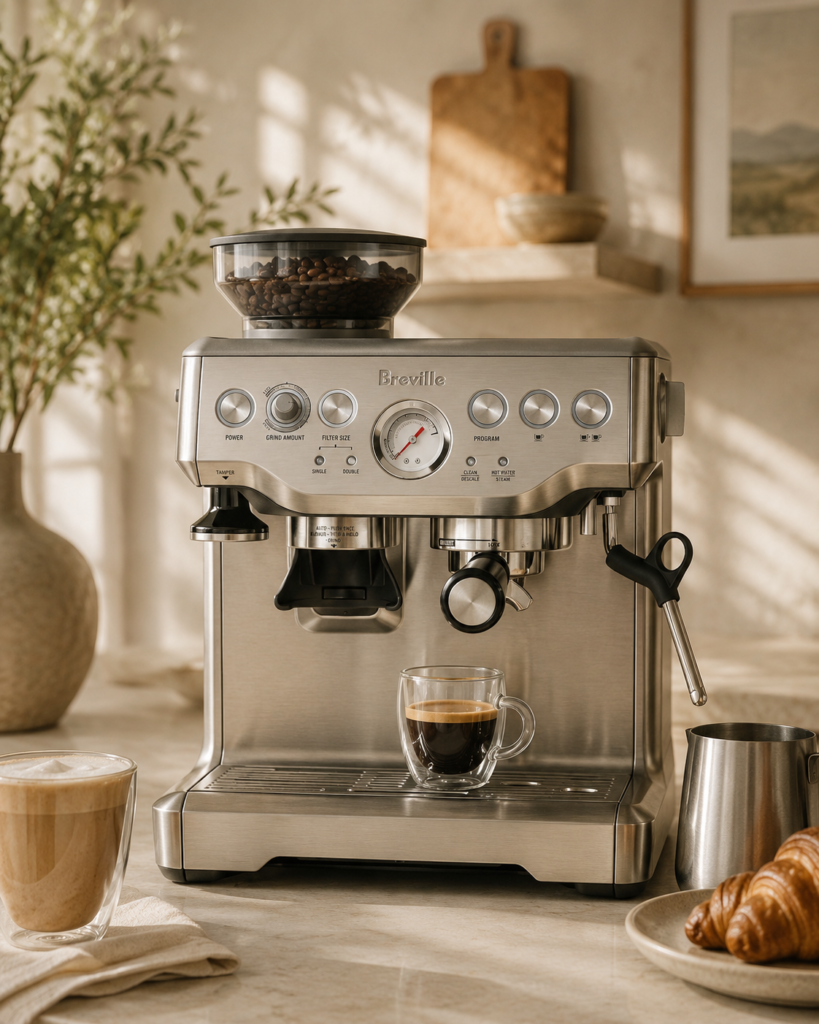
⭐⭐⭐⭐☆ 4.4/5
The Breville Barista Express is one of the most recognizable home espresso machines for people who want to learn the craft while keeping the setup relatively simple.
Its major advantage is the integrated conical burr grinder, which means you don’t need to purchase a separate grinder to get started.
The machine combines grinding, dosing, tamping, extraction, and manual milk steaming in one setup. Current 2026 comparisons continue to recommend it as a strong all-in-one option for enthusiasts and beginners.
| Feature | Details |
|---|---|
| Best For | All-in-one espresso setup |
| Machine Type | Semi-automatic |
| Built-In Grinder | Yes |
| Grinder Type | Conical burr grinder |
| Grind Settings | 16 settings |
| Portafilter Size | 54mm |
| Heating System | Thermocoil |
| Pump Pressure | 15-bar pump |
| Pre-Infusion | Yes |
| Pressure Gauge | Yes |
| Milk System | Manual steam wand |
| Milk Frothing | Manual |
| Water Tank | 2 L |
| Bean Hopper | 250 g |
| Espresso | ⭐⭐⭐⭐⭐ |
| Cappuccino | ⭐⭐⭐⭐⭐ |
| Latte | ⭐⭐⭐⭐⭐ |
| Americano | ⭐⭐⭐⭐⭐ |
| Ease of Use | ⭐⭐⭐⭐ |
| Cleaning | ⭐⭐⭐⭐ |
| Counter Space | Medium |
| Main Advantage | Combines grinder and espresso machine |
| Main Drawback | Learning curve for beginners |
Why We Like It
- Built-in grinder
- Manual steam wand
- Integrated dosing
- Large water tank
- Pressure gauge
- Adjustable grind settings
- Strong learning platform
Best For
Coffee lovers who want to learn traditional espresso preparation without buying a separate grinder.
Consider Before Buying
The integrated grinder saves space and money, but dedicated grinders can offer more flexibility as your espresso skills develop.
3. De’Longhi La Specialista Arte — Best for Beginners
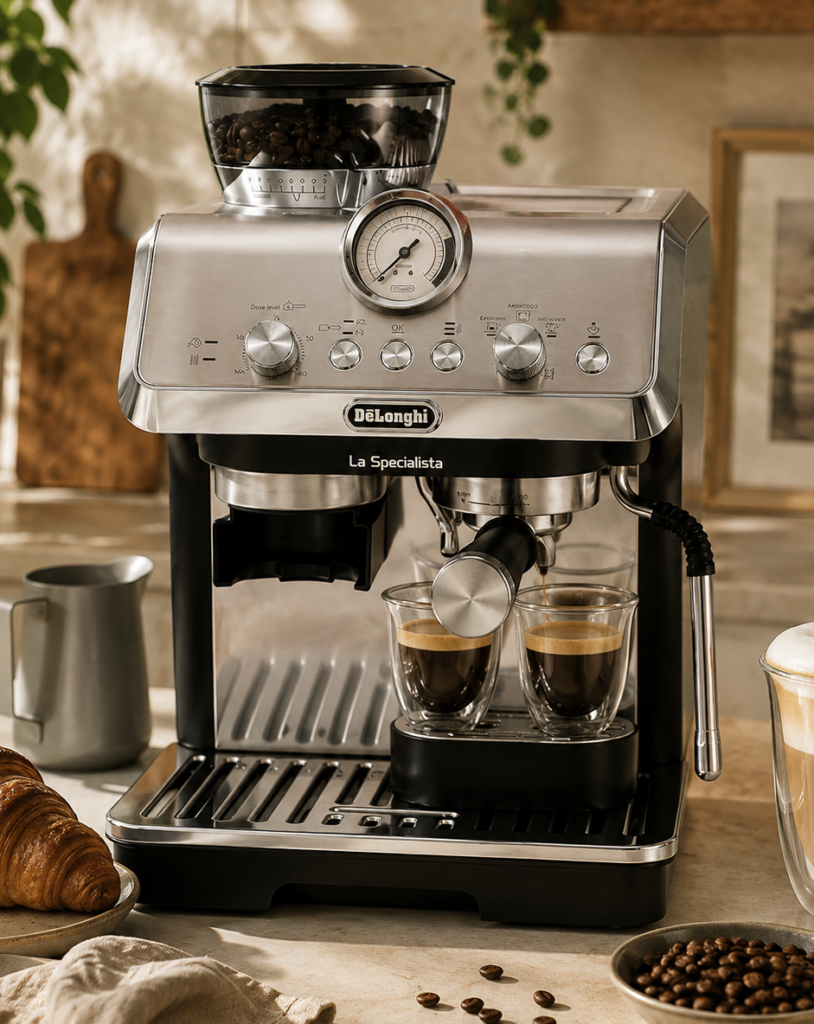
⭐⭐⭐☆ 3.1/5
The De’Longhi La Specialista Arte combines a built-in grinder with guided controls designed to make manual espresso preparation less intimidating.
It offers more hands-on control than a fully automatic machine while helping simplify some of the most difficult steps for beginners.
| Feature | Details |
|---|---|
| Best For | Beginner home baristas |
| Machine Type | Semi-automatic |
| Built-In Grinder | Yes |
| Grinder Settings | 8 settings |
| Portafilter Size | 51mm |
| Heating System | Thermoblock |
| Pump Pressure | 15-bar pump |
| Pre-Infusion | Yes |
| Pressure Gauge | Yes |
| Milk System | Manual steam wand |
| Milk Frothing | Manual |
| Water Tank | 1.7 L |
| Bean Hopper | Approximately 250 g |
| Espresso | ⭐⭐⭐⭐½ |
| Cappuccino | ⭐⭐⭐⭐½ |
| Latte | ⭐⭐⭐⭐½ |
| Americano | ⭐⭐⭐⭐⭐ |
| Ease of Use | ⭐⭐⭐⭐⭐ |
| Cleaning | ⭐⭐⭐⭐ |
| Counter Space | Medium |
| Main Advantage | Guided workflow with built-in grinder |
| Main Drawback | Less upgrade flexibility than separate grinder setup |
Why We Like It
- Built-in grinder
- Assisted dosing
- Multiple grind settings
- Manual milk frother
- Compact design
- Beginner-friendly workflow
Best For
New home baristas who want to learn espresso without starting with a completely manual setup.
Great For
- Espresso
- Cappuccino
- Latte
- Americano
- Flat white
Consider Before Buying
Because the grinder and machine are integrated, upgrading one component independently later isn’t as straightforward as it is with a separate grinder-and-machine setup.
4. Gaggia Classic Evo Pro — Best Traditional Option
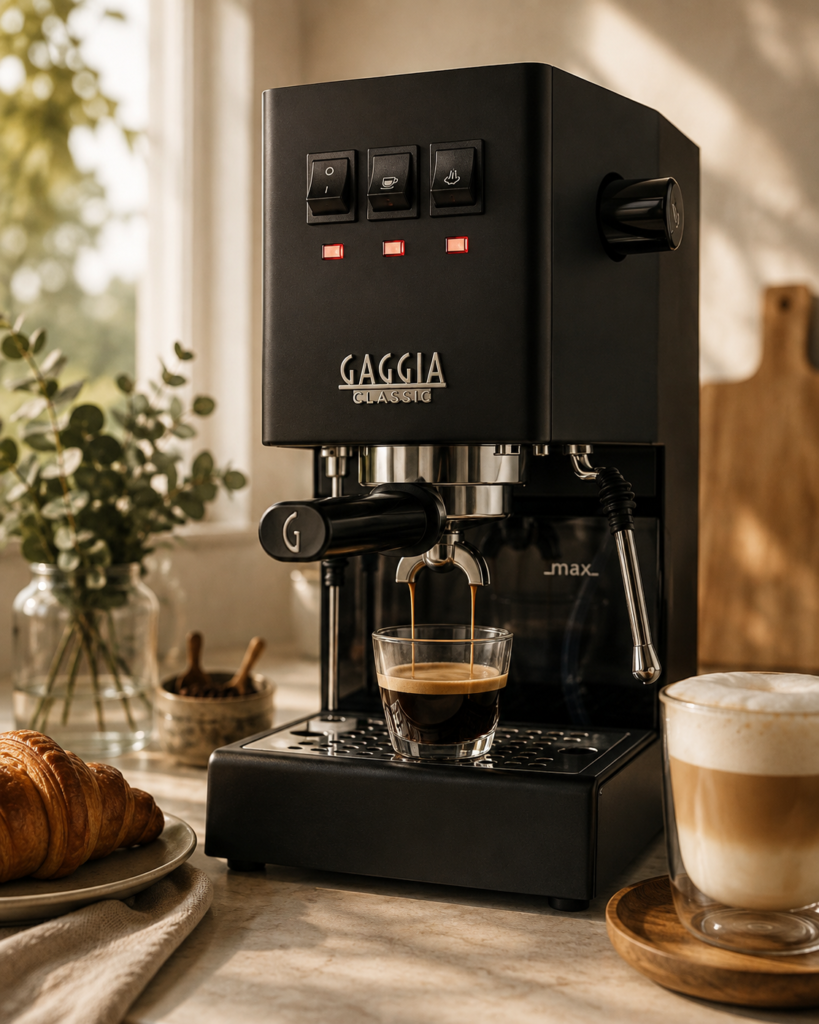
⭐⭐⭐⭐☆ 4.4/5
The Gaggia Classic Evo Pro is aimed at coffee lovers who want a more traditional espresso-making experience.
Unlike machines that automate much of the process, the Gaggia encourages you to learn the fundamentals yourself.
That makes it appealing to people who enjoy experimenting with grind size, dose, extraction time, and milk texture.
| Feature | Details |
|---|---|
| Best For | Traditional espresso preparation |
| Machine Type | Semi-automatic |
| Built-In Grinder | No |
| Portafilter Size | 58mm |
| Heating System | Single boiler |
| Pump Pressure | 15-bar pump |
| Pre-Infusion | Traditional/manual workflow |
| Pressure Gauge | No standard gauge |
| Milk System | Commercial-style steam wand |
| Milk Frothing | Manual |
| Water Tank | About 2.1 L |
| Espresso | ⭐⭐⭐⭐⭐ |
| Cappuccino | ⭐⭐⭐⭐½ |
| Latte | ⭐⭐⭐⭐½ |
| Americano | ⭐⭐⭐⭐ |
| Ease of Use | ⭐⭐⭐ |
| Cleaning | ⭐⭐⭐⭐ |
| Counter Space | Compact |
| Main Advantage | Traditional 58mm espresso setup |
| Main Drawback | Requires separate grinder and more practice |
Why We Like It
- Traditional design
- 58mm commercial-style portafilter
- Manual steam wand
- Strong enthusiast community
- Compact footprint
- Upgrade potential
Best For
Home baristas who want to develop real espresso-making skills.
Consider Before Buying
You’ll need a separate grinder, and there’s a steeper learning curve than with more automated machines.
5. Rancilio Silvia — Best for Espresso Enthusiasts
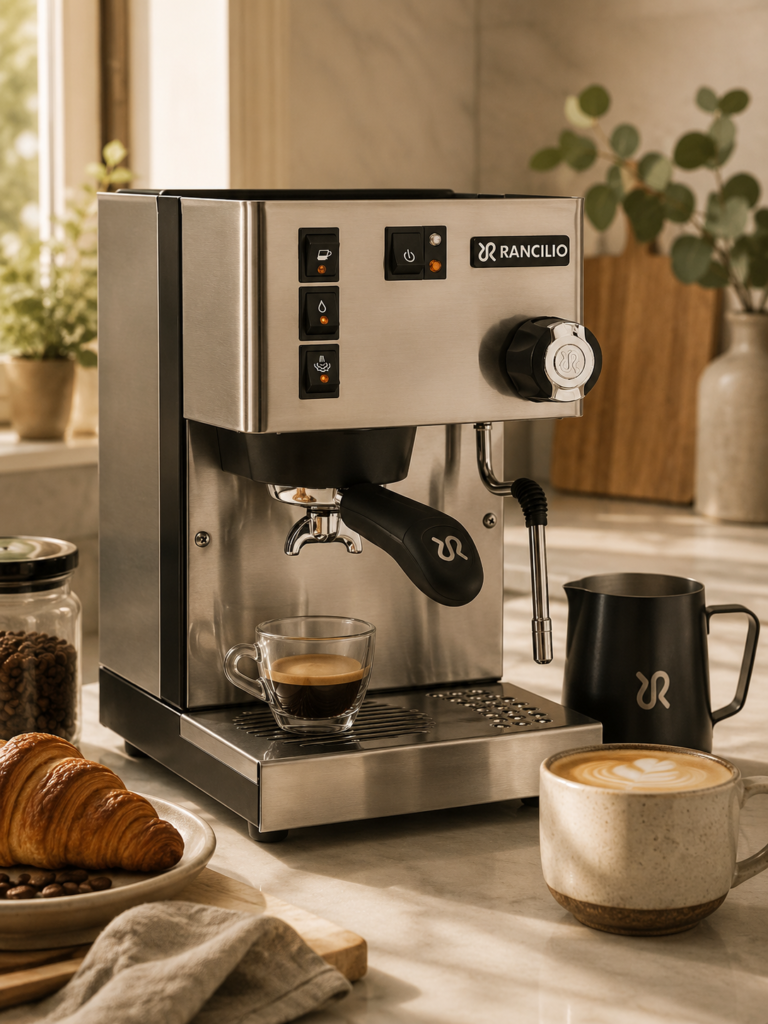
⭐⭐⭐⭐☆ 4.2/5
The Rancilio Silvia is designed for coffee lovers who prioritize traditional espresso preparation and robust construction.
Its commercial-style components and manual controls make it particularly attractive to experienced users who want greater control over the brewing process.
| Feature | Details |
|---|---|
| Best For | Experienced home baristas |
| Machine Type | Semi-automatic |
| Built-In Grinder | No |
| Portafilter Size | 58mm |
| Heating System | Single boiler |
| Pump Pressure | 15-bar pump |
| Pre-Infusion | Manual |
| Pressure Gauge | Model-dependent |
| Milk System | Commercial-style steam wand |
| Milk Frothing | Manual |
| Water Tank | About 2 L |
| Espresso | ⭐⭐⭐⭐⭐ |
| Cappuccino | ⭐⭐⭐⭐⭐ |
| Latte | ⭐⭐⭐⭐⭐ |
| Americano | ⭐⭐⭐⭐ |
| Ease of Use | ⭐⭐⭐ |
| Cleaning | ⭐⭐⭐⭐ |
| Counter Space | Medium |
| Main Advantage | Durable traditional design |
| Main Drawback | Steeper learning curve |
Why We Like It
- Commercial-style 58mm portafilter
- Manual steam wand
- Durable construction
- Traditional espresso workflow
- Strong enthusiast following
- Excellent upgrade potential
Best For
Experienced home baristas who want a traditional machine they can grow into.
Consider Before Buying
The Silvia has a steeper learning curve and doesn’t include a grinder. A good espresso grinder is an important additional investment.
6. Breville Barista Touch Impress — Best Smart Option
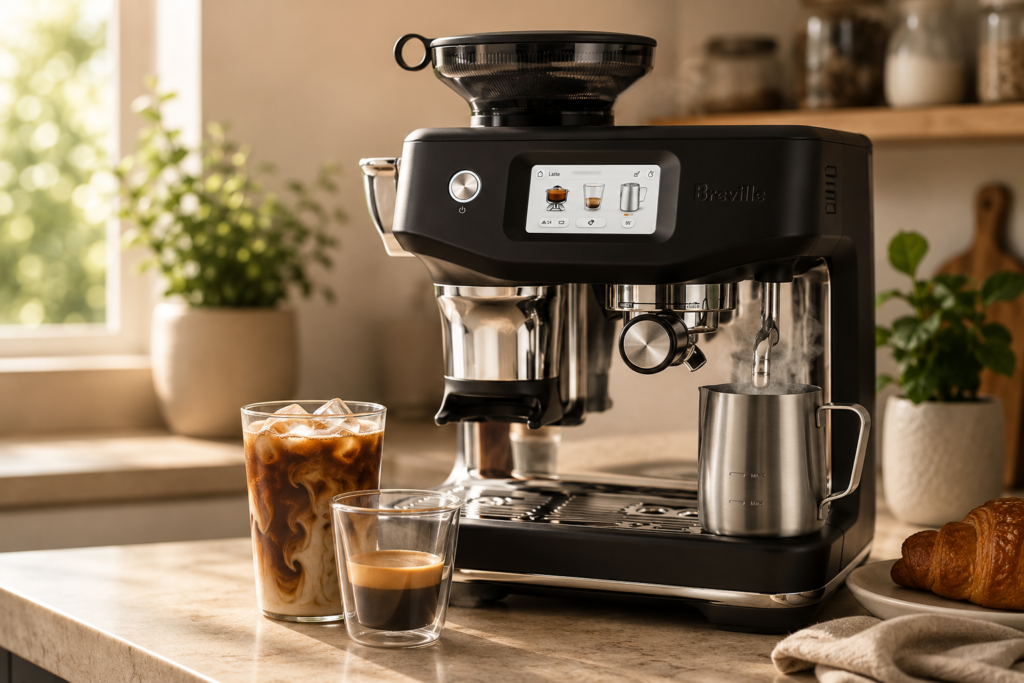
⭐⭐⭐⭐ 3.7/5
If you want traditional espresso with more guidance, the Breville Barista Touch Impress offers a technology-focused approach.
Its touchscreen interface helps guide users through the preparation process, making it easier to produce consistent drinks without manually controlling every stage.
| Feature | Details |
|---|---|
| Best For | Guided & smart espresso preparation |
| Machine Type | Semi-automatic with guided touchscreen |
| Built-In Grinder | Yes |
| Grinder Type | Integrated conical burr grinder |
| Grind Settings | Multiple adjustable settings |
| Portafilter Size | 54mm |
| Heating System | ThermoJet |
| Heat-Up Time | About 3 seconds |
| Pump Pressure | 15-bar pump |
| Pre-Infusion | Yes |
| Touchscreen | Yes |
| Milk System | Automatic steam wand |
| Milk Temperature Control | Yes |
| Milk Frothing | Automatic or manual |
| Water Tank | About 2 L |
| Espresso | ⭐⭐⭐⭐⭐ |
| Cappuccino | ⭐⭐⭐⭐⭐ |
| Latte | ⭐⭐⭐⭐⭐ |
| Americano | ⭐⭐⭐⭐⭐ |
| Ease of Use | ⭐⭐⭐⭐⭐ |
| Cleaning | ⭐⭐⭐⭐½ |
| Counter Space | Medium |
| Main Advantage | Guided touchscreen workflow and automatic milk texturing |
| Main Drawback | High price |
Why We Like It
- Touchscreen interface
- Built-in grinder
- Guided preparation
- Automatic milk texturing
- Multiple drink options
- Adjustable settings
Best For
Busy coffee lovers who want convenience without giving up control completely.
Great For
- Espresso
- Latte
- Cappuccino
- Flat white
- Americano
- Other milk-based drinks
Consider Before Buying
It’s significantly more expensive than basic espresso machines, so it makes the most sense for users who value automation and convenience.
7. De’Longhi Dedica Arte — Best Compact Espresso Machine
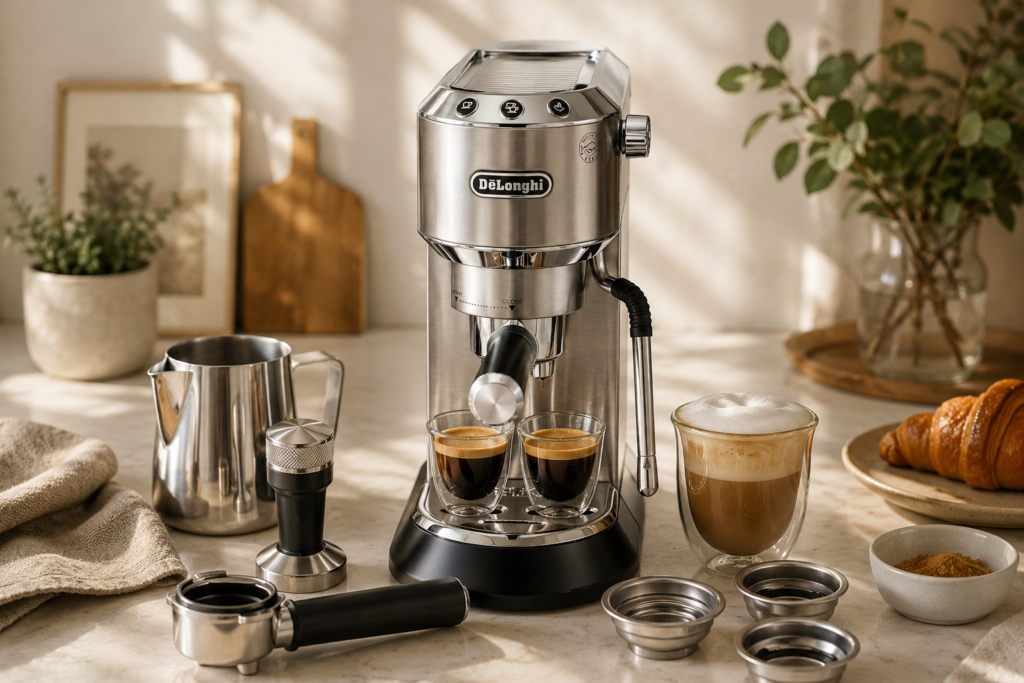
⭐⭐⭐⭐ 3.9/5
For small kitchens, the De’Longhi Dedica Arte is an attractive option.
Its slim footprint allows you to enjoy traditional espresso preparation without dedicating a large section of your countertop to a coffee machine.
| Feature | Details |
|---|---|
| Best For | Small kitchens |
| Machine Type | Compact semi-automatic |
| Built-In Grinder | No |
| Portafilter Size | 51mm |
| Heating System | Thermoblock |
| Heat-Up Time | Fast |
| Pump Pressure | 15-bar pump |
| Pre-Infusion | Yes |
| Pressure Gauge | No |
| Milk System | Manual steam wand |
| Milk Frothing | Manual |
| Water Tank | About 1.1 L |
| Espresso | ⭐⭐⭐⭐ |
| Cappuccino | ⭐⭐⭐⭐ |
| Latte | ⭐⭐⭐⭐ |
| Americano | ⭐⭐⭐⭐ |
| Ease of Use | ⭐⭐⭐⭐⭐ |
| Cleaning | ⭐⭐⭐⭐⭐ |
| Counter Space | Very compact |
| Main Advantage | Slim design and beginner-friendly operation |
| Main Drawback | Smaller capacity and less advanced controls |
Why We Like It
- Compact design
- Slim footprint
- Manual steam wand
- Simple controls
- Quick heating
- Good entry-level option
Best For
Apartment dwellers and coffee lovers with limited counter space.
Consider Before Buying
The compact design means it doesn’t offer the same workflow or capacity as larger machines.
How to Choose the Best Espresso Machine
Buying an espresso machine becomes much easier when you focus on how you actually drink coffee.
Step 1: Decide Your Experience Level
Complete Beginner
Choose a machine with:
- Simple controls
- Automatic milk frothing
- Guided settings
- Fast heat-up
- Minimal manual preparation
Good choice: Breville Bambino Plus.
Intermediate User
Look for:
- Built-in grinder
- Manual steam wand
- Adjustable grind
- Pressure control
- More customization
Good choice: Breville Barista Express.
Experienced Home Barista
Prioritize:
- Commercial-style portafilter
- Manual controls
- Stable brewing
- Quality steam wand
- Upgrade potential
Good choices: Gaggia Classic Evo Pro or Rancilio Silvia.
Step 2: Decide Whether You Need a Built-In Grinder
This is one of the most important decisions.
Machine With Built-In Grinder
Advantages:
- Saves counter space
- Easier setup
- One purchase
- Convenient workflow
Disadvantages:
- Grinder cannot easily be upgraded separately
- One component may become outdated before the other
Machine Without Grinder
Advantages:
- More flexibility
- Easier to upgrade
- Greater grinder choice
- Potentially better espresso dialing
Disadvantages:
- Requires another appliance
- More expensive overall
- More counter space
For espresso quality, don’t underestimate the grinder. Current testing and buying guides consistently emphasize grind quality and consistency as major factors in espresso preparation.
Step 3: Choose Your Milk System
If you drink mostly black espresso, the milk system may not matter much.
If you love lattes and cappuccinos, it becomes extremely important.
Automatic Steam Wand
Best for:
- Beginners
- Convenience
- Consistent milk temperature
- Quick preparation
Manual Steam Wand
Best for:
- Learning latte art
- Experienced users
- Greater control
- Experimentation
Step 4: Consider the Heating System
Espresso machines use different heating technologies.
ThermoJet / Thermoblock
Advantages:
- Fast heating
- Compact
- Energy efficient
- Convenient
Best for everyday home use.
Single Boiler
Advantages:
- Traditional design
- Good steam performance
- Often durable
Disadvantage:
- Switching between brewing and steaming can take longer.
Dual Boiler
Premium machines may use separate boilers for brewing and steaming.
Advantages:
- Excellent temperature control
- Simultaneous brewing and steaming
- Better for frequent milk drinks
Disadvantage:
- Higher price
- Larger footprint
Step 5: Consider Portafilter Size
The portafilter holds the coffee grounds during extraction.
Common sizes include:
- 51mm
- 54mm
- 58mm
A 58mm portafilter is widely used in commercial espresso equipment and gives you access to a broad range of accessories and baskets.
However, portafilter size alone does not determine espresso quality.
Step 6: Think About Counter Space
Measure your kitchen before buying.
Check:
- Width
- Depth
- Height
- Water-tank access
- Bean hopper access
- Space above the machine
Remember that you also need room for:
- Grinder
- Coffee beans
- Tamper
- Milk pitcher
- Cups
Step 7: Consider Your Coffee Drinks
Your favorite drink should influence your purchase.
Mostly Espresso
Prioritize:
- Extraction quality
- Temperature stability
- Grinder quality
- Portafilter
Mostly Lattes
Prioritize:
- Steam wand
- Milk temperature control
- Steam power
- Ease of cleaning
Mostly Cappuccinos
Look for:
- Strong steam performance
- Good milk-texturing control
- Easy switching between brewing and steaming
Mostly Americanos
Consider:
- Espresso quality
- Water tank size
- Easy hot-water dispensing
Step 8: Set a Realistic Budget
Don’t forget that the machine isn’t always your only expense.
You may also need:
- Espresso grinder
- Tamper
- Distribution tool
- Knock box
- Milk pitcher
- Coffee scale
- Cleaning supplies
- Fresh espresso beans
A $500 machine paired with a poor grinder may produce worse results than a less expensive machine paired with a good grinder.
How to Make Better Espresso at Home
Buying a good machine is only part of the process.
Step 1: Use Fresh Coffee Beans
Freshly roasted beans generally provide a better starting point for espresso.
Step 2: Grind Immediately Before Brewing
Grinding just before extraction helps preserve aroma and flavor.
Step 3: Use the Correct Grind Size
Espresso generally requires a fine grind, but the exact setting depends on the beans and grinder.
Step 4: Dose Consistently
Use a coffee scale if possible.
Consistency makes troubleshooting much easier.
Step 5: Distribute the Grounds
Spread the coffee evenly throughout the basket.
Step 6: Tamp Evenly
Apply consistent pressure and keep the coffee bed level.
Step 7: Start the Extraction
Begin brewing and observe the flow.
Step 8: Adjust the Grind
If the espresso flows too quickly, try a finer grind.
If it flows too slowly, try a coarser grind.
Make small adjustments rather than changing several variables at once.
How to Steam Milk for a Latte
If your machine has a manual steam wand, practice is important.
Step 1: Fill the Pitcher
Use cold milk and fill the pitcher only to the appropriate level.
Step 2: Purge the Wand
Release a small amount of steam before introducing it into the milk.
Step 3: Add Air
Position the wand near the surface of the milk to introduce a small amount of air.
Step 4: Create a Whirlpool
Lower the wand slightly and create a smooth swirling motion.
Step 5: Stop at the Right Temperature
Avoid overheating the milk.
Step 6: Pour Immediately
Swirl the milk and pour it into your espresso.
With practice, you can gradually develop the microfoam needed for latte art.
Espresso Machine Maintenance
Regular maintenance is essential for good-tasting coffee and reliable performance.
After Every Use
- Knock out the coffee puck
- Rinse the portafilter
- Flush the group head
- Wipe the steam wand
- Purge the steam wand
Weekly
Depending on use:
- Clean removable components
- Wash the water tank
- Clean the drip tray
- Check the group head
Periodically
Follow the manufacturer’s instructions for:
- Backflushing
- Descaling
- Replacing water filters
- Cleaning the grinder
- Replacing seals
Never use cleaning products or descaling methods that aren’t compatible with your machine.
Espresso Machine vs. Pod Machine
| Feature | Espresso Machine | Pod Machine |
|---|---|---|
| Coffee quality potential | ⭐⭐⭐⭐⭐ | ⭐⭐⭐ |
| Convenience | ⭐⭐⭐ | ⭐⭐⭐⭐⭐ |
| Customization | ⭐⭐⭐⭐⭐ | ⭐⭐ |
| Fresh grinding | Yes | Usually no |
| Learning curve | Moderate–High | Very Low |
| Drink variety | Excellent | Good |
| Long-term flexibility | Excellent | Limited |
| Waste | Coffee grounds | Pods/capsules |
| Best For | Coffee enthusiasts | Convenience-focused users |
Choose an Espresso Machine If:
You enjoy fresh coffee, customization, and learning how to make café-style drinks.
Choose a Pod Machine If:
Your priority is speed and convenience with minimal preparation.
Common Espresso Machine Buying Mistakes
1. Choosing the Machine Before the Grinder
A good grinder is essential for consistent espresso.
2. Buying More Automation Than You Need
If you enjoy learning barista skills, excessive automation may actually make the experience less enjoyable.
3. Ignoring Counter Space
Espresso setups can become surprisingly large once you add a grinder and accessories.
4. Focusing Only on Pressure
A machine’s advertised maximum pump pressure isn’t a complete measure of espresso quality.
5. Forgetting Maintenance
Every espresso machine requires regular cleaning.
6. Buying Based Only on Appearance
A beautiful machine isn’t necessarily the right machine for your coffee habits.
7. Ignoring Milk Drinks
If you drink several lattes every day, steam performance should be a major consideration.
Frequently Asked Questions
What is the best espresso machine for beginners?
The Breville Bambino Plus is an excellent beginner-friendly option because it heats quickly and offers automatic milk texturing.
Is an espresso machine worth buying for home use?
If you drink espresso-based drinks regularly, a home machine can be a worthwhile investment. It gives you more control over coffee quality, milk, grind size, and preparation.
Do I need a grinder with an espresso machine?
If your machine doesn’t have a built-in grinder, you’ll need one. Even machines with built-in grinders can benefit from a dedicated grinder if you want greater control.
Is a built-in grinder better?
A built-in grinder is more convenient and saves counter space. A separate grinder generally provides greater flexibility and makes future upgrades easier.
What is the best espresso machine for lattes?
Look for a machine with a strong steam wand or automatic milk-texturing system. The Bambino Plus is particularly convenient for beginners who primarily make milk-based drinks.
Is the Breville Barista Express good for beginners?
Yes. Its integrated grinder and guided workflow make it a popular starting point for people who want to learn manual espresso preparation. Current 2026 guides continue to recommend it for beginners and intermediate users.
Is the Gaggia Classic Evo Pro good for beginners?
It can be, but it has a steeper learning curve than more automated machines. It’s particularly appealing if you want to learn traditional espresso techniques.
Is the Rancilio Silvia worth it?
The Silvia can be an excellent choice for experienced coffee enthusiasts who value traditional controls, durable construction, and upgrade potential.
How much should I spend on an espresso machine?
You can find capable entry-level machines at relatively modest prices, while enthusiast and prosumer machines can cost considerably more. Set a total budget that includes the grinder and accessories.
Final Verdict
The best espresso machine for coffee lovers is ultimately the one that matches your skill level, coffee preferences, budget, and willingness to learn.
For most beginners, the Breville Bambino Plus is an excellent choice thanks to its compact design, fast heating, and convenient automatic milk texturing. For an all-in-one setup, the Breville Barista Express remains a compelling choice because it combines an espresso machine and grinder in one appliance. Current 2026 expert guides continue to feature both models prominently.
If you want a more traditional experience, the Gaggia Classic Evo Pro provides plenty of room to develop your skills. More experienced home baristas may prefer the Rancilio Silvia for its traditional design and enthusiast-focused capabilities.
Before buying, don’t focus only on the machine itself. Consider the grinder, milk system, heating technology, portafilter, counter space, maintenance requirements, and accessories you’ll need.
A great espresso setup isn’t necessarily the most expensive one. It’s the setup that makes you excited to prepare your next cup.
Espresso Machine Buying Checklist
- Decide your experience level
- Choose manual, semi-automatic, or automatic
- Decide whether you need a built-in grinder
- Consider espresso vs. milk-based drinks
- Compare steam wand options
- Check the heating system
- Consider portafilter size
- Check water-tank capacity
- Measure your counter space
- Consider machine height
- Budget for a quality grinder
- Consider accessories
- Check cleaning requirements
- Check descaling requirements
- Compare warranty coverage
- Look for replacement parts
- Consider long-term maintenance
- Choose a machine you’ll actually enjoy using