
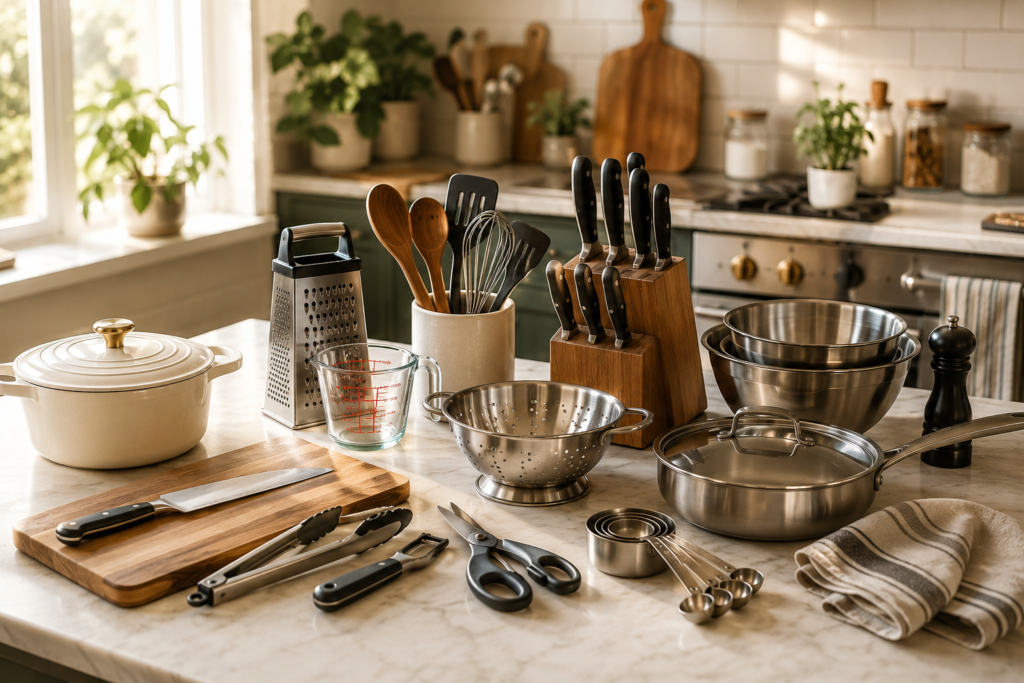
A well-equipped kitchen doesn’t need dozens of gadgets.
In fact, the best kitchen setup is usually built around a relatively small collection of reliable, versatile tools that you actually use.
Whether you’re preparing a quick weekday dinner, experimenting with a new recipe, or cooking for the whole family, having the right equipment can make chopping, measuring, mixing, cooking, and cleaning much easier.
But with thousands of kitchen products available, it’s easy to end up buying tools that look useful but spend most of their lives sitting in a drawer.
That’s why we’ve put together this practical list of 15 kitchen tools every home cook should have.
We’ve focused on versatile essentials that can handle multiple tasks, save time, and earn their place in your kitchen.
Quick List: 15 Essential Kitchen Tools
| # | Kitchen Tool | Best For | Importance |
|---|---|---|---|
| 1 | Chef’s Knife | Chopping & slicing | ⭐⭐⭐⭐⭐ |
| 2 | Cutting Board | Food preparation | ⭐⭐⭐⭐⭐ |
| 3 | Measuring Cups & Spoons | Accurate measurements | ⭐⭐⭐⭐⭐ |
| 4 | Mixing Bowls | Mixing & preparation | ⭐⭐⭐⭐⭐ |
| 5 | Kitchen Tongs | Turning & serving | ⭐⭐⭐⭐⭐ |
| 6 | Silicone Spatula | Scraping & mixing | ⭐⭐⭐⭐ |
| 7 | Wooden Spoon | Stirring & cooking | ⭐⭐⭐⭐ |
| 8 | Vegetable Peeler | Peeling produce | ⭐⭐⭐⭐ |
| 9 | Box Grater | Grating & shredding | ⭐⭐⭐⭐ |
| 10 | Colander | Draining & rinsing | ⭐⭐⭐⭐ |
| 11 | Instant-Read Thermometer | Checking food temperature | ⭐⭐⭐⭐ |
| 12 | Can Opener | Opening cans | ⭐⭐⭐⭐ |
| 13 | Kitchen Shears | Cutting & trimming | ⭐⭐⭐⭐ |
| 14 | Fine-Mesh Strainer | Straining & rinsing | ⭐⭐⭐⭐ |
| 15 | Sheet Pan | Roasting & baking | ⭐⭐⭐⭐⭐ |
Affiliate Disclosure: This post contains affiliate links. We may earn a commission if you make a purchase, at no extra cost to you.
1. Chef’s Knife
⭐⭐⭐⭐⭐ 4.7/5
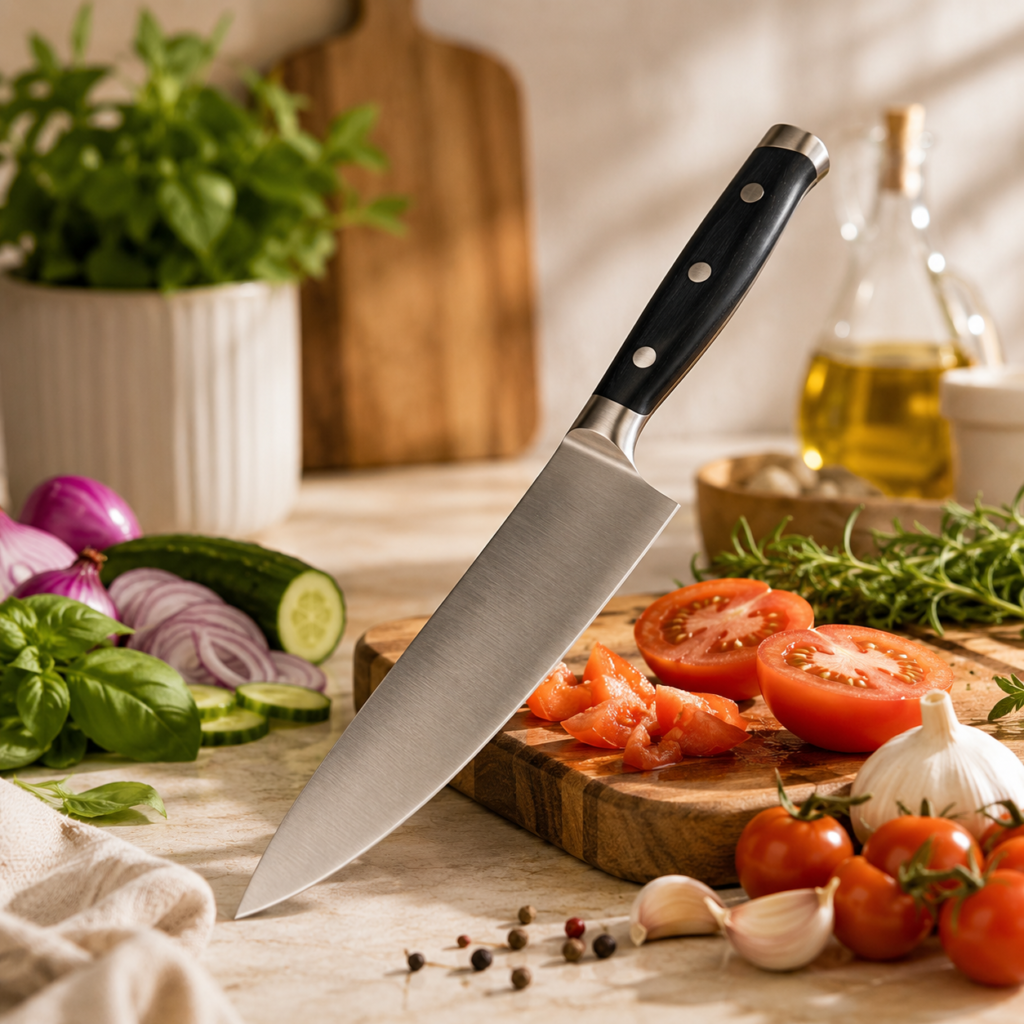
If you buy only one serious kitchen tool, make it a good chef’s knife.
A versatile chef’s knife can handle a huge variety of everyday tasks, including chopping vegetables, slicing meat, mincing herbs, and preparing fruit.
What to look for
- Comfortable handle
- Good balance
- Durable blade
- Appropriate size for your hand
- Easy maintenance
For most home cooks, an approximately 8-inch chef’s knife is a versatile starting point.
How to use it
Step 1: Place your cutting board on a stable surface.
Step 2: Hold the knife securely.
Step 3: Keep your non-cutting hand positioned safely.
Step 4: Use controlled slicing and chopping motions.
Step 5: Clean and dry the knife after use.
Hot Picks Tip
Don’t automatically choose the most expensive knife. Comfort and control matter more than price.
2. Cutting Board
⭐⭐⭐⭐☆ 4.4/5
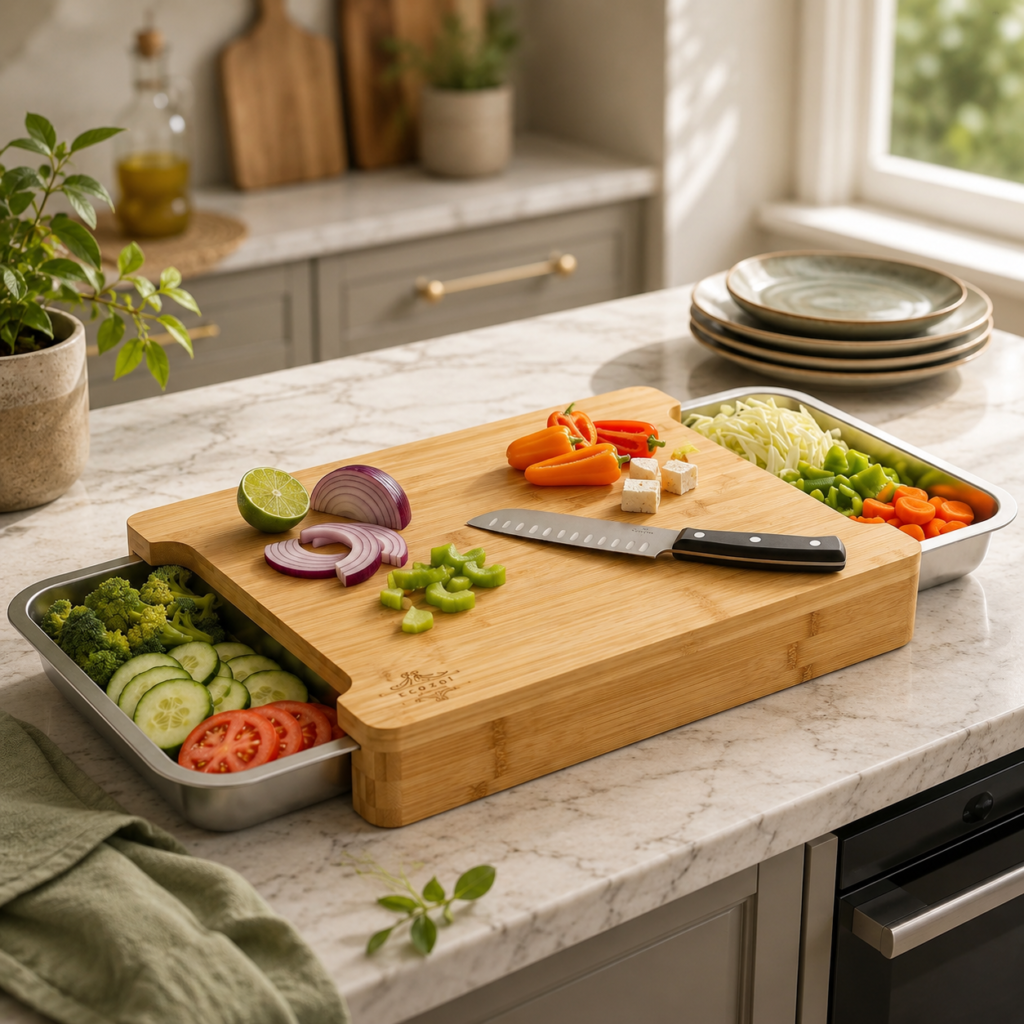
A good knife needs a good surface to work on.
A sturdy cutting board gives you enough room to prepare ingredients safely and comfortably.
What to look for
- Stable surface
- Enough workspace
- Easy cleaning
- Durable construction
- Juice groove for particularly messy ingredients, if useful
Pro tip
Consider having two cutting boards:
- One primarily for produce
- One for raw meat and poultry
Always follow proper food-safety practices when handling raw ingredients.
3. Measuring Cups & Spoons
⭐⭐⭐⭐⭐ 4.8/5
Cooking is often flexible, but baking can be much less forgiving.
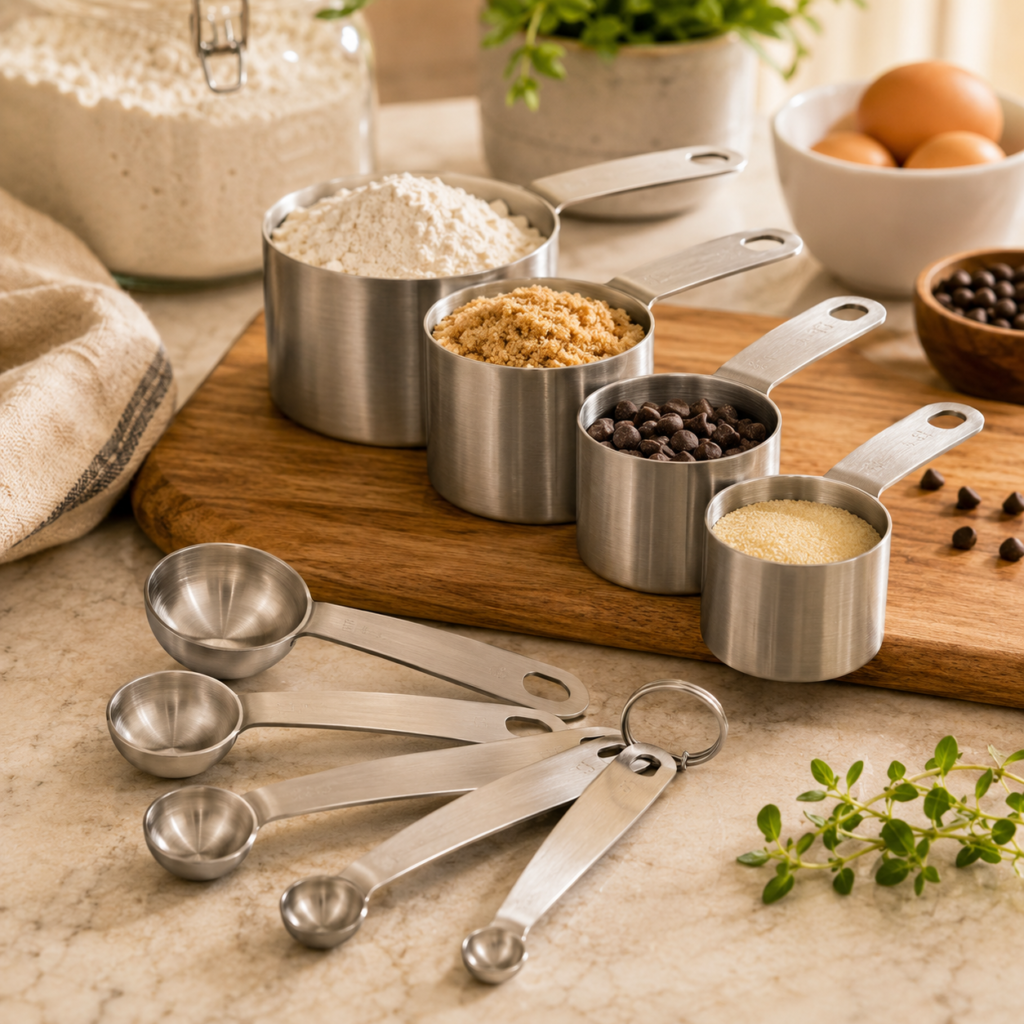
A reliable set of measuring cups and spoons helps you follow recipes consistently.
Useful measurements include:
- 1 cup
- ½ cup
- ⅓ cup
- ¼ cup
- 1 tablespoon
- 1 teaspoon
- ½ teaspoon
- ¼ teaspoon
Why they’re essential
Accurate measurements can make a significant difference when you’re preparing sauces, marinades, baked goods, and other recipes where proportions matter.
Upgrade option
If you bake frequently, consider adding a digital kitchen scale for more precise ingredient measurements.
4. Mixing Bowls
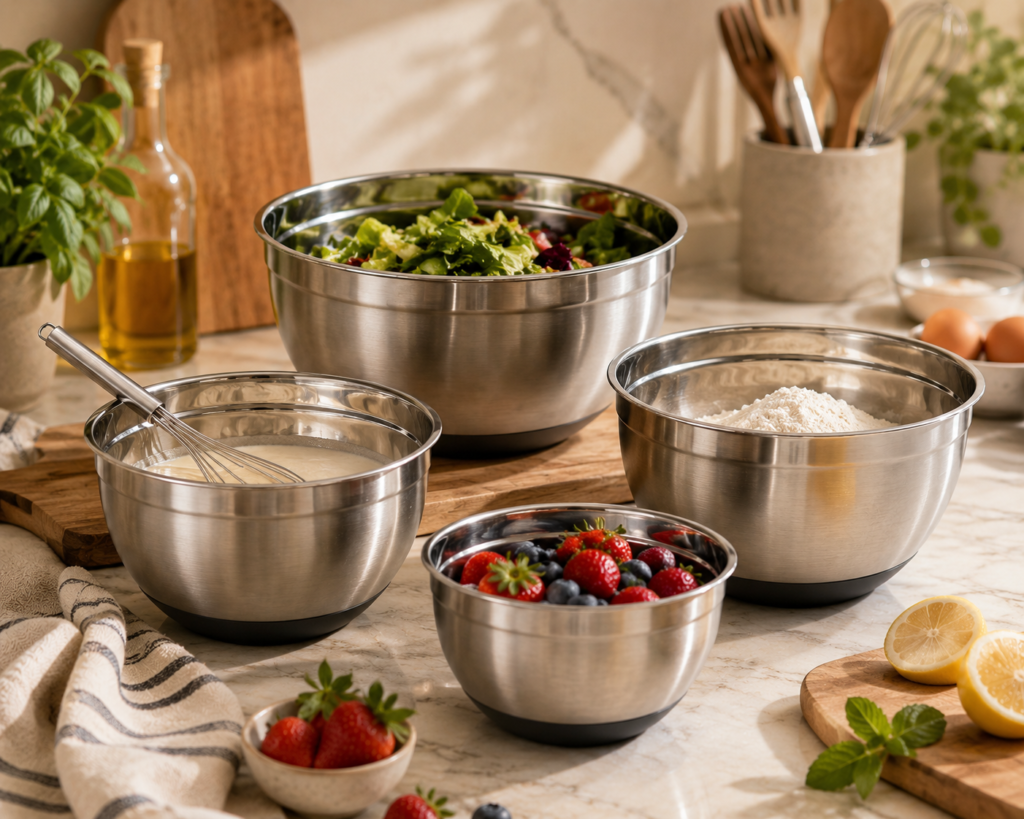
⭐⭐⭐⭐⭐ 4.7/5
Mixing bowls are one of those kitchen essentials you’ll probably use more often than you expect.
They’re useful for:
- Mixing ingredients
- Preparing salads
- Marinating food
- Whisking eggs
- Holding chopped vegetables
- Preparing sauces
- Baking
Best setup
A set containing several different sizes is usually more useful than buying one large bowl.
Look for
Nesting bowls are particularly practical because they take up less cabinet space.
5. Kitchen Tongs
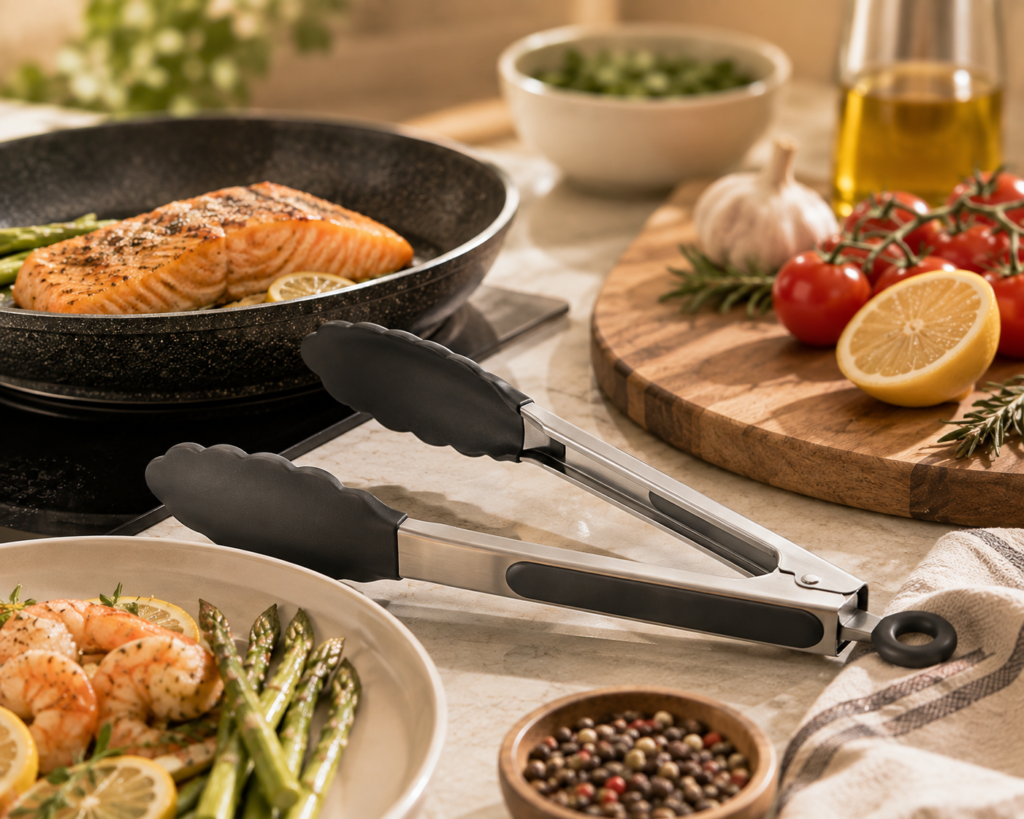
⭐⭐⭐⭐⭐ 4.7/5
Kitchen tongs are essentially an extension of your hand.
They’re perfect for:
- Turning meat
- Tossing vegetables
- Serving pasta
- Handling hot food
- Grilling
- Stir-frying
What to look for
Choose tongs with:
- Comfortable grip
- Locking mechanism
- Heat-resistant tips
- Strong spring action
Hot Picks Tip: A longer pair is useful when cooking over high heat because it keeps your hands farther from the pan.
6. Silicone Spatula
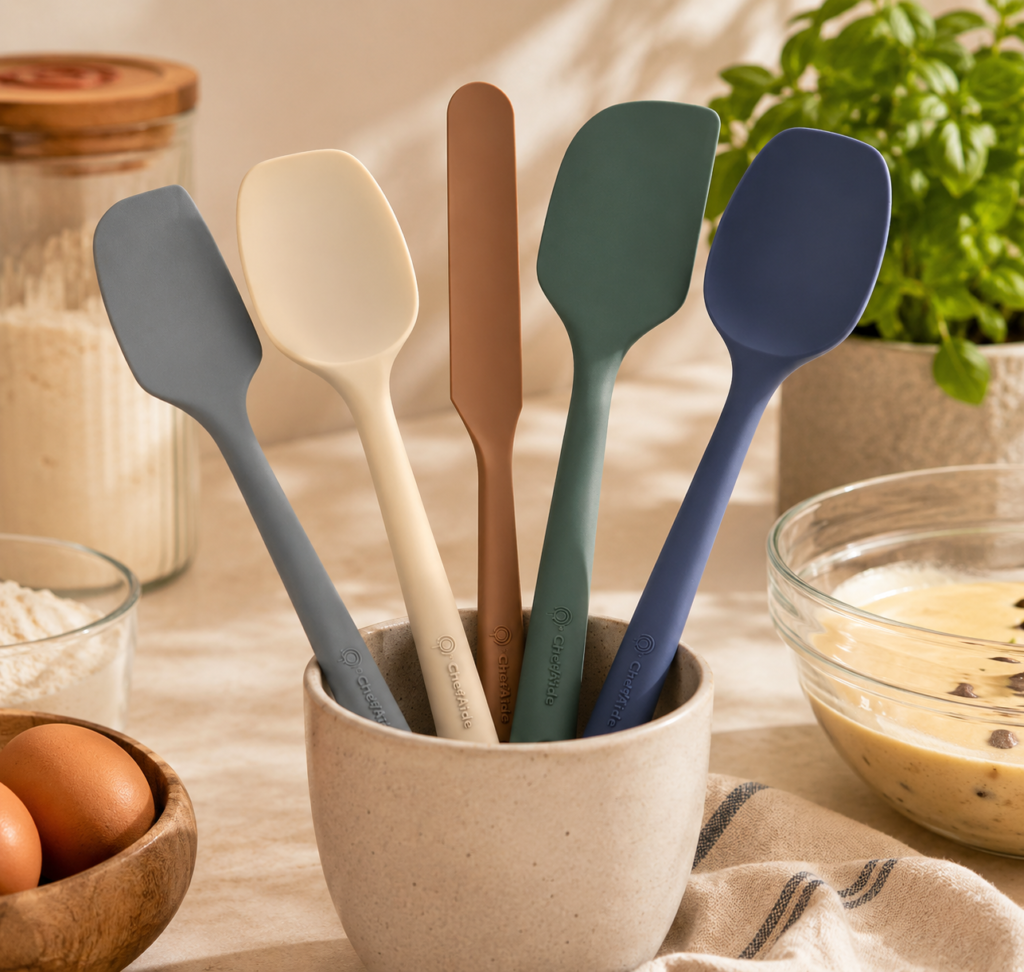
⭐⭐⭐⭐⭐ 4.7/5
A silicone spatula is incredibly useful for both cooking and baking.
Use it to:
- Scrape bowls
- Fold ingredients
- Stir sauces
- Mix batters
- Spread ingredients
- Get the last bit of sauce out of a container
Why silicone?
A good silicone spatula is flexible and can reach corners that rigid utensils can’t.
If you frequently cook with nonstick cookware, choose utensils specifically designed to be compatible with your cookware.
7. Wooden Spoon
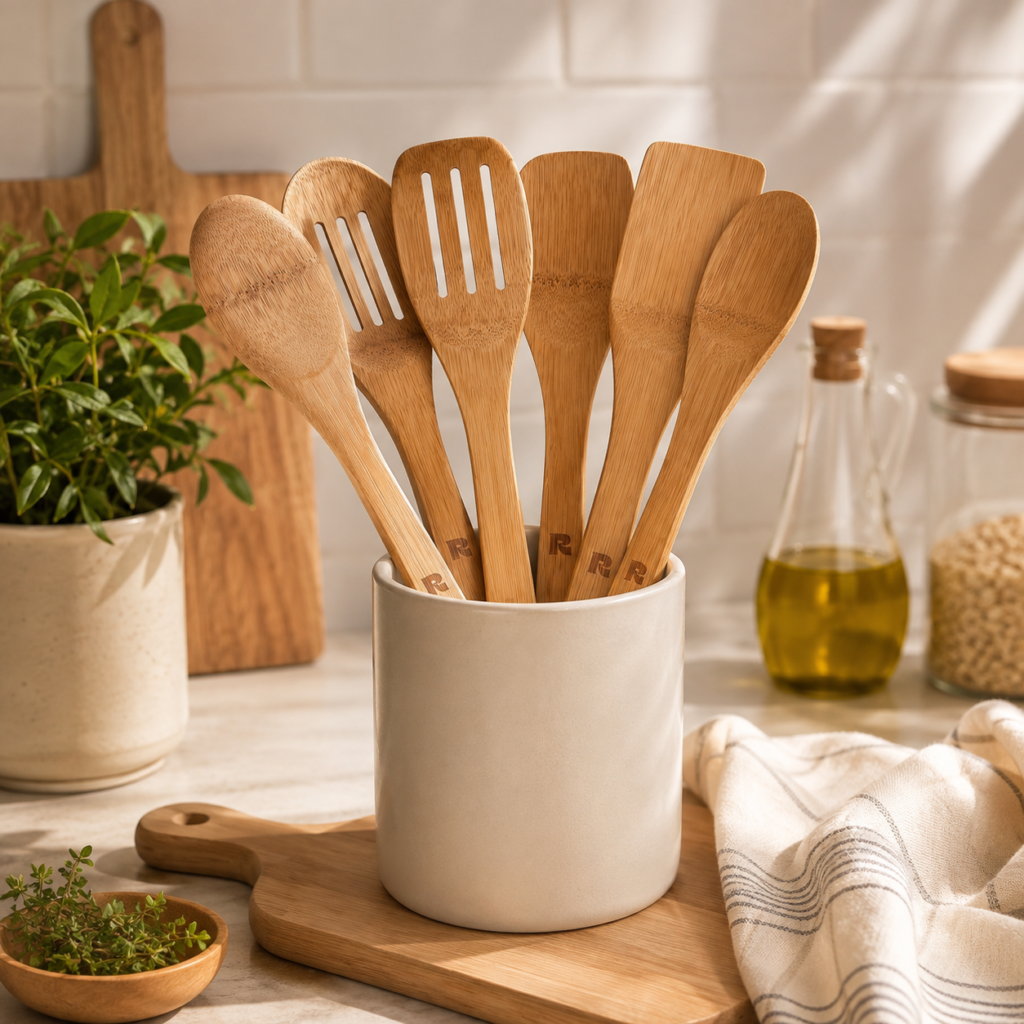
⭐⭐⭐⭐⭐ 4.6/5
Sometimes the simplest tools are the most useful.
A wooden spoon is excellent for:
- Stirring soups
- Mixing sauces
- Cooking vegetables
- Stirring pasta
- Scraping the bottom of a pan gently
It’s also comfortable to hold and doesn’t conduct heat like metal utensils.
Buying tip
Look for a smooth, sturdy wooden spoon without rough edges or cracks.
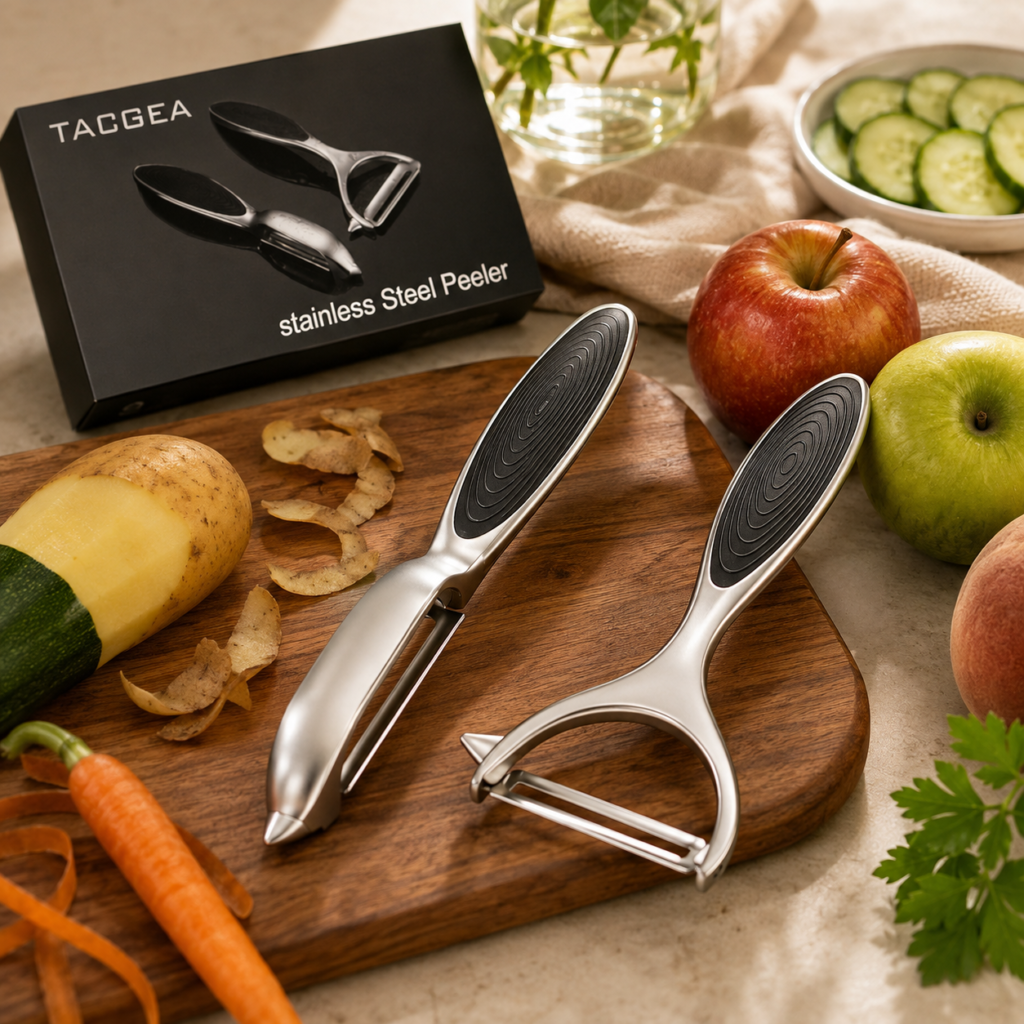
8. Vegetable Peeler
⭐⭐⭐⭐⭐ 4.6/5
A vegetable peeler might be inexpensive, but it’s one of the most useful small kitchen tools.
It’s ideal for:
- Potatoes
- Carrots
- Cucumbers
- Apples
- Zucchini
- Citrus zest
What makes a good peeler?
Look for a comfortable handle and a sharp, durable blade.
A good peeler should remove the skin efficiently without requiring excessive pressure.
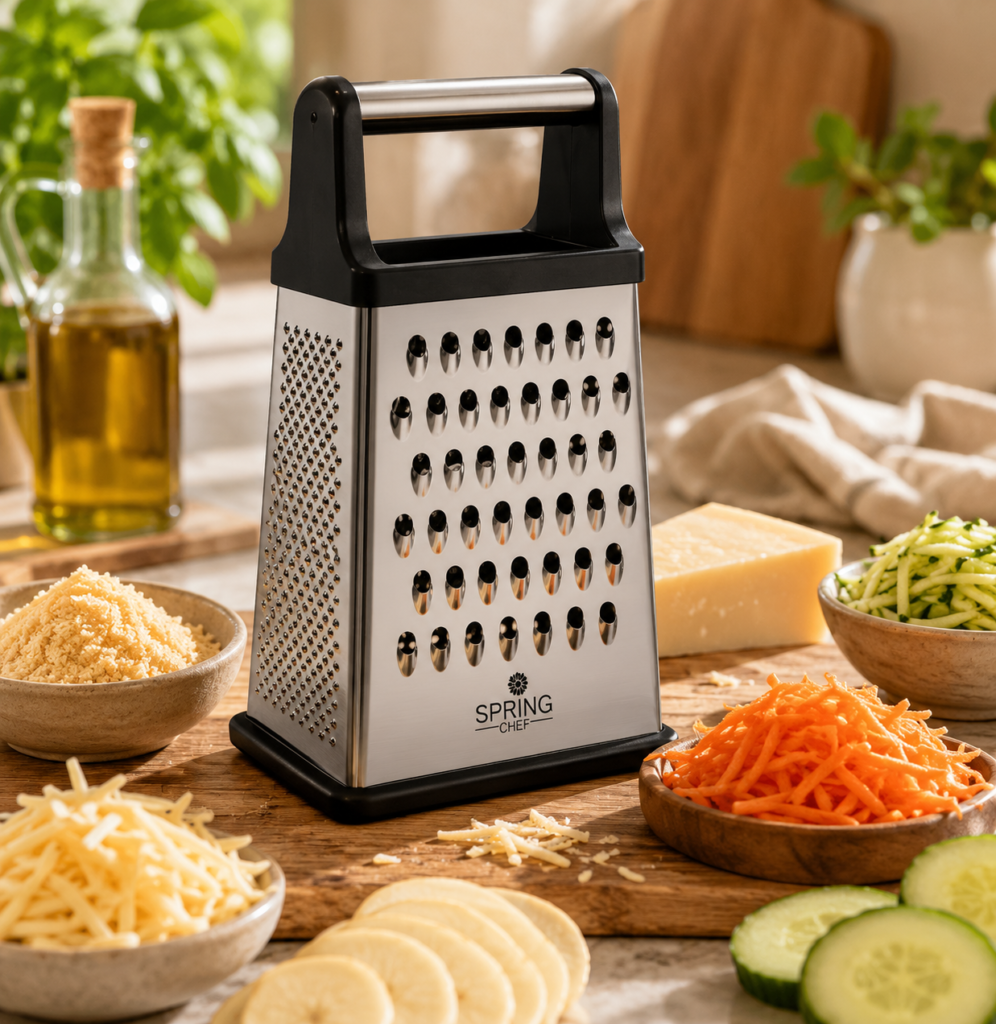
9. Box Grater
⭐⭐⭐⭐⭐ 4.8/5
A box grater gives you several grating options in one tool.
You can use it for:
- Cheese
- Carrots
- Potatoes
- Zucchini
- Chocolate
- Citrus zest
Why it’s worth having
Instead of buying separate tools for different grating tasks, a box grater gives you several surfaces in one compact design.
Safety tip
Use the handle and keep your fingers away from the grating surface as you approach the end of the ingredient.
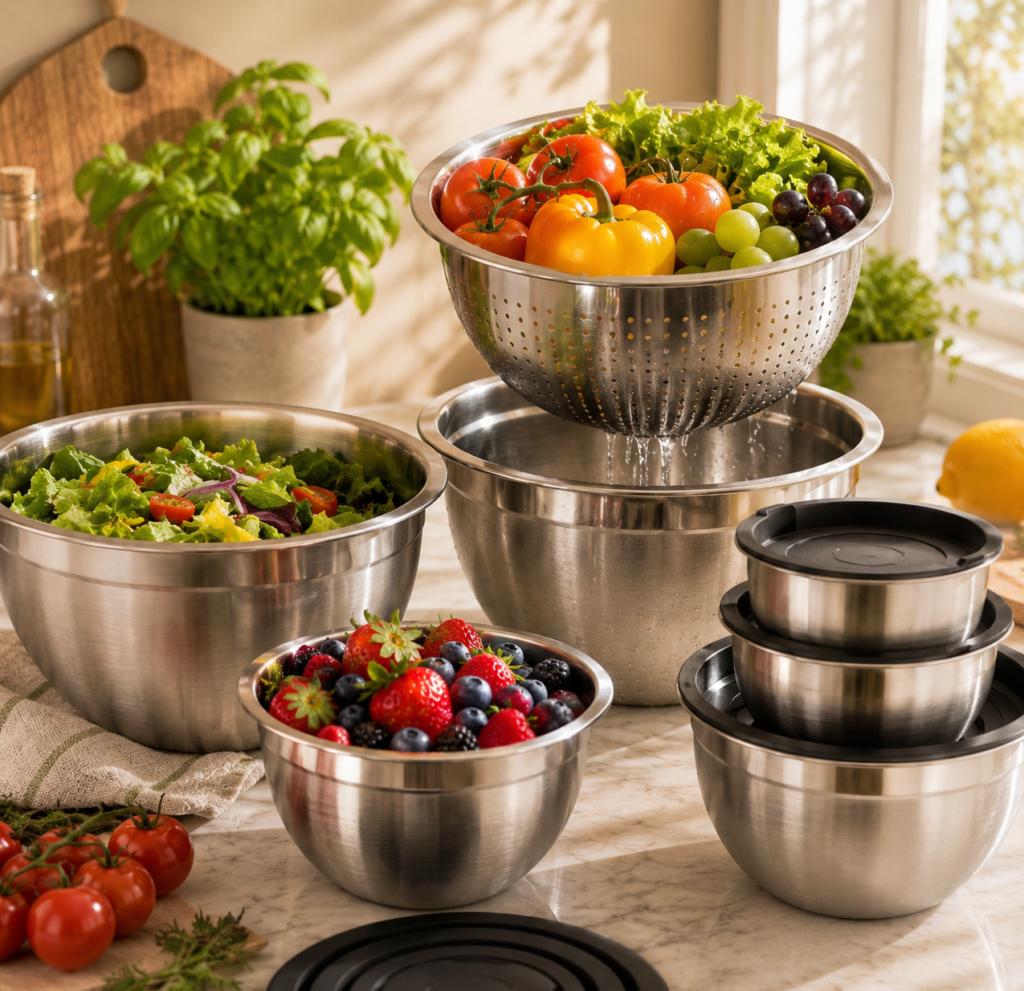
10. Colander
⭐⭐⭐⭐⭐ 4.6/5
A colander is essential for draining pasta, rinsing vegetables, washing fruit, and handling other ingredients.
Look for:
- Stable base
- Comfortable handles
- Good drainage
- Easy-to-clean surface
- Size appropriate for your household
Space-saving idea
If your kitchen is small, a collapsible colander can be particularly useful.
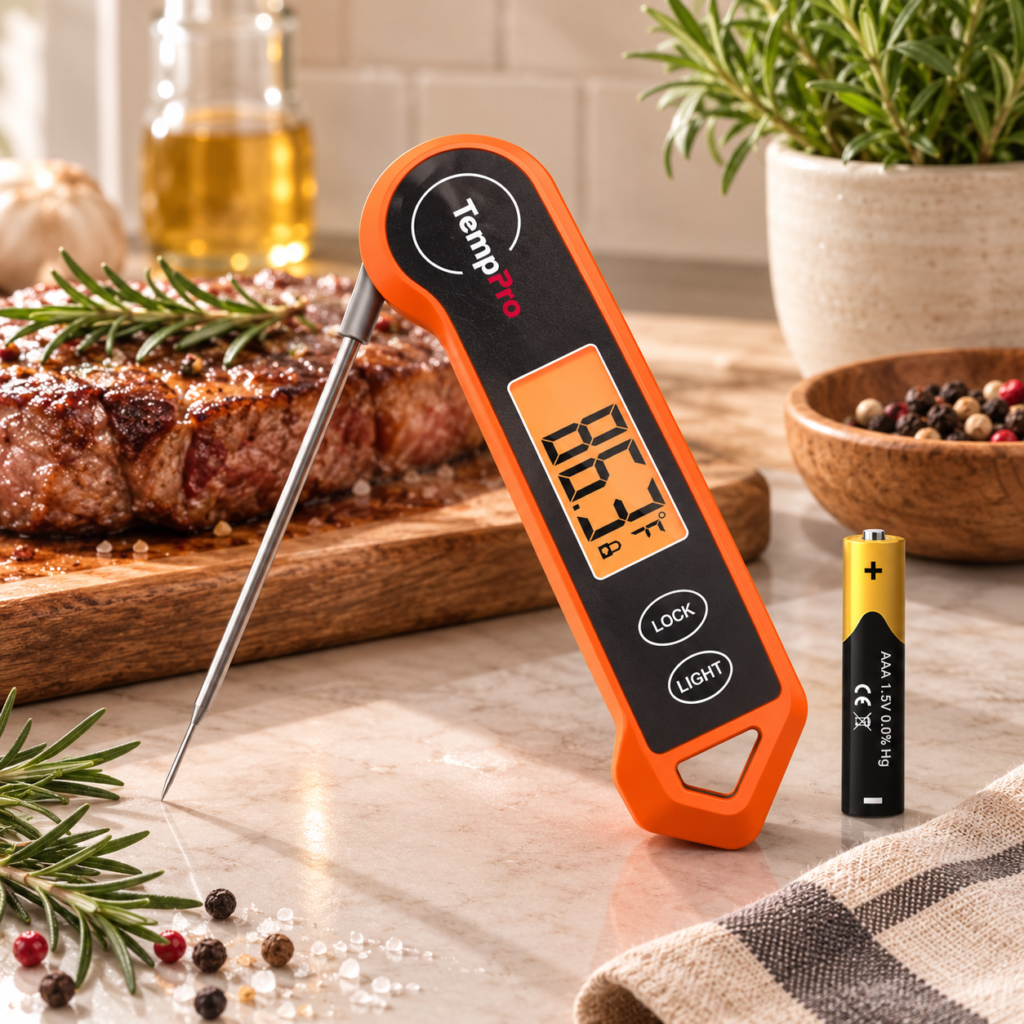
11. Instant-Read Kitchen Thermometer
⭐⭐⭐⭐⭐ 4.7/5
A food thermometer takes the guesswork out of checking whether certain foods have reached a safe internal temperature.
It’s particularly useful for:
- Meat
- Poultry
- Fish
- Roasts
- Reheated foods
- Candy and some baking applications
How to use it
Step 1: Insert the probe into the thickest appropriate part of the food.
Step 2: Avoid touching bone when measuring meat.
Step 3: Wait for the reading to stabilize.
Step 4: Compare the reading with a reliable food-safety temperature guide.
Why it’s worth buying
Instead of cutting food open repeatedly to check whether it’s done, a thermometer provides a much more reliable measurement.
12. Can Opener
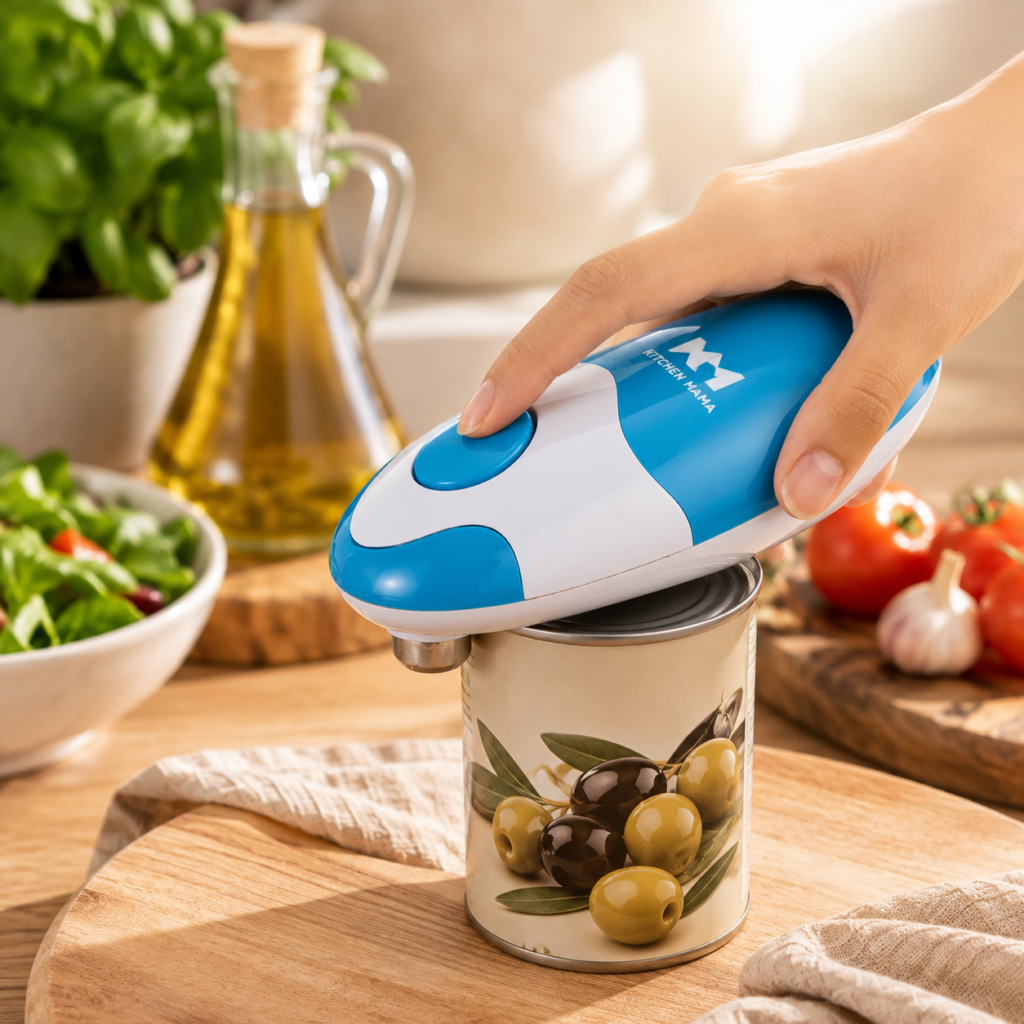
⭐⭐⭐⭐☆ 4.2/5
A can opener isn’t exciting—but you’ll definitely notice when you don’t have one.
It’s useful for canned:
- Beans
- Tomatoes
- Tuna
- Coconut milk
- Vegetables
- Soups
- Sauces
Buying tip
Choose one that feels sturdy and operates smoothly.
A poorly designed can opener can turn a simple task into a frustrating one.
13. Kitchen Shears
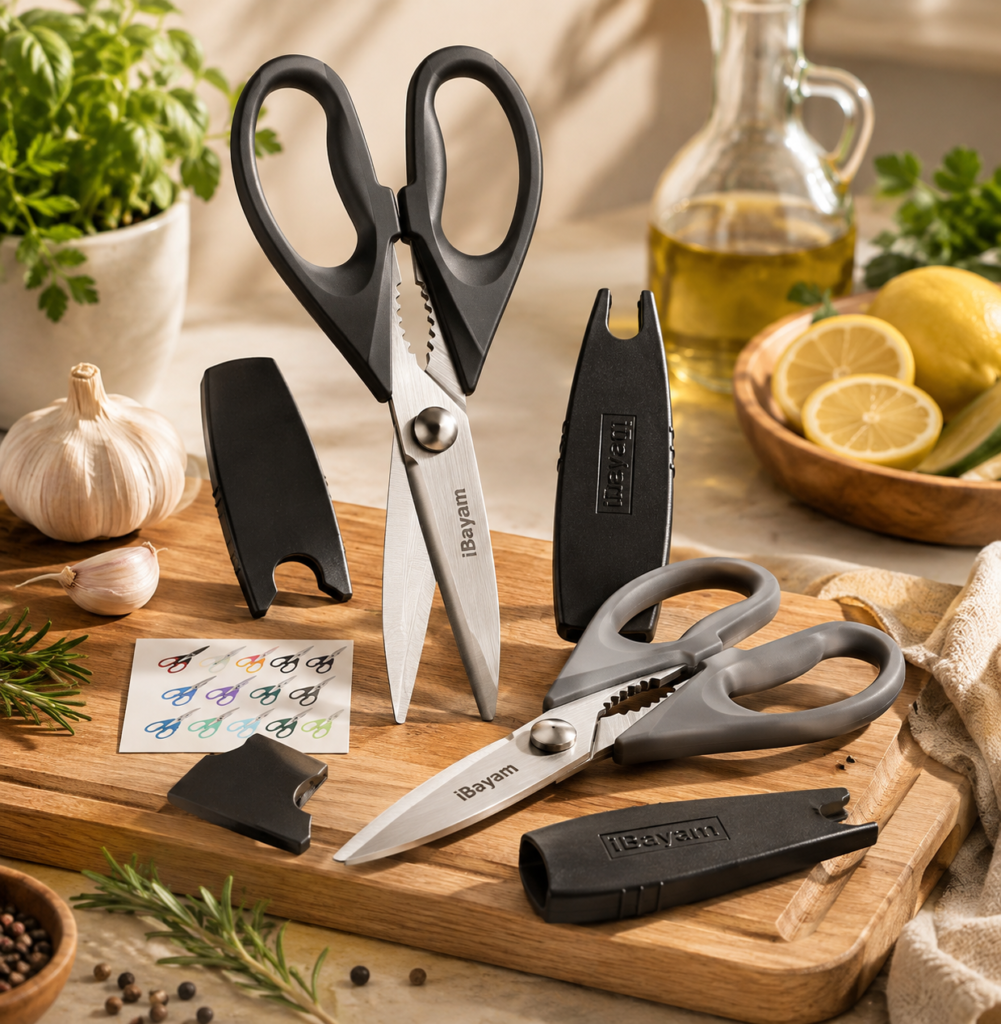
⭐⭐⭐⭐⭐ 4.8/5
Kitchen shears are far more versatile than many people realize.
They’re useful for:
- Cutting herbs
- Opening food packaging
- Trimming poultry
- Cutting parchment
- Snipping green onions
- Cutting dried fruit or other foods when appropriate
Important
If you use kitchen shears for raw meat or poultry, clean and sanitize them appropriately afterward.
Hot Picks Tip
Choose a pair that can be separated for easier cleaning if that feature is important to you.
14. Fine-Mesh Strainer
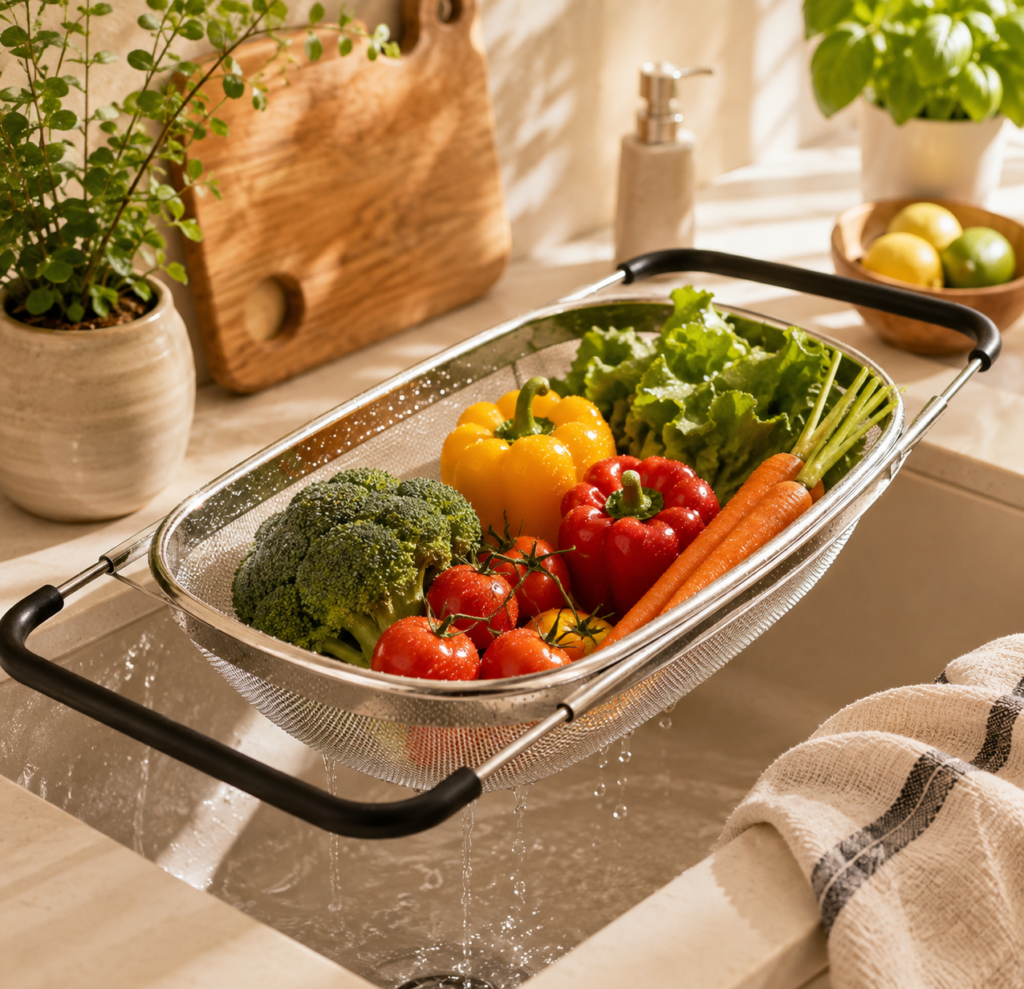
⭐⭐⭐⭐⭐ 4.6/5
A fine-mesh strainer can perform several jobs around the kitchen.
Use it to:
- Strain sauces
- Rinse grains
- Sift dry ingredients
- Remove lumps
- Strain tea
- Dust powdered sugar
Why it’s useful
Its fine mesh makes it much more versatile than a standard colander.
For a small kitchen, this is especially valuable because one tool can perform several jobs.
15. Sheet Pan
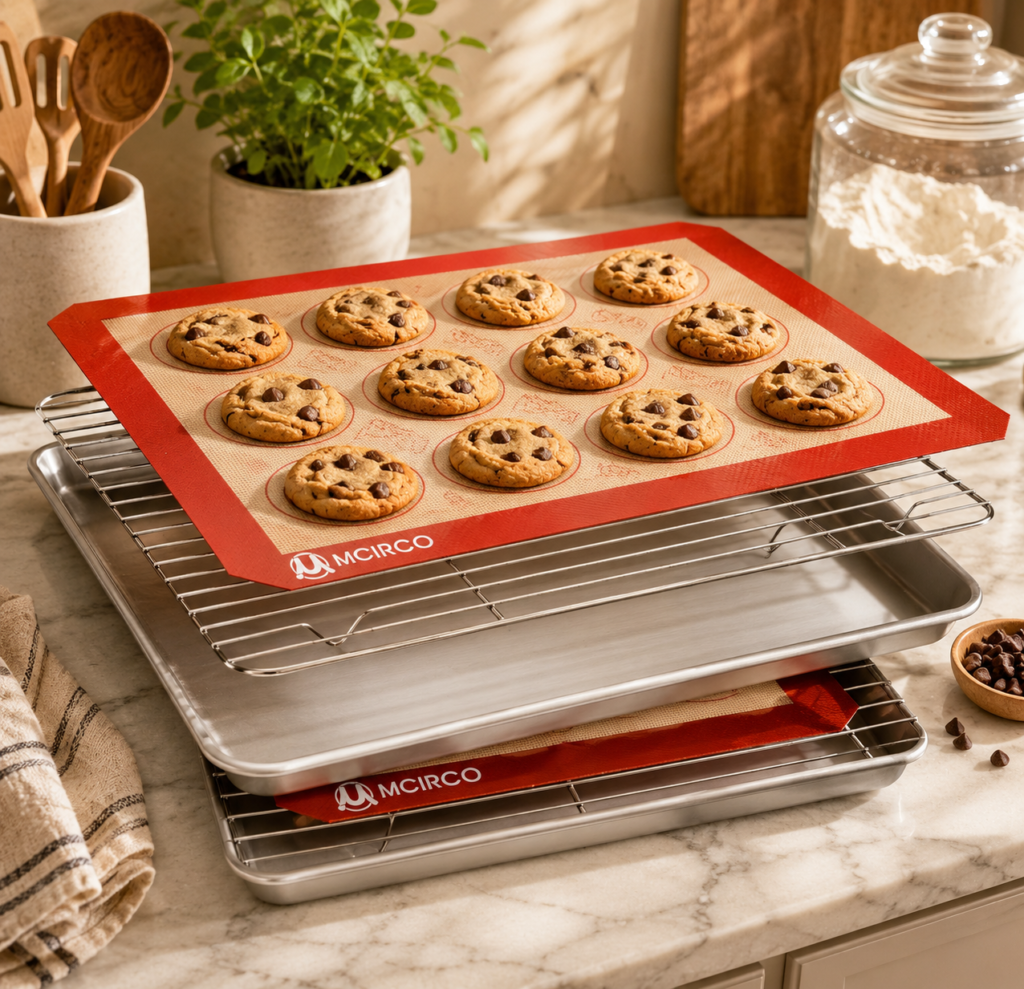
⭐⭐⭐⭐⭐ 4.7/5
A sturdy sheet pan can become one of the hardest-working pieces of cookware in your kitchen.
Use it for:
- Roasted vegetables
- Chicken
- Fish
- Cookies
- Sheet-pan dinners
- Toasted nuts
- Baked snacks
How to get better results
Step 1: Avoid overcrowding the pan.
Step 2: Cut ingredients into reasonably similar sizes.
Step 3: Coat ingredients appropriately with oil and seasoning.
Step 4: Spread everything into an even layer.
Step 5: Turn or toss ingredients when the recipe calls for it.
Why we love it
Sheet-pan cooking combines simple preparation with relatively easy cleanup, making it ideal for busy weeknights.
How to Choose the Right Kitchen Tools
You don’t need to purchase all 15 items at once.
If you’re building a kitchen from scratch, start with the tools you’ll use most frequently.
Step 1: Start with preparation essentials
Begin with:
These cover a large percentage of basic preparation tasks.
Step 2: Add everyday cooking utensils
Next, add:
These are inexpensive but extremely versatile.
Step 3: Add specialty essentials
Then consider:
Step 4: Complete your cooking setup
Finally, add:
This gives you a practical foundation without filling your kitchen with unnecessary gadgets.
What Should You Look for When Buying Kitchen Tools?
Before buying any kitchen tool, ask yourself five questions:
1. Will I use it regularly?
If the answer is no, you may not need it.
2. Can it perform multiple tasks?
Versatility is particularly valuable in smaller kitchens.
3. Is it comfortable?
A tool can be technically excellent but frustrating to use if the handle doesn’t feel right.
4. Is it easy to clean?
Complicated tools often end up sitting unused.
5. Will it last?
It’s usually better to buy one reliable tool than repeatedly replace inexpensive versions.
Essential Kitchen Tools vs. Kitchen Gadgets
It’s important to understand the difference.
Essential tools solve everyday cooking problems.
Gadgets often solve specific problems or add convenience.
For example:
| Essential Tool | Specialized Gadget |
|---|---|
| Chef’s knife | Electric vegetable chopper |
| Cutting board | Avocado slicer |
| Mixing bowl | Pancake batter dispenser |
| Tongs | Taco holder |
| Sheet pan | Specialized roasting gadget |
There’s nothing wrong with owning gadgets.
But if you’re starting from scratch, build your kitchen around essentials first.
How We Chose These Kitchen Essentials
For this guide, we focused on tools that provide a strong combination of:
Versatility: Can the tool perform multiple everyday tasks?
Frequency of use: Is it likely to be used regularly?
Practicality: Does it solve a real cooking problem?
Storage: Is it reasonably easy to store?
Durability: Is it worth investing in a quality version?
Value: Does it provide enough usefulness to justify its place in the kitchen?
The result is a collection designed to cover the fundamentals without encouraging unnecessary kitchen clutter.
Frequently Asked Questions
What are the most important kitchen tools for beginners?
If you’re starting from scratch, prioritize a chef’s knife, cutting board, measuring tools, mixing bowls, tongs, silicone spatula, and sheet pan.
How many kitchen tools does a home cook really need?
You don’t need dozens. A carefully selected collection of around 15 versatile tools can cover most everyday cooking and food-preparation tasks.
What is the most important kitchen tool?
For general food preparation, a good chef’s knife is arguably one of the most important tools because it is used for so many tasks.
Are expensive kitchen tools worth it?
Not always. Quality and durability matter more than simply choosing the most expensive product. For many basic tools, a reasonably priced, well-made option can be excellent.
What kitchen tools should I buy first?
Start with tools that you’ll use almost every day: a chef’s knife, cutting board, measuring tools, mixing bowls, and basic cooking utensils.
What kitchen tools are useful for a small kitchen?
Choose compact, multipurpose tools such as nesting mixing bowls, a box grater, fine-mesh strainer, kitchen shears, and versatile cookware.
Final Verdict
A great kitchen isn’t defined by how many gadgets you own.
It’s defined by how easily you can prepare the food you actually enjoy cooking.
The 15 tools in this guide provide a practical foundation for most home cooks. From a reliable chef’s knife and sturdy cutting board to versatile tongs, mixing bowls, and a dependable sheet pan, each item has a clear purpose and can handle multiple everyday tasks.
If you’re building your kitchen from scratch, don’t buy everything at once.
Start with the essentials, choose quality where it matters, and add specialized tools only when you discover that you genuinely need them.
That’s how you build a kitchen that is functional, organized, and enjoyable to cook in—without filling every drawer with gadgets you rarely use.