
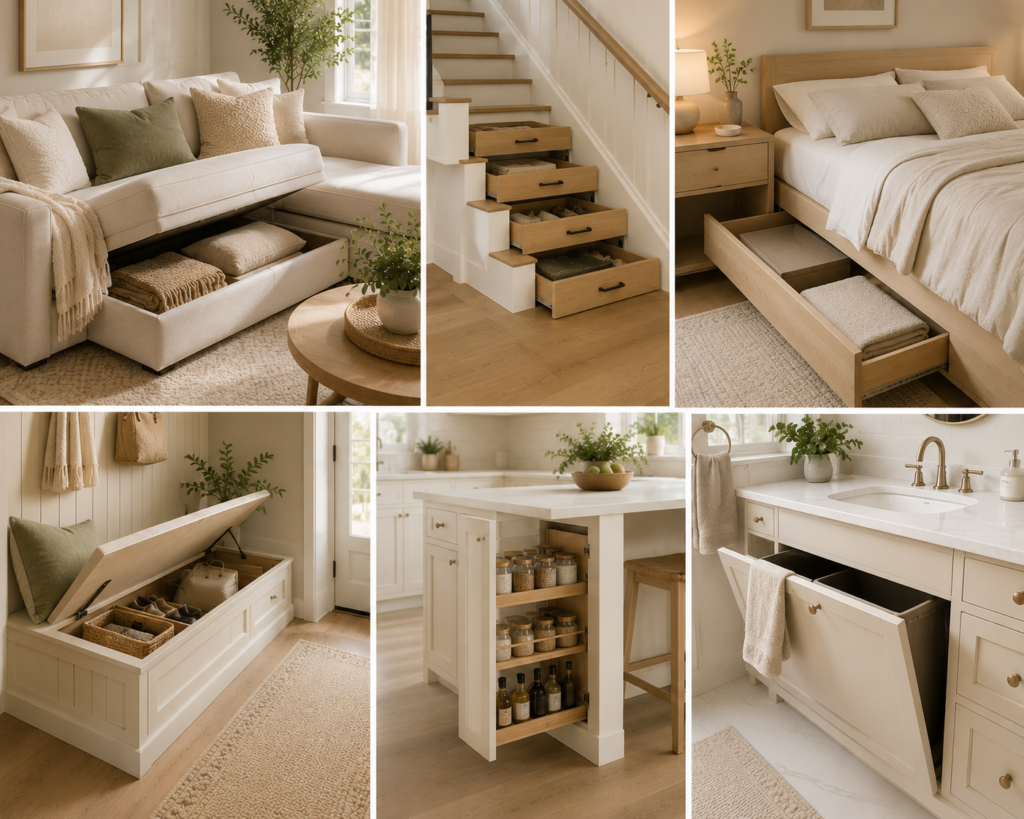
Storage space has a way of disappearing quickly.
Even in a reasonably sized home, closets, cabinets, and drawers can eventually become overcrowded. The solution isn’t always adding another large piece of furniture. Sometimes, the best storage opportunities are the spaces you’re already overlooking.
Hidden storage at home allows you to use unused areas without adding visual clutter. Under the bed, inside benches, behind doors, beneath stairs, and even inside furniture can provide valuable places to store everyday and seasonal belongings.
The key is to look beyond traditional storage and identify spaces that can work harder.
In this guide, we’ll explore the best places to add hidden storage at home, along with practical ways to use each space effectively.
Why Hidden Storage Is Worth Considering
Hidden storage can make a home feel cleaner and more spacious because it keeps belongings out of sight while keeping them accessible.
It can help you:
- Reduce visible clutter
- Make better use of unused space
- Keep rooms organized
- Store seasonal belongings
- Maximize small rooms
- Improve the appearance of your home
- Create more functional living areas
The goal isn’t to hide everything.
It’s to make better use of space that would otherwise remain unused.
1. Under the Bed
The space underneath your bed is one of the easiest hidden storage opportunities to use.
Instead of allowing it to collect dust, use it for items you don’t need every day.
Ideal for:
- Seasonal clothing
- Extra bedding
- Shoes
- Luggage
- Blankets
- Keepsakes
How to organize it
- Measure the available height.
- Choose containers that fit comfortably underneath.
- Group similar items together.
- Label containers if necessary.
- Keep frequently used items toward the front.
Pro tip
Choose containers with lids if you’re storing clothing or bedding for long periods. This helps protect them from dust.
2. Inside an Ottoman
An ottoman can provide both seating and storage.
Choose a design with a removable or hinged top.
Great for storing:
- Blankets
- Books
- Remote controls
- Board games
- Extra cushions
- Small living room accessories
This is particularly useful in small living rooms where every piece of furniture needs to serve more than one purpose.
Why it works
The storage remains hidden while the ottoman continues to function as seating, a footrest, or a coffee table.
3. Under a Bench
Storage benches are another smart way to combine function and organization.
Consider using one in:
- Entryways
- Bedrooms
- Dining areas
- Window seats
- Mudrooms
Entryway example
A storage bench can provide:
Top: Seating
Inside: Shoes, bags, umbrellas, or seasonal accessories
This creates a dedicated drop zone without requiring a separate cabinet.
4. Inside a Window Seat
If your home has a window seat, the space beneath it may offer valuable storage.
A built-in window seat with a hinged top or drawers can provide concealed storage while creating a comfortable place to sit.
Use it for:
- Blankets
- Books
- Children’s toys
- Seasonal items
- Decorative cushions
This can be especially useful in bedrooms, living rooms, and reading corners.
5. Behind Doors
The back of a door is often overlooked.
A door-mounted organizer can provide additional storage without taking up floor space.
Useful for:
- Shoes
- Cleaning supplies
- Accessories
- Bathroom products
- Small kitchen items
- Office supplies
Where to use it
Consider:
- Bedroom doors
- Pantry doors
- Bathroom doors
- Closet doors
- Utility-room doors
Before installing anything, make sure the door and hardware can safely support the added weight.
6. Inside Cabinet Doors
The inside of cabinet doors can provide convenient hidden storage.
This works particularly well in kitchens and bathrooms.
Kitchen ideas
Store:
- Measuring spoons
- Small utensils
- Cleaning tools
- Kitchen wraps
- Recipe notes
Bathroom ideas
Store:
- Hair accessories
- Brushes
- Small toiletries
- Cleaning supplies
Use organizers designed for cabinet-door mounting and make sure they don’t interfere with the shelves or cabinet closing properly.
7. Under the Stairs
The space beneath a staircase can be one of the most valuable hidden storage areas in a home.
Instead of leaving it empty, consider turning it into:
- Pull-out drawers
- Built-in cabinets
- Shelving
- A compact pantry
- A cleaning closet
For a custom solution
A professional carpenter or cabinetry specialist can design storage that follows the shape of the staircase.
This can transform an awkward area into highly functional storage.
8. Inside Stair Treads
In some homes, staircase steps can be designed with hidden compartments.
This is a more specialized solution and should be professionally designed and constructed.
Potential uses:
- Small household items
- Shoes
- Books
- Children’s belongings
- Seasonal accessories
Because stairs are structural and safety-critical, this isn’t a suitable DIY modification unless the construction is specifically designed for it.
9. Under a Stair Landing
If your staircase has a landing or platform, check whether the surrounding space can accommodate storage.
You might add:
- Built-in cabinets
- Drawers
- Shelves
- A concealed closet
This can be particularly useful in homes where traditional closet space is limited.
10. Inside a Headboard
A headboard doesn’t have to be purely decorative.
Some beds and headboards include:
- Hidden compartments
- Shelves
- Drawers
- Cabinets
Great for:
- Books
- Reading glasses
- Chargers
- Small electronics
- Bedtime essentials
This can reduce the need for bulky bedside furniture.
11. Under a Sofa
The space underneath a sofa can sometimes be used for storage.
However, it should be approached carefully.
Look for furniture specifically designed with under-seat or lift-up storage rather than trying to force storage boxes underneath a standard sofa.
Ideal for:
- Blankets
- Seasonal cushions
- Extra throws
- Rarely used accessories
Keep the area easy to access and avoid turning it into a place where forgotten clutter accumulates.
12. Inside a Coffee Table
A coffee table can do much more than hold drinks.
Look for designs with:
- Lift-up tops
- Drawers
- Hidden compartments
- Lower storage sections
Store:
- Remote controls
- Books
- Board games
- Chargers
- Magazines
- Small electronics
A lift-top coffee table can also provide a temporary workspace in a small home.
13. Inside a Console Table
A console table with drawers or cabinets can provide discreet storage in narrow spaces.
It’s particularly useful in:
- Entryways
- Hallways
- Living rooms
- Dining areas
Use the drawers for small items and cabinets for larger belongings.
Choose a slim design if floor space is limited.
14. Behind a Mirror
Mirrors can provide more than visual depth.
A mirrored cabinet can hide useful storage behind the reflective surface.
This is particularly popular in bathrooms.
Store:
- Toiletries
- Medication where appropriate
- Grooming products
- Small accessories
A mirrored cabinet combines decoration and storage without requiring additional wall space.
15. Inside a Bathroom Vanity
The area beneath a bathroom sink is valuable storage real estate.
Instead of leaving plumbing and cleaning supplies exposed, use the cabinet area efficiently.
Try:
- Pull-out drawers
- Stackable organizers
- Door-mounted baskets
- Small bins
- Adjustable shelves
Store frequently used items toward the front and occasional products farther back.
16. Behind a False Drawer
Some kitchen and bathroom cabinets have unused space behind decorative drawer fronts.
With appropriate cabinetry, these areas can sometimes be converted into shallow storage.
Useful for:
- Sponges
- Small cleaning tools
- Measuring spoons
- Kitchen towels
- Other small items
This type of modification is best handled carefully because plumbing and cabinet construction can limit what is possible.
17. Inside a Kitchen Island
A kitchen island can provide significant hidden storage.
Depending on the design, it may include:
- Drawers
- Cabinets
- Pull-out shelves
- Appliance storage
- Recycling compartments
Create zones
Cooking: Pots and pans
Preparation: Cutting boards and utensils
Baking: Baking supplies
Storage: Containers and wraps
A well-organized island can reduce pressure on your main kitchen cabinets.
18. Under a Kitchen Cabinet
The space beneath upper cabinets can sometimes be used for discreet storage.
Consider:
- Pull-down racks
- Under-cabinet drawers
- Hidden spice storage
- Slim shelves
This can be particularly helpful in small kitchens.
Just make sure the storage doesn’t interfere with food preparation or make the countertop feel crowded.
19. Inside a Pantry Door
A pantry door can provide a surprising amount of additional storage.
A slim door-mounted organizer can hold:
- Spices
- Snacks
- Sauces
- Small cans
- Baking accessories
This is especially useful when pantry shelves are deep and smaller items tend to disappear toward the back.
20. Above Kitchen Cabinets
The space above kitchen cabinets is often left unused.
If the ceiling height allows, you can use attractive storage boxes or baskets for items you don’t need frequently.
Store:
- Seasonal kitchenware
- Serving pieces
- Special occasion items
- Extra supplies
Choose matching containers if the area is visible so the storage looks intentional rather than cluttered.
21. Inside a Staircase or Hallway Cabinet
A shallow cabinet built into a hallway can create valuable storage without significantly reducing the walking area.
This works well for:
- Linens
- Cleaning products
- Shoes
- Household supplies
- Seasonal accessories
The key is choosing a depth that provides useful storage without making the hallway feel narrow.
22. Inside Built-In Seating
Built-in seating can provide excellent concealed storage.
Consider storage benches in:
- Breakfast areas
- Entryways
- Bay windows
- Reading corners
- Children’s rooms
Lift-up seats or drawers can provide easy access.
23. Under a Desk
A desk doesn’t need to take up additional floor space for storage.
Look for desks with:
- Drawers
- Hidden compartments
- Cable management
- Built-in shelving
You can also use shallow storage boxes underneath a desk if they don’t interfere with legroom.
24. Inside a Platform Bed
A platform bed with built-in drawers can significantly increase bedroom storage.
Use the drawers for:
- Clothing
- Bedding
- Shoes
- Towels
- Seasonal items
This is especially useful when closet space is limited.
25. Behind a Wall Panel
In some homes, shallow wall cavities can be converted into concealed storage.
For example, a recessed cabinet can provide hidden storage in a hallway or bathroom.
However, always check what’s behind the wall before cutting into it.
Electrical wiring, plumbing, structural elements, and other building systems must be identified before any wall modification.
For permanent built-in solutions, professional assessment is recommended.
How to Choose the Best Hidden Storage for Your Home
Not every storage solution will work in every space.
Use this simple process.
Step 1: Identify Your Clutter
What keeps appearing around your home?
Shoes?
Blankets?
Kitchen appliances?
Toys?
Cleaning supplies?
The type of clutter will determine the best storage location.
Step 2: Look for Unused Space
Check:
- Under furniture
- Behind doors
- Inside cabinets
- Above cabinets
- Under stairs
- Inside benches
- Inside furniture
Look for areas that aren’t being used effectively.
Step 3: Measure the Space
Before buying storage products or commissioning built-ins, measure:
- Width
- Height
- Depth
- Door clearance
- Drawer clearance
Don’t forget to consider how the storage will actually open.
Step 4: Choose Accessible Storage for Everyday Items
Daily-use belongings shouldn’t be hidden so well that they become inconvenient.
Keep frequently used items easy to reach.
Use hidden storage primarily for:
- Clutter-prone items
- Seasonal belongings
- Backups
- Items you want nearby but don’t need every day
Hidden Storage Ideas for Small Homes
If you live in a small apartment or house, prioritize storage that doesn’t consume additional floor space.
Best options:
- Under-bed drawers
- Storage ottomans
- Wall-mounted cabinets
- Door organizers
- Built-in benches
- Tall cabinets
- Furniture with hidden compartments
- Under-stair storage
The principle is simple:
Use existing space before adding more furniture.
How to Keep Hidden Storage Organized
Hidden storage can easily become “out of sight, out of mind” clutter.
Avoid this by using a simple system.
Group similar items
Don’t mix seasonal clothing with kitchen accessories.
Label containers
Labels are especially useful for boxes stored in hard-to-reach areas.
Avoid overfilling
You should still be able to remove items without unpacking everything.
Review storage regularly
Every few months, check what you’re storing.
Ask whether you still need it.
Common Hidden Storage Mistakes
Hiding Clutter Instead of Decluttering
A cabinet full of unnecessary items is still clutter.
Choosing Inaccessible Storage
If you need a ladder and three boxes to reach something you use every week, the location isn’t ideal.
Overfilling Every Space
Leave enough room to access your belongings comfortably.
Ignoring Weight Limits
Shelves, wall organizers, and furniture have specific load limits. Follow the manufacturer’s instructions.
Forgetting About Safety
Don’t block ventilation, electrical access, plumbing, emergency exits, or other essential building components.
A Simple Hidden Storage Plan
If you’re not sure where to start, follow this sequence.
Week 1: Bedroom
Look under the bed and inside bedside furniture.
Week 2: Living Room
Check the sofa, ottoman, coffee table, and console.
Week 3: Kitchen
Review cabinets, pantry doors, island storage, and unused vertical space.
Week 4: Entryway and Hallway
Look at doors, benches, and narrow wall areas.
Week 5: Bathroom
Review vanity cabinets and mirrored storage.
This gradual approach prevents the project from becoming overwhelming.
Frequently Asked Questions
What is the best hidden storage solution for a small home?
Multi-functional furniture, under-bed storage, door-mounted organizers, built-in benches, and vertical cabinets are particularly useful because they maximize existing space.
How can I add hidden storage without remodeling?
Start with storage furniture such as ottomans, beds with drawers, coffee tables with compartments, baskets, under-bed containers, and door organizers.
Where is the most overlooked storage space?
Commonly overlooked areas include under beds, behind doors, inside cabinet doors, above kitchen cabinets, under stairs, and inside furniture.
Is hidden storage better than open storage?
Not necessarily. Hidden storage is excellent for reducing visual clutter, while open storage can make frequently used items easier to access. A combination of both is often most practical.
How do I organize hidden storage?
Group similar items, label containers when useful, avoid overfilling, and review stored items regularly.
Final Verdict
The best hidden storage at home doesn’t necessarily require a major renovation.
Before adding another cabinet or shelving unit, look at the space you already have.
Under the bed, inside an ottoman, behind doors, beneath stairs, inside benches, and within existing cabinets can all provide valuable storage opportunities.
Start with the areas where clutter appears most often, then choose a storage solution that makes those items easy to access while keeping them out of sight.
The Bottom Line
The smartest storage isn’t always the most visible—it uses overlooked spaces to keep your home organized without making it feel crowded.
With a little planning, even the smallest home can have significantly more useful storage than you realize.