
If you want more control over your morning coffee, a pour-over coffee maker is one of the simplest upgrades you can make. Unlike automatic coffee makers, pour-over brewing lets you control the water temperature, pouring speed, coffee-to-water ratio, and brewing time.
The result can be a clean, aromatic cup that highlights the individual characteristics of your coffee beans.
However, choosing the right pour-over brewer isn’t always straightforward. Different designs use different filters, shapes, materials, and brewing techniques. Some are better for beginners, while others reward experienced coffee enthusiasts with greater control.
To make your choice easier, we’ve compared seven of the best pour-over coffee makers, considering brewing performance, capacity, materials, ease of use, portability, filter requirements, and overall value.
Our Top Picks
Best Overall: Hario V60
Best for Clean Coffee: Chemex Classic
Best for Beginners: Kalita Wave 185
Best for Brewing Control: Origami Dripper
Best Easy Brewing: Clever Dripper
Best Versatile Brewer: AeroPress Coffee Maker
Best No-Paper Option: Bodum Pour Over
Comparison Table: 7 Best Pour-Over Coffee Makers
| Product | Best For | Material | Capacity | Filter Type | Brewing Style | Ease of Use |
|---|---|---|---|---|---|---|
| Hario V60 | Best Overall | Ceramic/Plastic | 1–4 cups | Paper | Fast, bright | ⭐⭐⭐⭐ |
| Chemex Classic | Best for Clean Coffee | Glass | 3–10 cups | Thick paper | Slow, clean | ⭐⭐⭐⭐ |
| Kalita Wave 185 | Best for Beginners | Stainless Steel/Glass/Ceramic | 2–4 cups | Wave paper | Balanced | ⭐⭐⭐⭐⭐ |
| Origami Dripper | Best for Control | Ceramic/Plastic | 1–4 cups | Cone/ Wave | Flexible | ⭐⭐⭐⭐½ |
| Clever Dripper | Best Easy Brewing | Plastic | 1–2 cups | Flat-bottom paper | Immersion + pour-over | ⭐⭐⭐⭐⭐ |
| AeroPress Coffee Maker | Best Versatile Brewer | Plastic | 1–3 cups | Paper | Immersion/pressure | ⭐⭐⭐⭐⭐ |
| Bodum Pour Over | Best No-Paper Option | Glass + Stainless Steel | 3–8 cups | Permanent mesh | Full-bodied | ⭐⭐⭐⭐⭐ |
Affiliate Disclosure: This post contains affiliate links. We may earn a commission if you make a purchase, at no extra cost to you.
1. Hario V60 — Best Overall
⭐⭐⭐⭐⭐ 4.8/5
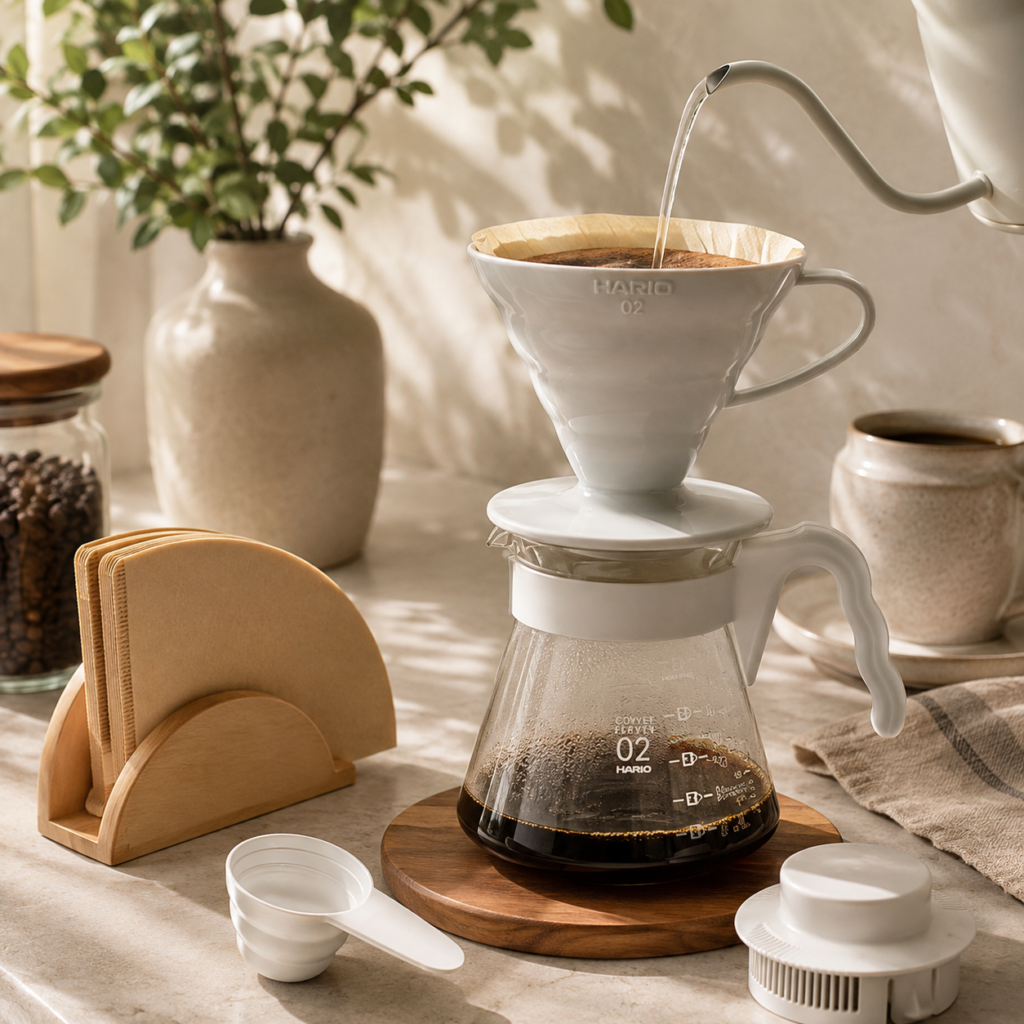
The Hario V60 is one of the most recognizable pour-over coffee makers available, and for good reason. Its cone-shaped design, spiral ridges, and large opening give the brewer plenty of control over water flow.
It’s particularly well suited to coffee drinkers who enjoy bright, aromatic cups and don’t mind spending a little time refining their technique.
Why We Like It
- Excellent brewing control
- Simple design
- Affordable
- Available in several materials
- Easy to find filters
- Excellent for experimenting with recipes
Best For
Coffee enthusiasts who want maximum control over the brewing process.
Ideal For
- Beginners learning pour-over
- Experienced brewers
- Light-roast coffee
- Single-cup brewing
- Coffee experimentation
Feature Table
| Feature | Details |
|---|---|
| Best For | Overall pour-over brewing |
| Design | Cone-shaped |
| Material Options | Ceramic, plastic, glass, metal |
| Capacity | 1–4 cups depending on size |
| Filter | V60 paper filters |
| Brewing Style | Manual pour-over |
| Flow Control | High |
| Heat Retention | Varies by material |
| Learning Curve | Moderate |
| Portability | ⭐⭐⭐⭐½ |
| Ease of Use | ⭐⭐⭐⭐ |
| Coffee Clarity | ⭐⭐⭐⭐⭐ |
| Flavor Control | ⭐⭐⭐⭐⭐ |
| Consistency | ⭐⭐⭐⭐½ |
| Cleaning | ⭐⭐⭐⭐⭐ |
| Durability | ⭐⭐⭐⭐½ |
| Main Advantage | Exceptional control and versatility |
| Main Drawback | Technique has a significant effect on results |
2. Chemex Classic — Best for Clean Coffee
⭐⭐⭐⭐⭐ 4.8/5
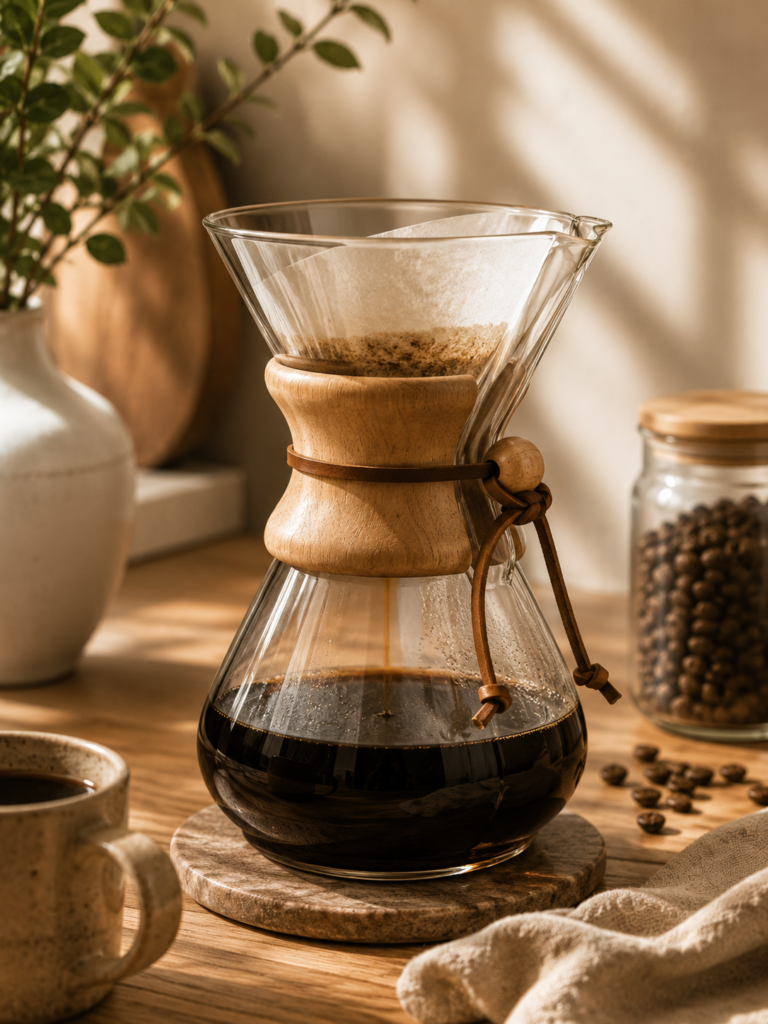
The Chemex Classic combines a beautiful glass design with a distinctive brewing process.
Its thick paper filters remove a significant amount of oils and fine particles, producing an exceptionally clean and bright cup.
It also works well when you’re brewing several cups at once.
Why We Like It
- Elegant design
- Excellent clarity
- Large capacity options
- Thick filters produce a clean cup
- Doubles as an attractive serving vessel
- Great for entertaining
Best For
Coffee drinkers who prefer a smooth, clean, tea-like cup.
Ideal For
- Multiple cups
- Light and medium roasts
- Entertaining
- Coffee enthusiasts
- Beautiful kitchen setups
Feature Table
| Feature | Details |
|---|---|
| Best For | Clean, refined coffee |
| Design | Hourglass carafe |
| Material | Heat-resistant glass |
| Capacity | Approximately 3–10 cups depending on model |
| Filter | Chemex bonded paper filters |
| Brewing Style | Manual pour-over |
| Filter Thickness | Thick |
| Flow Control | Moderate |
| Heat Retention | ⭐⭐⭐½ |
| Learning Curve | Moderate |
| Portability | ⭐⭐⭐ |
| Ease of Use | ⭐⭐⭐⭐ |
| Coffee Clarity | ⭐⭐⭐⭐⭐ |
| Flavor Control | ⭐⭐⭐⭐½ |
| Consistency | ⭐⭐⭐⭐½ |
| Cleaning | ⭐⭐⭐⭐ |
| Durability | ⭐⭐⭐⭐ |
| Main Advantage | Exceptionally clean coffee |
| Main Drawback | Glass requires careful handling |
3. Kalita Wave 185 — Best for Beginners
⭐⭐⭐⭐⭐ 4.7/5
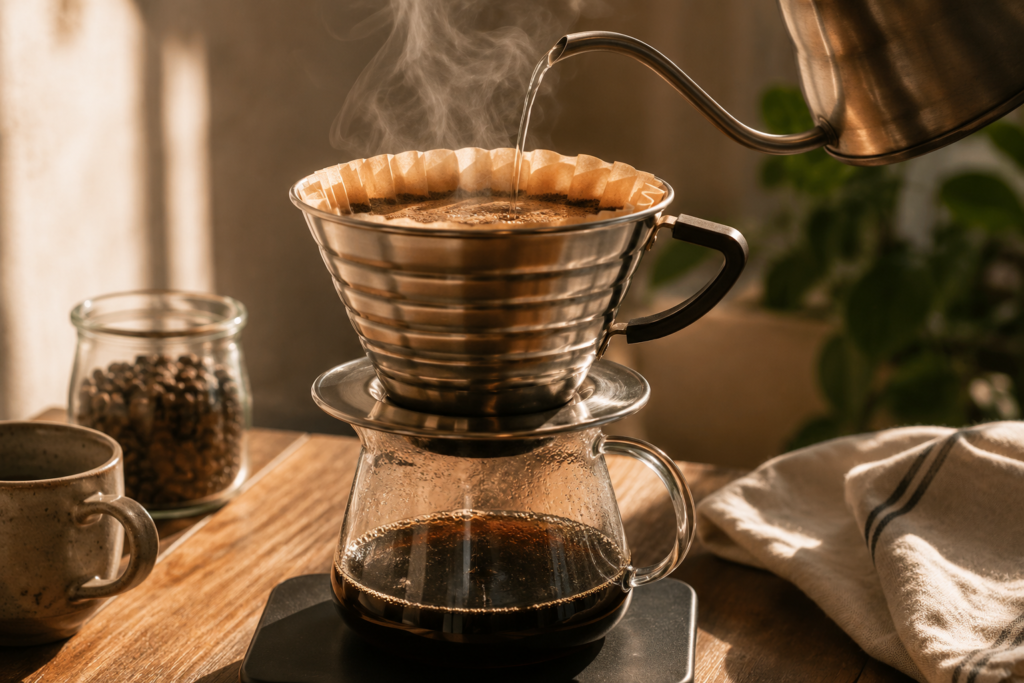
The Kalita Wave 185 is an excellent choice if you want a pour-over brewer that’s somewhat more forgiving than a traditional cone dripper.
Its flat-bottom design and wave-shaped filter help promote an even extraction, making it easier to achieve consistent results.
Why We Like It
- Beginner-friendly design
- Flat-bottom brewing
- Consistent extraction
- Forgiving technique
- Attractive minimalist design
- Excellent everyday brewer
Best For
Beginners who want an easier path to consistent pour-over coffee.
Ideal For
- New pour-over drinkers
- Medium-roast coffee
- Daily brewing
- Small households
- Consistency-focused users
Feature Table
| Feature | Details |
|---|---|
| Best For | Beginners |
| Design | Flat-bottom |
| Material Options | Stainless steel, glass, ceramic |
| Capacity | Approximately 2–4 cups |
| Filter | Kalita Wave paper filters |
| Brewing Style | Manual pour-over |
| Flow Control | Moderate |
| Extraction | Even and balanced |
| Heat Retention | Depends on material |
| Learning Curve | Easy-Moderate |
| Portability | ⭐⭐⭐⭐½ |
| Ease of Use | ⭐⭐⭐⭐⭐ |
| Coffee Clarity | ⭐⭐⭐⭐½ |
| Flavor Control | ⭐⭐⭐⭐½ |
| Consistency | ⭐⭐⭐⭐⭐ |
| Cleaning | ⭐⭐⭐⭐⭐ |
| Durability | ⭐⭐⭐⭐½ |
| Main Advantage | Forgiving and consistent |
| Main Drawback | Requires dedicated filters |
4. Origami Dripper — Best for Brewing Control
⭐⭐⭐⭐☆ 4.1/5
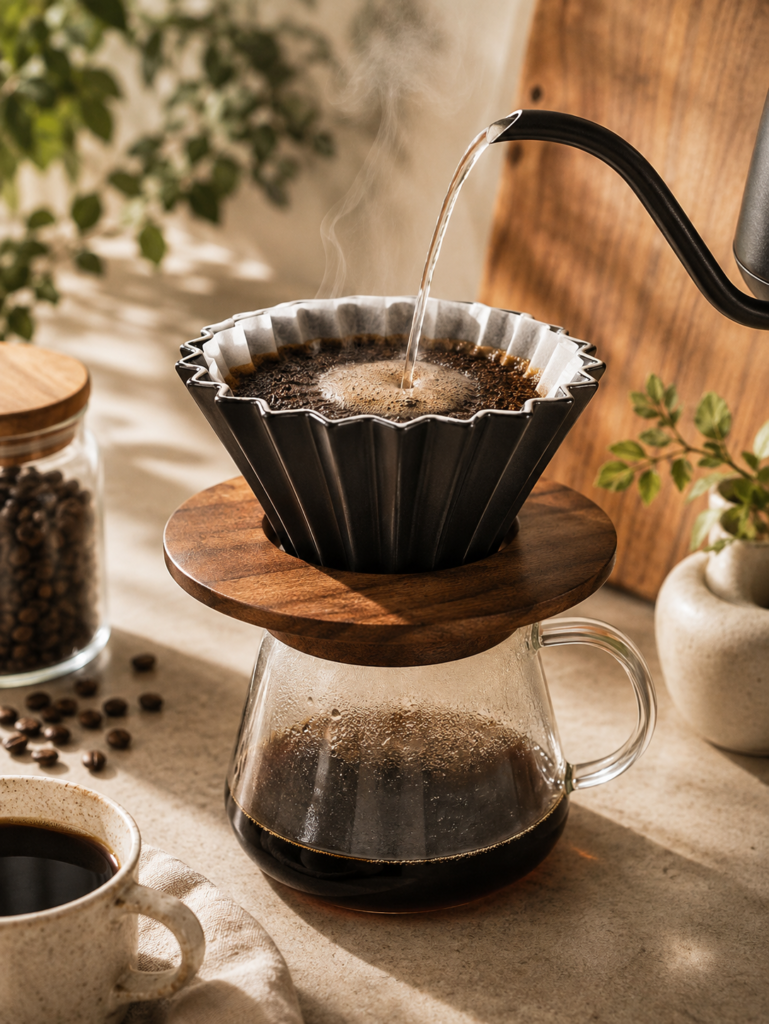
The Origami Dripper stands out because its distinctive ridged design gives experienced brewers plenty of room to experiment.
It can work with different filter styles, depending on the specific setup, making it particularly versatile.
Why We Like It
- Excellent control
- Distinctive design
- Multiple filter options
- Lightweight
- Great for experimenting
- Available in several materials and colors
Best For
Coffee enthusiasts who enjoy experimenting with different brewing recipes.
Ideal For
- Light-roast coffee
- Specialty coffee
- Experienced brewers
- Recipe experimentation
- Single-cup brewing
Feature Table
| Feature | Details |
|---|---|
| Best For | Brewing flexibility |
| Design | Ridged cone |
| Material Options | Ceramic, resin |
| Capacity | Approximately 1–4 cups |
| Filter Options | Cone and wave-style filters depending on setup |
| Brewing Style | Manual pour-over |
| Flow Control | High |
| Learning Curve | Moderate |
| Portability | ⭐⭐⭐⭐⭐ |
| Ease of Use | ⭐⭐⭐⭐½ |
| Coffee Clarity | ⭐⭐⭐⭐⭐ |
| Flavor Control | ⭐⭐⭐⭐⭐ |
| Consistency | ⭐⭐⭐⭐½ |
| Cleaning | ⭐⭐⭐⭐⭐ |
| Durability | ⭐⭐⭐⭐½ |
| Main Advantage | Flexible brewing options |
| Main Drawback | Can be sensitive to technique |
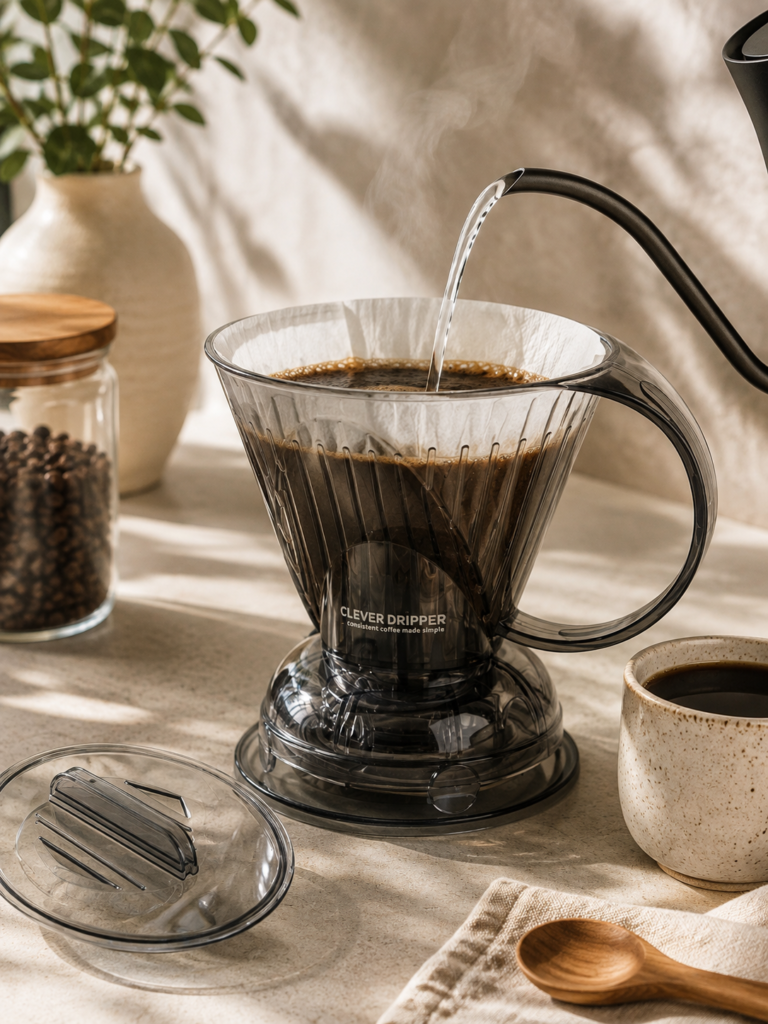
5. Clever Dripper — Best for Easy Brewing
⭐⭐⭐⭐⭐ 4.7/5
The Clever Dripper takes a slightly different approach by combining immersion brewing with a controlled release.
This makes it particularly appealing to people who want the flavor and control of manual brewing without having to master complicated pouring techniques.
Why We Like It
- Very easy to use
- Forgiving brewing process
- Minimal pouring technique required
- Affordable
- Easy cleanup
- Good consistency
Best For
Beginners who want excellent coffee without a complicated technique.
Ideal For
- New coffee enthusiasts
- Busy mornings
- Office coffee
- Medium and dark roasts
- Consistent daily brewing
Feature Table
| Feature | Details |
|---|---|
| Best For | Easy manual brewing |
| Design | Immersion dripper |
| Material | BPA-free plastic |
| Capacity | Approximately 1–2 cups |
| Filter | Standard #4 paper filters |
| Brewing Style | Immersion + controlled release |
| Flow Control | Automatic release |
| Learning Curve | Easy |
| Portability | ⭐⭐⭐⭐⭐ |
| Ease of Use | ⭐⭐⭐⭐⭐ |
| Coffee Clarity | ⭐⭐⭐⭐ |
| Flavor Control | ⭐⭐⭐⭐ |
| Consistency | ⭐⭐⭐⭐⭐ |
| Cleaning | ⭐⭐⭐⭐⭐ |
| Durability | ⭐⭐⭐⭐⭐ |
| Main Advantage | Extremely easy and forgiving |
| Main Drawback | Less direct control than a V60 |
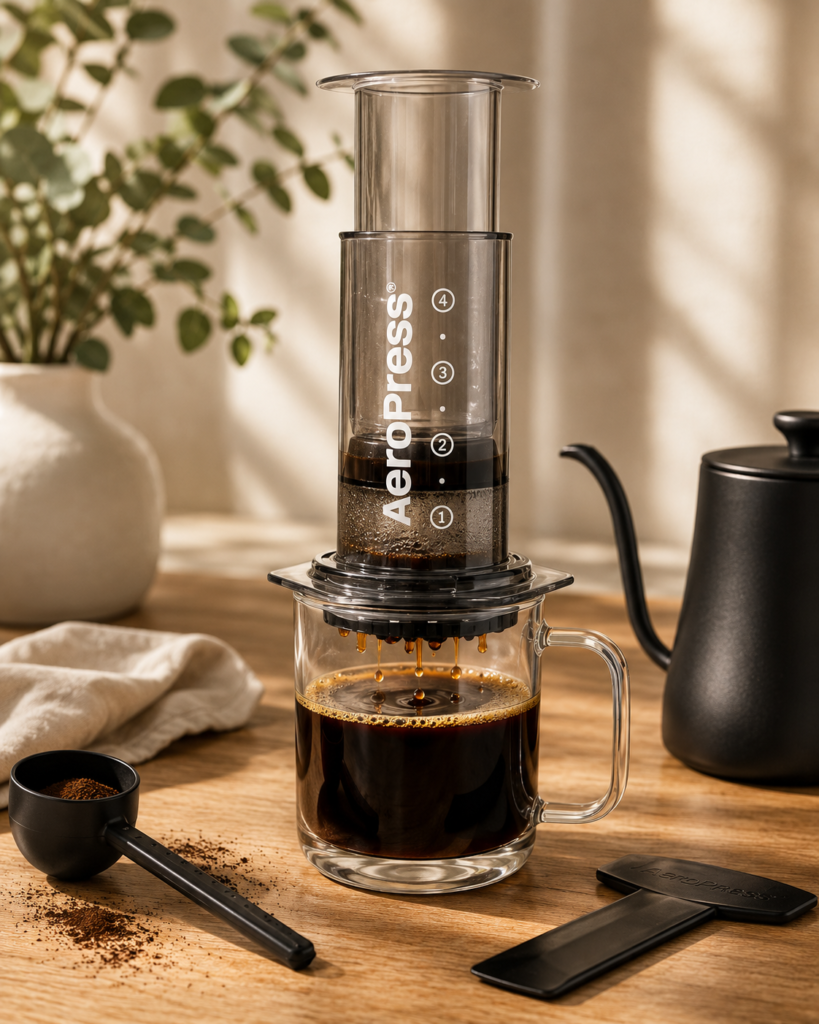
6. AeroPress Coffee Maker — Best Versatile Brewer
⭐⭐⭐⭐⭐ 4.6/5
The AeroPress Coffee Maker isn’t a traditional pour-over brewer, but its flexibility makes it a popular alternative for coffee lovers who want a compact manual brewing system.
It can produce different styles of coffee depending on the recipe, grind size, steeping time, and brewing technique.
Why We Like It
- Extremely versatile
- Compact
- Lightweight
- Fast brewing
- Easy cleanup
- Excellent for travel
Best For
Coffee drinkers who want a portable brewer capable of multiple brewing styles.
Ideal For
- Travel
- Camping
- Office brewing
- Single servings
- Experimenting with recipes
Feature Table
| Feature | Details |
|---|---|
| Best For | Versatile brewing |
| Design | Press-style brewer |
| Material | BPA-free plastic |
| Capacity | Single serving |
| Filter | Paper or compatible reusable filters |
| Brewing Style | Immersion + pressure |
| Brewing Time | Typically a few minutes |
| Learning Curve | Easy |
| Portability | ⭐⭐⭐⭐⭐ |
| Ease of Use | ⭐⭐⭐⭐⭐ |
| Coffee Clarity | ⭐⭐⭐⭐½ |
| Flavor Control | ⭐⭐⭐⭐⭐ |
| Consistency | ⭐⭐⭐⭐⭐ |
| Cleaning | ⭐⭐⭐⭐⭐ |
| Durability | ⭐⭐⭐⭐⭐ |
| Main Advantage | Extremely versatile and portable |
| Main Drawback | Generally designed for smaller servings |
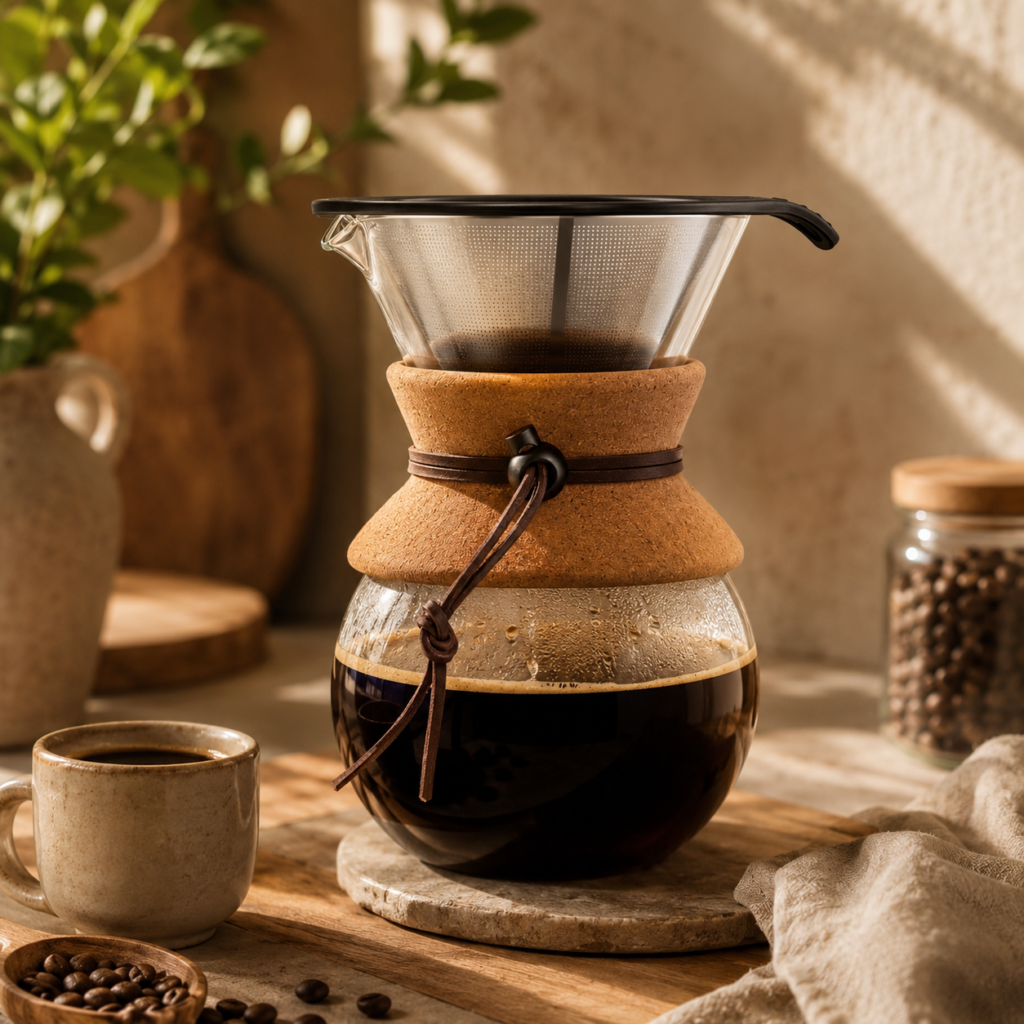
7. Bodum Pour Over — Best No-Paper Option
⭐⭐⭐⭐⭐ 4.5/5
The Bodum Pour Over is a convenient choice if you want the simplicity of pour-over brewing without regularly buying paper filters.
Its permanent stainless-steel filter allows more oils and fine particles into the finished coffee, producing a fuller-bodied cup than a traditional paper-filter brewer.
Why We Like It
- Reusable filter
- No paper filters required
- Simple brewing process
- Attractive glass design
- Easy to serve
- Good for multiple cups
Best For
Coffee drinkers who want a reusable filter and fuller-bodied coffee.
Ideal For
- Everyday brewing
- Multiple cups
- Environmentally conscious users
- Fuller-bodied coffee
- Simple coffee stations
Feature Table
| Feature | Details |
|---|---|
| Best For | Reusable filtering |
| Design | Carafe-style |
| Material | Glass + stainless steel |
| Capacity | Approximately 3–8 cups depending on model |
| Filter | Permanent stainless steel |
| Brewing Style | Pour-over |
| Paper Filters Required | No |
| Flow Control | Moderate |
| Learning Curve | Easy |
| Portability | ⭐⭐⭐ |
| Ease of Use | ⭐⭐⭐⭐⭐ |
| Coffee Clarity | ⭐⭐⭐½ |
| Flavor Control | ⭐⭐⭐⭐ |
| Consistency | ⭐⭐⭐⭐ |
| Cleaning | ⭐⭐⭐⭐ |
| Durability | ⭐⭐⭐⭐ |
| Main Advantage | Reusable filter |
| Main Drawback | More oils and sediment in the cup |
How to Choose the Best Pour-Over Coffee Maker
Choosing a pour-over brewer isn’t just about appearance. The design can significantly influence how water moves through your coffee.
Step 1: Choose the Right Shape
Most pour-over brewers fall into two major designs.
Cone-Shaped Brewers
Examples include:
- Hario V60
- Origami Dripper
These generally provide significant control over water flow and extraction.
Flat-Bottom Brewers
Examples include:
- Kalita Wave
These can be more forgiving and may encourage more even extraction.
Step 2: Choose the Right Material
Pour-over brewers are commonly made from:
- Plastic
- Ceramic
- Glass
- Stainless steel
Plastic
Pros:
- Lightweight
- Durable
- Excellent for travel
- Often affordable
Cons:
- Less premium appearance
Ceramic
Pros:
- Good heat retention
- Attractive
- Durable
Cons:
- Heavier
- Can break if dropped
Glass
Pros:
- Attractive
- Lets you see the brewing process
Cons:
- Fragile
- Can lose heat more quickly
Stainless Steel
Pros:
- Durable
- Travel-friendly
- Resistant to breakage
Cons:
- Less visual brewing feedback
Step 3: Consider Your Coffee Preferences
Your preferred coffee style can help determine the best brewer.
| Coffee Preference | Good Choice |
|---|---|
| Bright and complex | Hario V60 |
| Clean and delicate | Chemex |
| Balanced and forgiving | Kalita Wave |
| Experimental | Origami |
| Easy and consistent | Clever Dripper |
| Versatile and portable | AeroPress |
| Fuller body | Bodum Pour Over |
Step 4: Consider Filter Availability
Filters are an important part of your long-term cost and convenience.
Before buying, check:
- Filter size
- Local availability
- Online availability
- Paper vs. reusable options
- Filter cost
A brewer that requires specialized filters may cost more to maintain than one that uses commonly available filters.
Step 5: Choose the Right Capacity
Consider how much coffee you normally make.
Single-Cup Brewers
Best for:
- Solo coffee drinkers
- Small kitchens
- Freshly brewed individual cups
Larger Brewers
Best for:
- Couples
- Families
- Entertaining
- Multiple cups
Avoid choosing a large brewer simply because it looks impressive. A smaller brewer may be more convenient for everyday use.
How to Make Better Pour-Over Coffee
You don’t need complicated equipment to make excellent pour-over coffee. Technique matters.
Step 1: Use Fresh Coffee Beans
Freshly roasted beans can produce a more aromatic and flavorful cup.
For the best results, grind the beans shortly before brewing.
Step 2: Measure Your Coffee
A kitchen scale makes your results more consistent.
A useful starting point is approximately:
1 gram of coffee for every 15–17 grams of water.
Adjust this ratio according to your taste.
Step 3: Grind the Coffee
Start with a medium-fine grind for most cone-style pour-over brewers.
You may need to adjust the grind depending on the brewer, coffee, and recipe.
Step 4: Heat Your Water
A temperature around 90–96°C (194–205°F) is a useful starting range.
Step 5: Rinse the Paper Filter
Rinsing can remove paper taste and preheat your brewer and serving vessel.
Step 6: Add the Coffee
Place the ground coffee into the filter and gently level the bed.
Step 7: Bloom the Coffee
Add a small amount of water and allow the coffee to bloom for roughly 30–45 seconds.
This helps release trapped gases from freshly roasted coffee.
Step 8: Pour Slowly
Pour the remaining water gradually using a controlled circular motion.
Avoid aggressively pouring directly against the filter walls.
Step 9: Let the Coffee Draw Down
Allow the water to pass through the coffee bed.
The exact brewing time will vary depending on your recipe and equipment.
Step 10: Taste and Adjust
If the coffee tastes too sour or weak, consider grinding slightly finer.
If it tastes overly bitter or harsh, try grinding slightly coarser.
Make one change at a time.
Pour-Over Coffee Ratio Guide
| Coffee | Water | Starting Ratio |
|---|---|---|
| 15 g | 240 g | 1:16 |
| 20 g | 320 g | 1:16 |
| 25 g | 400 g | 1:16 |
| 30 g | 480 g | 1:16 |
These are starting points rather than strict rules.
You can adjust the ratio according to your preferred strength.
Pour-Over vs. Drip Coffee Maker
| Feature | Pour-Over | Automatic Drip |
|---|---|---|
| Brewing control | ⭐⭐⭐⭐⭐ | ⭐⭐⭐ |
| Convenience | ⭐⭐⭐ | ⭐⭐⭐⭐⭐ |
| Consistency | ⭐⭐⭐⭐½ | ⭐⭐⭐⭐⭐ |
| Customization | ⭐⭐⭐⭐⭐ | ⭐⭐⭐ |
| Brewing involvement | High | Low |
| Multiple cups | ⭐⭐⭐⭐ | ⭐⭐⭐⭐⭐ |
| Cleanup | ⭐⭐⭐⭐ | ⭐⭐⭐⭐ |
| Best for | Coffee enthusiasts | Convenience-focused users |
Choose pour-over if you enjoy controlling your coffee.
Choose an automatic drip machine if convenience and repeatability are more important.
Pour-Over vs. French Press
| Feature | Pour-Over | French Press |
|---|---|---|
| Coffee clarity | ⭐⭐⭐⭐⭐ | ⭐⭐⭐ |
| Body | ⭐⭐⭐½ | ⭐⭐⭐⭐⭐ |
| Oils | Lower | Higher |
| Brewing control | ⭐⭐⭐⭐⭐ | ⭐⭐⭐⭐ |
| Sediment | Low | Moderate |
| Brewing time | Short | Moderate |
| Cleanup | ⭐⭐⭐⭐ | ⭐⭐⭐ |
| Best for | Clean, nuanced coffee | Rich, full-bodied coffee |
Common Pour-Over Brewing Mistakes
1. Using the Wrong Grind Size
Grind size has a major impact on extraction.
Start with a medium-fine grind and adjust based on taste and drawdown time.
2. Pouring Too Quickly
Fast pouring can cause uneven extraction.
3. Using Inconsistent Measurements
Use a scale whenever possible.
4. Skipping the Bloom
A proper bloom can help freshly roasted coffee release trapped gases.
5. Using Poor-Quality Water
Coffee is mostly water, so water quality can significantly affect the final cup.
6. Using Water That’s Too Hot or Too Cold
Start within the recommended temperature range and adjust according to your coffee.
7. Ignoring Your Coffee’s Roast Level
Different beans may respond better to different grind sizes, temperatures, and recipes.
Frequently Asked Questions
Is pour-over coffee better than drip coffee?
Not necessarily. Pour-over gives you more control over the brewing process, while automatic drip machines offer greater convenience and consistency.
What is the best pour-over coffee maker for beginners?
The Kalita Wave 185 is an excellent beginner-friendly choice because its flat-bottom design can be relatively forgiving.
The Clever Dripper is another great option if ease of use is your top priority.
Is the Hario V60 difficult to use?
The V60 isn’t difficult to operate, but achieving consistently excellent results can require some practice because pouring technique has a noticeable effect on extraction.
What is the best pour-over coffee maker overall?
The Hario V60 is our top overall pick because it’s affordable, versatile, widely available, and gives you excellent control over brewing.
Is Chemex coffee stronger than regular coffee?
Strength depends primarily on the coffee-to-water ratio and brewing method rather than the brewer itself. Chemex coffee is often perceived as lighter because its thick filter removes many oils and fine particles.
Do I need a gooseneck kettle for pour-over coffee?
You don’t absolutely need one, but a gooseneck kettle makes it easier to control water flow and pour precisely.
What grind size should I use for pour-over coffee?
A medium-fine grind is a useful starting point for many pour-over brewers. You may need to adjust finer or coarser depending on your brewer and taste.
How much coffee should I use for one cup?
A useful starting point is approximately 15–20 grams of coffee for 240–320 grams of water, depending on your preferred strength.
Can I make pour-over coffee without a scale?
Yes, but a scale makes it much easier to reproduce your results consistently.
Final Verdict
The best pour-over coffee maker depends on how much control you want and what type of coffee you enjoy.
For most coffee enthusiasts, the Hario V60 is our top overall choice. Its simple design, affordability, and excellent control make it a fantastic starting point for anyone interested in manual brewing.
If you prefer a cleaner and more refined cup, the Chemex Classic is an excellent choice. For beginners who want a more forgiving brewer, the Kalita Wave 185 offers an attractive balance of simplicity and consistency.
The Origami Dripper is particularly appealing to experienced brewers who enjoy experimenting, while the Clever Dripper is ideal if you want excellent coffee without mastering a complicated pouring technique.
For travelers and people who value versatility, the AeroPress remains a highly practical choice. And if you want to eliminate paper filters, the Bodum Pour Over provides a reusable alternative with a fuller-bodied cup.
Whichever brewer you choose, remember that fresh beans, a consistent grind, good water, accurate measurements, and proper technique can make a bigger difference than the brewer itself.
Pour-Over Coffee Maker Buying Checklist
- Choose your preferred brewing style
- Decide between cone and flat-bottom designs
- Choose a suitable material
- Check brewing capacity
- Confirm filter availability
- Consider paper vs. reusable filters
- Think about portability
- Consider heat retention
- Check cleaning requirements
- Choose a brewer compatible with your preferred coffee
- Consider whether you need a gooseneck kettle
- Buy a quality coffee grinder
- Use a kitchen scale
- Experiment with grind size and brewing ratio
- Start with fresh coffee beans